Showing posts with label politics. Show all posts

Wednesday, April 7, 2010

Miners die, again

The newspaper from Harlan, KY sends a reporter to the Montcoal mine disaster.

And though statistically, mining has become safer overall in recent years, that's in the context of technology that could make mining disasters entirely a thing of the past. Why aren't they a thing of the past? Here's a glimpse from In These Times, which makes me feel like

the more things change, the more they stay the same.

Stay the same

Stay the same

Stay the same, the same

Stay the same

Stay the same.

Tuesday, March 24, 2009

Don't walk. Sit.


Above: employees of an Indiana health plan promote "breast cancer awareness" by wearing pink and making themselves into a ribbon. Below: from Rex Wockner at wockner.blogspot.com; the AIDS Coalition to Unleash Power in Chicago. AIDS activists demanded national healthcare, but mostly didn't figure out how to make common cause with other people with other illnesses.


Over at DuncanCross.net, a blog I've just started reading, the pseudonymous Mr. Cross urges us to consider not walking. Not going on breast cancer walks, Crohn's disease walks, polycystic kidney disease walks, etc, etc. Don't walk, he says:

To me, as a sick person, one of the worst aspects of these organizations is their aggressive insistence that the best way to help sick people is by funding for-cure research. That is a lie. Sick people face a lot of challenges, most of which cannot be deferred until a cure is found. If you’re sick, start talking about those challenges as you face them, and try asking for help.

If your concern is a specific person, get more involved in their life; ask them what you, specifically, can do to help them, specifically. For my friends who are sick, I make an effort to be there - to be available, to help them when they need it, maybe cook a meal or drive them to an appointment, but mostly to remain a presence in their lives. Look at the posters and the ads for these organizations: they’re clearly suggesting that sick people can only find community among their fellow-sufferers, as if our only hope to rejoin humanity is via the distant promise of a cure. That, of course, is false - and you can prove it false simply by refusing to be marginalized if you’re sick, or by being a friend to someone who is sick.


I hope you'll consider heading over there to read this essay in full.

One thing that Mr. Cross briefly considers is the origin of all of this walking, and of this marketing strategy. He traces it to breast cancer. My own read is that the breast cancer marketers (as opposed to breast cancer activists) got it from certain parts of the gay community's efforts to respond to AIDS in the 1980s. It seems to me that the Avon-sponsored pink ribbon element of the response to breast cancer must have looked quite closely at AIDS, then tried to find all of the elements of the successful response to AIDS that could be made completely banal.

There are always people in every disease organization who try to defy the vague sense of corporate uplift to have some relationship to the real lived experience of people with the disease. That's because the basic impulse of these organizations--try to work to stop diseases that make people suffer--is a genuinely decent one. But once they start taking sponsorships and decide to stop making tough political choices they will inevitably succumb to banality, because that is what they believe is required to make this kind of fundraising strategy work.

In the case of breast cancer, it is also partly a a story of how the practical innovations of feminism are often appropriated and then depoliticized. Barbara Ehrenreich has a brilliant description of her own reaction to the kitschification of breast cancer in a now-classic essay, Welcome to Cancerland. A brief excerpt of this essay, which merits reading by anyone who has felt a vague discomfort about pink ribbons but has never been able to say exactly why:

It is the very blandness of breast cancer, at least in mainstream perceptions, that makes it an attractive object of corporate charity and a way for companies to brand themselves friends of the middle-aged female market. With breast cancer, "there was no concern that you might actually turn off your audience because of the life style or sexual connotations that AIDS has," Amy Langer, director of the National Alliance of Breast Cancer Organizations, told the New York Times in 1996. 'That gives corporations a certain freedom and a certain relief in supporting the cause." Or as Cindy Pearson, director of the National Women's Health Network, the organizational progeny of the Women's Health Movement, puts it more caustically: "Breast cancer provides a way of doing something for women, without being feminist."

There have actually been plenty of AIDS versions of this kind of strategy--but that is for a longer post than this one.

Seeing the worst excesses of these ways of doing things, one would wonder, as Duncan Cross does, why anyone would want to do disease-specific activism of any kind. In the case of AIDS it was because of the very specific stigma associated with the disease. People with AIDS in the early 1980s died social deaths--people wrote them off as essentially dead before they were biologically dead, and ostracized them--unless they demanded a place both in their own communities and in the larger world. The medical community mostly avoided AIDS whenever it could and often responded poorly when they couldn't avoid it. And most leading researchers were uninterested in the problem; pharmaceutical companies had not yet jumped in because they couldn't see that there was going to be any significant market to be gained out of it. Organizing around their disease identity was built around a very specific and urgent political situation. And the urgency of AIDS activism came not only from the agenda of advocating for people with the disease, but also from trying to defend the communities that were under the threat of so many people dying.

The question is, does that situation exist anymore? Or is there more hope in people with different diagnoses banding together?

The disability rights movement in its modern form did not exist before the late 1960s and early 1970s. The seminal moment in the United States came in 1977 when the various disability organizations--organizations for the blind, the deaf, disabled veterans, and so on--came together to fight for implementation of Section 504 of the Rehabilitation Act of 1974. It was a relatively obscure piece of legislation but it made a huge difference in employment opportunities for people with disabilities, forced school systems to provide real education for a new generation of disabled people, and ultimately led the way to the Americans with Disabilities Act. A dramatic sit-in in San Francisco, including people with all kinds of disabilities, got the legislation passed and created the new face of the new, united, and militant disability rights movement. The movement saw a political opening--Jimmy Carter getting elected--and used it. ( Joseph Shapiro is a fantastic NPR reporter who has made disability his beat: his description of the 504 sit-in is here.) The key element of this movement and its success was the decision by many different disability constituencies to unite.

For people who need change because their own bodily circumstances require assistance from society and from the healthcare system, the history of AIDS activism and the disability rights movement show two things:

1. the credibility of your own circumstances can be a potent political weapon.
2. though that first central tactic can win victories, the largest and most enduring gains are won by tying your own circumstances to those of others.


***

I hope to write more about these two points, but in the meantime, here is an 18-minute documentary about the 504 protests that shows these two points in action. And below, a link to what the folks over at Breast Cancer Action are up to these days: their annual Think Before You Pink effort to end what they describe as "pinkwashing". ThinkBeforeYouPink.Org

The Power of 504:
part 1, followed by part 2


Wednesday, November 19, 2008

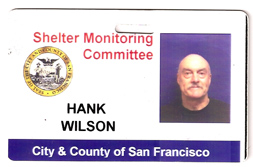
Hank Wilson, community organizer.


I wrote in my last post about Hank Wilson. Here's a much more lovely long remembrance of Hank Wilson, by his friend Bob Ostertag. Read it.

Here's the last paragraph:
What, exactly, is a "community?" At the university where I teach, there are "experts" in this matter who will give you definitions of community that use so many big words, you will need a PhD of your own just to figure out what they are talking about. Hank Wilson had a definition his kindergarten students could understand: a community was something that took care of its least privileged members. If this simple thing could not be done, then you didn't have much in the way of community. This was Hank's life project, his singular, profound contribution to the gay and lesbian community, and to the city of Saint Francis.

Also, some memories at the San Francisco Bay Guardian's web site (read the comments section);

the Chronicle's article;

for the historians in the crowd, here's the finding aid to the Hank Wilson Papers, which Hank donated when he thought he was about to die of AIDS in 1996, right before highly active antiretroviral therapy saved his life;

and finally, a Magnum Photos photo essay about the Ambassador Hotel.

Of course, you can always help out with the Wikipedia page, in progress.

Sunday, November 9, 2008

The hybrid healthcare system


photo: from wikimedia commons, Barack Obama hearing from Ohio voter Marian Edwards about health insurance


At a small social gathering recently, a policy wonk doctor and I chatted about what the Obama era might bring to healthcare.

"I think he's going to try to do something quickly", the policy wonk said. "The difference between 1992 and now is that big business then was opposed to government involvement just on principle. But now they want it off their table. They can't keep bearing the cost of the whole system. They're ready."

I think the goal should not be a single-payer system. It should be a system that could eventually become a single-payer system in which the government runs an opt-in portion that gradually more and more people opt in to as business ditches health benefits. This is akin to building a hybrid car with the capacity, once a better battery is available on the market, to become a plug-in hybrid with a much greater share of electric power.

Thursday, October 23, 2008

Follow-up to McCain and melanoma

Kyle makes a couple of arguments below in the comments of my last post, and my reply is long enough and separate enough from my original post that I'm posting it separately:

Kyle,
I don't disagree with your political conclusion of what to do at the end of the day. The point is that any president might die. The fallacies of the Altman argument are that:

1) the medical chart does not contain information on what is most likely to kill a president; and
2) John McCain has some unknown risk of recurrent melanoma, which further information might allow us to calculate slightly differently than what we know to be his generic risk without further information. But John McCain either will or will not die in office if elected. And, with or without melanoma, he has a reasonable probability of dying in office because US presidents generically do have a much higher probability of dying in a given four year span than many other people, entirely because of the risks associated with the office rather than the officeholder.

So whether the possibility is x% chance of melanoma combined with y% chance of cardiac disease combined with z% chance of lung cancer, the generic risk to the officeholder already meets a test of likelihood. That is, statistically, taking any president at any age, a generic voter should assume--regardless of what is in the medical chart--that the president is at least as likely to die before the end of the term as the voter herself, or at least, the voter's children.

So, the reason this is relevant to a medical blog and a medical argument is that melanoma in particular should not change the intervention--i.e., your vote. Whether or not he has a given chance of recurrent melanoma, Sarah Palin is not a qualified vice president, and she has a high generic chance of becoming president if elected as vice president.

Incidentally, though the two candidates' generic risks of mortality can be influenced by their age, this is an easily discernible and intuitively obvious risk which does not require Lawrence Altman digging through colonoscopy reports.

Because the baseline presidential risk of death is high, the issue of Sarah Palin's competence is more or less exactly the same as the issue of Joe Biden's competence. If Obama had picked Palin, it would be just as bad a pick, for the exact same reason.

Now, take the low-probability but possible chance of Lawrence Altman finding something in the chart that a group of Mayo Clinic doctors deliberately concealed or misrepresented when they vouched for McCain's health. When going through McCain's chart, the greatest likelihood is that whatever Altman would find would be a "false-positive"--that is, it would raise concerns for voters but would not actually change the outcome of the next four years.

That would be unfair to McCain, and more importantly to democracy in general. It would represent a medicalization of democracy--a completely out-of-proportion ability of a few doctors and medical screening tests to influence democratic elections.

Also, at least as importantly, it would be unfair to anyone with "concerning" things in their medical charts who wanted to be in a powerful position. There is no magic about a president; to the workers of a company, the CEO and CFO might well have greater power to determine their quality of life in the next four years. So, should boards of directors have the right to examine every bit of the medical record of any executive? And how far down the management trail are you willing to go with that logic? And what does that mean for people with family history of genetic diseases, for people with past medical issues, for people with high epidemiological risk?

Aside from this, I want to make sure I am clear about the statistical and medical argument I'm making, so let me take a less-loaded and very common medical parallel. Let's say someone comes into the emergency department with shortness of breath and a fast heart rate. There are various possibilities. One is a blood clot in the lung, known as a pulmonary embolism (PE).

To diagnose PE, I can get a CT scan with contrast, which can damage the kidneys. I can also do a blood test, the result of which will increase or decrease my estimate of the chance that the person has a PE. If the blood test increases my estimate, I'll get a CT scan. If it decreases my estimate, I won't get a CT scan.

So, if I think there is a clear alternative explanation and no reason to suspect PE, should I get the blood test? No, because it will not change my decisionmaking. I am more likely to get a false positive than a true positive, and therefore, the CT scan is more likely to be dangerous than helpful.

What if it's someone has a very high risk of pulmonary embolism--a known clot in the veins of the leg, and cancer which predisposes to PE? Will I do the blood test? No, because I don't care if the test is negative. I will still not be satisfied until I do the CT scan.

So it turns out that the only time to do the blood test is if you're not sure whether or not a PE is likely--the risk is indeterminate, or "medium-risk." The argument Altman is making relies on the idea that a medical chart is the equivalent of this blood test. That is, you will cast your vote--the potentially wise or unwise and highly consequential decision, the equivalent of CT scan with contrast--based on the information in the medical chart. This is a common issue in medicine: will a given test change your medical choices? If not, why are you doing the test?

Given that the Altman chart review is the equivalent of the "medium-risk" blood test, where we are trying to convince ourselves that a candidate will very likely die in office or will very likely not die in office. But this is not the right choice from the point of view of the "change your choice" test. That's because a president is not medium risk for death in the next four years. At least historically, a president is high risk. So, I certainly will not fail to care about the qualifications of a vice president. But I will not use the medical chart to decide how much I care. I already care a lot, because I know no matter what the chart says, I care. Any reasonable person should vote with the assumption that a president has a high chance of dying in office.

If examining the chart had no impact, then it wouldn't matter. And I'm the last person to defend McCain.

But I'm not defending McCain or a decision to vote for him. I'm defending people with a history of melanoma, and a lot of other people too. For anyone with higher probabilities of disease (whether through genetics, behavior, or past medical history), the risk of making the argument Altman is making is actually quite high. So, thinking through the issue of whether you do a test, and whether the Altman chart review is a test we should be doing:

the test does not change my ultimate decision
the test has a high chance of falsely influencing my thinking
the test has a high chance of other bad effects.

And therefore, the test should not be conducted. And Lawrence Altman doesn't need to look through every page of John McCain's medical chart.

[edited for clarity later in the day]

I vote against John McCain because he is a risk to people with melanoma, not because of his risk of melanoma.

Before I go any farther, let me just say that this post is the one time I'll say anything sympathetic about John McCain who I desperately hope loses this election and loses big. But this isn't about him, really.

It seems like during most election seasons, the New York Times' Lawrence Altman MD seems to get worked up about whether he has had enough access to political candidates' health records. Altman was a medical resident about 40 years ago and has never been much of a clinician as far as I can tell besides that--he did preventive health, public health work, and journalism. But, he seems to feel that reporters--and especially, he, being a doctor/reporter--have a right to go over presidential candidates' health records.

This is an appalling idea if we take away John McCain and our hope to see him lose, and think about this in the abstract. And I'm frustrated that a bunch of doctors who support Obama have apparently signed some kind of letter asking that McCain release all his medical records, and that some of them are saying a bunch of stuff in public about his melanoma risk. First of all, I don't know anything more about John McCain's melanoma risk than Bill Frist knew about Terri Schiavo's neurological function, which is to say, I know better than to pronounce my opinion about it.

Second of all, if I was able to look at all of John McCain's medical records, do a physical exam and history, and then quickly become a melanoma expert, does risk for a serious health condition mean that you're supposed to bow out of public life? If you think so, how far down does this argument apply? Governor? Mayor? City Council? Why would it stop at any particular level of office? If the argument is reasonable at the top, why shouldn't the voters of any given town know whether their mayor had guaiac-positive stool? Is it relevant to know whether your congressional candidate might have a brain aneurysm? Is it your right--no, your duty as a citizen--to demand full body CT scans and head MRIs for every person entering any political race at all? As a doctor, shouldn't I reserve my vote only for the candidate who puts his colonoscopy report up on the web so I can look inside his ass and judge for myself whether his polyps are sufficiently presidential?

John McCain's health plans mean his risk to people with melanoma is much more significant than his own risk of melanoma.

Finally, epidemiologically, the melanoma argument opens the door to a truly terrible line of logic, because underneath the medical argument must always be an epidemiological argument. By far the most common cause of death among US presidents in office is assassination. And deaths from cholera or bacterial pneumonia are unlikely for current US presidents. For all of Lawrence Altman's piety about presidents concealing their medical conditions, JFK hiding his Addison's disease was obviously irrelevant in the larger scheme of things. If we're so concerned about a president's chances of death, should we ask Lawrence Altman to be joined by security experts who can analyze the candidates' risk for being assassinated before we vote, which in presidential epidemiology is more likely than death from cancer? Does the public have a right to read all the death threats sent to presidential candidates so we can judge for ourselves whether they are serious? Shouldn't the Secret Service be granting the public complete access to suspected or potential assassins-in-the-making to assess whether they are serious threats or just rifle-toting equivalents of negative lymph nodes? In this election, I don't even want to think about such a thing.

So presidential epidemiology be damned; I am casting my vote for a black man with a significant smoking history and a bunch of racists who want him dead. I'm voting for him because of who he is while he is alive, not because of my morbid guesses about when he might die.

(If you want to be a doctor for Obama, here's a more reasonable way to do it.)

Saturday, October 18, 2008

No on 8--and yes for marriage equality


Gay marriage: it's not just for anonymous trailblazing ordinary people anymore--but even celebrities can get their rights taken away in November

If you make one political donation this season, the way to have the biggest long-term impact for your dollar is right here:

No On 8 Website

Yes, you should pony up for Obama--but lots of people are already doing that. Fewer people are donating to another important campaign, which means your donation can make an even bigger difference for the dollar. The campaign to save same sex marriage in California is an urgent moment for equality in the United States, and it will be a turning point for the struggle for equal rights for gays and lesbians. Recent polls show that the latest misleading ads for the proposition are working, and many Californians are prepared to vote for Proposition 8. If the election was held today, Prop 8 would win. That would be terrible news for my friends and family in California who need same-sex marriage for all kinds of practical reasons, and also some basic reasons of justice and equality.

I hope you'll join me in opposing Proposition 8. We in Massachusetts can breathe easy knowing that same sex marriage is safe here for now--but if it's defeated in California, the forces of intolerance will be coming back here to try to roll back the clock. I don't make a lot of money as a medical resident, but I just gave $200.00 to this campaign. I hope Hemodynamics readers will consider joining me--and if you do, let me know in the comments section of this post.

(PS: A challenge grant means that if you donate before Sunday October 19, your donation will be matched dollar for dollar--so you can double your already significant impact.)

Sunday, August 10, 2008


iTunes has a radio feature, and I'm listening to BeirutNights.com radio, which plays lots of satisfyingly eurotrashy dance music. Because there is no better place to keep track of eurotrashy dance music than Beirut. The only person I knew who had heard "Dragostea Din Tei" before the Numa Numa Dance swept the Internet was a guy who spent a lot of time hanging out in eurotrashy dance clubs in Beirut. Apparently, that's the epicenter of the good stuff, except if you know where to find the tiki lounge in Oakland where my sister's boyfriend is evidently spinning Italodisco under the nom de guerre of Dr. Fill.

So, I'm listening to BeirutNights.com, and a familiar chorus comes through: Hey Hezbollah! Eat this! It's a sped-up tinny remix of the Pet Shop Boys singing, "We'll run with the dogs tonight, in suburbia."

Sunday, May 4, 2008

Favorability


[Note: click on the graphs to get a full view including more-or-less readable data labels].

Here's a shout out to the graphic designers at the New York Times, who often produce great pieces of informational design, and who illustrated this op-ed about the black vote and the white vote in the Democratic primary. (I hope one of the data labels is in error: it cites the end of the graph as April 2, when the graph would really only be truly relevant if the end was May 2.) The article and the graphic make an important point: while the media has been fussing about whether Obama can win over white working-class men (many of whom will not vote for Clinton in the general election either), fewer observers of this political spectacle have been paying attention to the black votes that Clinton has been more or less deliberately throwing away and probably permanently losing.

The NYT article and graph are about a very specific question.

Contrast this to the more general and more common political discussion of whether a candidate is viewed favorably or unfavorably overall. Here's my quickly Excel-graphed illustration of Obama's approval ratings from November until now.


This graph uses overall national "approval" polling data from Rasmussen (the raw data are here) to show Barack Obama's approval ratings over time. The graph shows that the primary season has probably not had that much impact on how the overall electorate views Obama: mainly, people's views have on average become more certain (more "very" and less "somewhat"), but have not changed whether they like or dislike Obama.

The biggest shift came in late February where his "favorable" ratings got as high as 56% and his "unfavorable" ratings as low as 42%. In other words, the monumental flux of this campaign has been about 8% of voters who moved the center line between "kinda like" and "kinda don't like" back and forth.

My graph shows the effects of the political circus, the "who's up/who's down" tallies of cable news--and reveals a much more stable and enduring divide among voters, the one that persists election after election and actually does transcend personality. The smaller fluxes in "favorability" of any given candidate may or may not be important overall.

The NYT graph shows something more important: the actual effects of Hillary Clinton's behavior on a specific part of her base, and what could be one effect of her tactics if she were to win the primary. There is a significant inference here--the assumption that favorability ratings drive turnout. Maybe, maybe not. It may be that black voters would dislike her but vote for her anyway, which would probably be a rational choice. And there are a lot of things left unexamined in this graphic: it compares one group's view of one candidate with another group's view of another rather than comparing both groups' views of both candidates, which would likely be a more nuanced and less dramatic picture. Nonetheless, this single comparison and the clear presentation of the difference is much more interesting and reveals more significant shifts than where her favorability/unfavorability ratings have been going overall. (Not much changed.)

Sometimes smaller questions yield bigger answers.

Tuesday, April 22, 2008

Meta-analyses and pollster.com


The race for Minnesota's US Senate seat, US data on hypothetical McCain-Obama matchup for the general presidential election, and Pennsylvania Democratic primary polling, as shown by Pollster.com

I have a new addiction.

Pollster.com
is the website political junkies have been jonesing for even before we knew what it was. It clusters the results of polls that ask the same question--like, Who are you going to vote for? or, Do you think the country is on the right track? Then it puts them together into a single graph with a unifying trend line. It's imperfect--I can't satisfy myself that the trend line weights for sample size--but it's a lot better than reading the polls one by one.

The medicine parallel is in what we call meta-analyses--when we try to figure out a medical question by combining a number of studies that try to answer that question. Even if a bunch of smaller studies contradict each other, the idea is that by combining a number of studies you get the effect of having one huge study, and in this kind of data (with simple results like "worked better" vs "worked the same"), sample size is all. Thus, if you can create a meta-analysis that has the effect of creating one very large set of data, the answer those data give may be more reliable.

Like any kind of statistics, the problems get more complex as you try to get around the simplest problems. For instance, even when you weight for sample size, you can't throw less-reliable studies and more-reliable studies together and act like they're equivalent--so an ideal meta-analysis gives the data from more reliable studies more weight in the final result. But judging quality, and the appropriate weight given to difference between studies, begins to become a bit more subjective the more you try to fine-tune this problem. (What is quality? And how much weight does which measure of quality get?)

Pollster.com doesn't seem to do any weighting for sample size or other aspects of reliability, but even their relatively straightforward trend line is better than a lot of nonsense political handicapping you hear on TV politics talk shows. By giving more raw data and by combining large sets of data, these graphs and datasets allow you to begin cutting through some of the worst excesses of data-mining by stupid or biased pundits. In other words, you can be your own pundit.

I am aware, of course, that one of the ways that I manage to avoid coherent political action is by being a political junkie--an observer rather than a participant. Another thing that I need to change a little bit in the coming years.

PS:
Wikipedia on meta-analysis
Pollster.com on their trend-line method

Saturday, April 19, 2008

Dockworkers, doctors, and democracy

Photo from the Sydney Morning Herald: the Chinese ship, and South African church members protesting its cargo.

The dockworkers of Durban, South Africa, did what their government wouldn't: stopped a shipment of arms from China to Zimbabwe, including 3 million rounds of ammunition for AK-47s, rocket-propelled grenades, and mortar rounds. The arms would help the doddering dictator Robert Mugabe try to hold on to power, after an election that appears to have not gone well for him.

The Durban dockworkers refused to unload the arms. Then an Anglican archbishop filed a motion in court to stop the shipment. When the court affirmed the motion, the Chinese ship pulled up anchor and headed for Mozambique--or was it Angola?

Whichever port it heads towards next, the Chinese ship will likely eventually find a port, and a road to deliver its bullets. Nonetheless, the collaboration between the church and the unions exposes the banal exchanges of money, bullets and bureaucratic documents which move violence around the world. Mugabe sends money (though surely not in his own currency, which he has made worthless). The Chinese send bullets. The South African government signs the papers which allow the bullets to move from its ports to landlocked Zimbabwe. Stopping the bullets for a few days or weeks may or may not influence the outcome of the struggle in Zimbabwe, but it does help highlight who may share responsibility for the violence of that struggle.

The collaboration recalls some of the proudest moments of the fight against apartheid in South Africa, when the church and the unions led the struggle in the streets while much of the African National Congress leadership was in exile or prison. It also reminded me of a moment closer to home, when dockworkers in Oakland, California, refused to unload a South African ship's cargo as a protest against apartheid. At that time, they were supporting the work of the African National Congress as well as the Congress of South African Trade Unions in their collective struggle for justice and democracy.

This time, though, the unions and officials of the African National Congress were on two different sides of the question. COSATU members refused to unload the Chinese ship, while African National Congress government officials had already cleared the cargo to cross South Africa on the way to Zimbabwe, and the president of South Africa continues to coddle Mugabe.

The dockworkers' refusal to unload the cargo illustrates a broader political principle. In Zimbabwe, the ruling party was able to assert its primacy above all other political organizations. In South Africa, even those who have been fiercely proud members of the African National Congress also remained part of other organizations, like churches and unions, and these organizations remain an active and vital part of the political landscape. (In fact, they've helped change the leadership of the ANC, and President Mbeki's faction appears to be on the way out.)

When people in South Africa split their loyalties--voting for the ANC, but marching in a COSATU or Treatment Action Campaign march, and supporting an Anglican archbishop who speaks truth to power--their nation's politics, their own interests, and the well-being of the entire region are better served.

Thinking about the dockworkers' choice, it seems to me that in this election season, we should choose our candidate wisely, and then join an organization that also reflects our values but stands ready to oppose our chosen candidate. This is how we create the checks-and-balances of true democracy--not just by courts and legislatures, but by votes and protests, and by support and opposition by issue rather than by allegiance. Democracy is formal and informal; it involves the dockworkers refusing to unload the cargo, and the Anglican church going to court to stop it, and an independent judicial system willing to fairly judge the motion.

I've often been disappointed with myself during my medical training that I have not as been politically active as I think I should be. The dockworkers are a reminder of why a vote is not enough. My excuse this year is internship, which is my excuse for a lot of things; but that excuse will be over at the end of June. And then I will need to think about what I can do to make the world a better place, and to do my small part in exposing its violence.

Doctors sometimes convince ourselves that we are taking our own stands for what is right when we refuse to order a useless study, or fight for a medicine that an insurance company seeks to deny. But these actions are the quiet battles that take place inside the industrial process of healthcare delivery. Unlike the dockworkers, we actually conceal the violence of the system when we make private phone calls to soften its blows. Sometimes we should be ready to choose our times when we simply refuse to unload the ship.

I don't know which times these would be. The work of doctors and dockworkers is very different. Our struggles are rarely as clear-cut as stopping a shipment of arms to someone who will use them to kill civilians and suppress democracy. And a leader of a grassroots healthcare workers' movement could not in good conscience make this classic dockworkers "just try to fight us" threat:

Randall Howard, general secretary of the South African Transport and Allied Workers Union, said the dock workers had no intentions of allowing the Chinese cargo to be unloaded. "If they bring in replacement labor to do the work, our members will not stand and look at them and smile," he said.


Still, if the nature of who we are and what we stand for forbids busting heads for political gain, we can do more than vote and make quiet phone calls. What this will be for me, I'm not sure. But I'm in a mood for change, and I'm pretty sure that Obama won't be enough.

Friday, December 28, 2007

Just your average campaign song: "Bring Me My Machine Gun"


This is Jacob Zuma, the new leader of South Africa's ruling party, the African National Congress--and because of this, the instant front-runner for the presidency. He's singing Mshini Wami, "Bring Me My Machine Gun", his signature song, one that dates back to the liberation struggle. I can't say that it seems like an entirely good thing that Zuma is on track to be South Africa's next president, but watching him sing this song with his supporters embodies some part of what is wonderful yet terrifying, unstable yet enduring, and both ugly and beautiful about South Africa.

Saturday, September 1, 2007

Take it to the limits, one more time...


I page the infectious disease fellow, who's staffing the antibiotic approval pager. I know him: he was a resident when I was a medical student. He calls me back. I tell him briefly about the patient, and say, "We want IV vancomycin."

"When you were in medical school," he says, joking with me but also not, "You were this cool progressive socialist guy, ready to fight the system. Now you're calling me with this. So, I'll approve it, even though it's a NIMBY thing that will increase antibiotic resistance for other people. But what happened to you? What happened to the idealism?" He's making fun of me a little, but also I think wondering about the actual answer to the question.

"If I thought about health policy for more than a minute of my day," I tell him, "I couldn't get anything done."

I once heard an ICU nurse, frustrated with the night's project of keeping some very old and utterly unconscious person alive with expensive equipment and unclear benefit other than satisfying the person's relatives that "everything is being done", and she blurted out, "This is insane. We should be taking this money and investing it in children." Fair point. But either she ignores that point of view for most of her day or she's going to have to get a new nursing job.

I send people to MRIs all the time; as one attending of mine said, Boston probably has more MRI machines than all of Ontario. The availability of MRIs drives our willingness to order new studies; if it was harder to get someone into an MRI, we'd accept the slightly less exact findings of a CT, and so on.

Obviously from a policy point of view this suggests we should probably send less people to MRIs. But as an intern, my job is to carry out the medical plan, and to suggest aspects of that plan. I don't have the final authority over that plan. It is usually not for me to decide if someone gets an MRI or doesn't, at least not on a policy basis. It might not even be for the attending to decide: if other people in the area usually get MRIs for a particular problem, it begins to become negligence if the attending doesn't get their own patients the MRI.

Either way, I order IV vancomycin and MRIs all the time, among many other things, much of it on the federal government's Medicare tab, while the president says the federal government shouldn't get more involved in making sure children have health insurance. It's not like this cost comes out of nowhere; when healthcare dollars go to MRIs, there's somewhere else they're not going. When we use broad spectrum antibiotics to "cover" someone with a fever we can't yet diagnose, it costs money and increases bacterial resistance.

But if I'm honest, it's not just the system that demands this of me. My own views are full of contradictions: when facing an individual I am ready to go all out, to order everything that might have some benefit.

When thinking about the society, I think that there should probably be some limit to this. But I'm not the one who makes the limits. More often, as an intern in a large teaching hospital, I push the limits.

I say something about this to the ID fellow, and say that even if I had any power at this point, I'm not sure what I would do about this contradiction of wanting limits and abhorring them. We're quiet for a second.

Then I say, "Anyway, we want our IV vancomycin."

"Another resistant organism being created, at exorbitant cost," he says.

"Yep," I say. "Still, we want it."

"Done," he says, clearing it off the approval queue on his computer screen.

Thursday, July 26, 2007

HIV meets diabetes meets HIV

In the early 1990s, I never believed it would happen. But in mid-February 2007, I heard a cardiologist talking about the cardiovascular effects of HIV, who then put his talk in context by casually saying, “Even so, I’d choose to have HIV over having diabetes.” The doctors-in-training listening nodded in agreement. They probably didn’t remember that people used to talk about comparing HIV to diabetes like it was an impossible dream.

In 1992, Bob Rafsky, a person with AIDS and a member of the activist group ACT UP, wrote in the New York Times, “It's always possible we'll win. The drug, or drugs, that will turn AIDS into a chronic illness like diabetes will finally be discovered.” But, he wrote, “it's not likely, at least not in time for me.” Rafsky died the next year, in 1993.

Just three years later, starting in 1996, the kinds of drugs Rafsky had hoped for arrived in wealthy countries like the United States, used in combinations of medicines that together became more than the sum of their parts. Along with other improvements in HIV care, that allowed people to live with HIV for much longer periods of time than before.

Even back in 1996 and 1997, people were starting to say that living with HIV could finally be like living with diabetes, a difficult but manageable chronic disease. This didn't mean that it would be easy.

With modern medical strategies, the most common and serious effects of diabetes aren’t short term crises of sugar levels, but the effects of long-term damage to blood vessels: problems like stroke, heart attacks, kidney failure, blindness, nerve problems, and foot and leg infections that can sometimes require amputation.

Avoiding these problems over the long-term requires constant vigilance. In fact, as HIV medications become easier and simpler to take, sticking to them is often less complicated than sticking to diabetes regimens.

Especially early on, most Americans with HIV got the virus either from unprotected gay sex or sharing needles, which is part of how HIV got the stigma that it still has today. By contrast, Type I diabetes often comes in childhood, as a result of an autoimmune problem; no one blames people with Type I diabetes for their disease.

But stigma does influence how society responds to the much more common kind of diabetes, called Type II diabetes. Whether people get Type II diabetes has a lot to do with genetics. But higher amounts of body fat are associated with higher risk for Type II diabetes. That’s political poison for mobilizing a response to Type II diabetes, because Americans tend to misunderstand why people gain weight, think of fat as a kind of moral shame, and vastly underestimate the difficulty of losing weight and keeping it off. And so society can distance itself from Type II diabetes, by blaming the disease on the people who have it.

When AIDS was a more lethal disease in the US than it is now, it inspired intense fear and stigma and discrimination. In the late 1980s and early 1990s, people with AIDS and their allies, including activists like Bob Rafsky, began speaking against that fear and demanding the solidarity of others. They won the support of many; red ribbons became de rigeur for celebrities for a while. That kind of activism (both the angry kind and the syrupy Oscar ceremony kind) helped bring the day that HIV infection became more like diabetes.

Now, as Type II diabetes becomes more common, and also stigmatized for its increasingly well-publicized association with fat, the new challenge might be for Type II diabetes to become more like HIV—in which people with the disease and their allies stand up to demand that the society get over its prejudices, and start paying more attention.

Thursday, June 14, 2007

All politics is local: Gay marriage is safe!


People in Spain celebrating their same-sex marriage victory in 2005; today, Massachusetts caught up.

The Massachusetts legislature knocked down the effort to try to advance a constitutional amendment to ban same sex marriage here. How did we win in Massachusetts? Well, many people made many different kinds of contributions.

From the New York Times today:
Senator Gale Candaras also voted against the amendment today, although she had supported it as a state representative in January. She said her vote reflected constituent views in her larger, more progressive state Senate district; her fear of a vicious referendum campaign; and the 6,800 anti-amendment e-mails, phone calls and faxes she received, one call every three minutes.

Most moving, she said, were older constituents who first supported the amendment, but changed after meeting with gay men and lesbians.

One woman had “asked me to put it on the ballot for a vote, but since then a lovely couple moved in,” Ms. Candaras said. “She said, ‘They help me with my lawn, and if there can’t be marriage in Massachusetts, they’ll leave and they can’t help me with my lawn.’ ”


More seriously, here's a lengthier statement from Senator Candaras on why she changed her vote.

Wednesday, May 30, 2007

Prevention Works still fighting in DC


When I lived in DC, I worked at an immunology lab, and I volunteered for Prevention Works, Washington, DC's beleaguered needle exchange program. Ron Daniels was one of the staff members who was often on the van supervising sessions where I was a volunteer. I did simple work like counting out new needles and giving them out to people, or explaining the basics of the program to new participants, while Ron and others would be talking to people about tougher stuff, like drug treatment options and doing HIV testing.

Ron and people like Ron are incredibly inspiring to me. For anyone who becomes a part of Prevention Works or supports it, needle exchange is a great way to make a difference. But for people like Ron Daniels, needle exchange is not just that; it's also a way of reclaiming the meaning and value of their own lives, and the lives of many other people as well. It's a beautiful thing.

Ron Daniels was recently in the New York Times in an article that gives a little bit of hope that maybe the Democratic Congress will finally take off the obscene funding restrictions that prevent the DC city government from spending its own local tax money on needle exchange. This restriction is not only a terrible piece of public health policy, it's an insult to the people of Washington, DC, who should have a right to make their own political choices. (For more about the wisdom of this choice, check this recent quick .pdf summary of the benefits of needle exchange programs.)

Lots of Washingtonians need what Ron Daniels and the other staff and volunteers of Prevention Point have to give. Please tell your congressional representative to lift the ban on funding. But until the Congress finally gets out of DC's way, I can't think of a better or more effective place to spend your philanthropic dollar. Here's a link to give the money that Republicans from Missouri and Oklahoma won't.

(And thanks to John S. for sending the NYT article around to an email list to which I subscribe.)


video: uploaded on Current TV, a video about Prevention Point's work.

Friday, May 18, 2007

"Far horizons": no AIDS vaccine today


Top: Bill Clinton and Bill Gates, both of whom head foundations which make AIDS a high priority, and also tend to favor technological solutions; since leaving office, Clinton's own choices have suggested more strongly than ever that political expediency drove his AIDS decisions in office. Bottom: George Bush plugs a cord into a prototype hybrid electric-hydrogen car.


Ten years ago today, on May 18th, 1997, President Clinton called on scientists to develop a vaccine to prevent HIV infection, and to do it within ten years:

“My fellow Americans, if the 21st century is to be the century of biology, let us make an AIDS vaccine its first great triumph.”

Clinton compared this presidential goal to President Kennedy’s “moon shot.” But this year, we mark the date knowing that Clinton’s goal was not reached, and won’t be any time soon.

When Clinton made his speech I’d just started working as a community educator for an HIV vaccine research group. The next year, some of my fellow community educators and I started marking the date with media briefings, community forums, and other outreach events. When we started the idea of marking the date each year, public relations people from the National Institute of Allergy and Infectious Diseases resisted it. “We don’t like timelines,” I remember one saying.* No wonder. Vaccine scientists have been saying that an HIV vaccine might be about ten years away for about twenty years now.

I was deeply committed to the cause of HIV vaccine research. (I still am.) At the time, I thought holding the government to a timeline was just fine. What I also knew then, and understand even more clearly now, is that although Clinton’s pledge was inspiring and important, it was also a political dodge.

During the same time that President Clinton was calling for an AIDS vaccine, he was refusing to take leadership to support needle exchange, which he and his scientific advisors knew would prevent HIV infections immediately, and not just ten years from then. And until the end of his administration, he supported international trade rules that made it impossible for poor people living with HIV and AIDS to get generic versions of life-saving medicines.

We can keep supporting the HIV vaccine effort even as we understand that there are more immediate things we can do about AIDS today. But today, let’s mark the anniversary of Clinton’s speech by looking back to another recent presidential call for a new technology:

“I ask you to take a crucial step and protect our environment in ways that generations before us could not have imagined. In this century, the greatest environmental progress will come about not through endless lawsuits or command-and-control regulations, but through technology and innovation. Tonight I'm proposing $1.2 billion in research funding so that America can lead the world in developing clean, hydrogen-powered automobiles.”

That’s George Bush, in his 2003 State of the Union address. He’s making the same gesture that Clinton made in 1997, although with a much less eloquent speech and an even more egregious policy context. In both cases, these presidents made bold calls for new technology that didn’t (and doesn’t) yet exist, as a way of avoiding political choices they didn’t want to make. AIDS means talking about sex and drugs; AIDS means realizing that “free trade” isn’t free. And global warming means making tough changes today, rather than waiting for a hydrogen car to let us keep living the exact same lives we have today but with water vapor coming out the exhaust pipe.

This similarity between the two presidential speeches suggests that this is not a problem of Democrat or Republican tactics: it’s a common mistake in American politics generally.

Bill Clinton’s AIDS vaccine speech was really a more broad-ranging speech about science and technology, made at a black university in the same week that he apologized on behalf of the US government for the Tuskegee Experiment. In his broader discussion of science, two of Clinton's sentences that sound like political throw-away lines turn out to be the key to understanding the whole speech. These two sentences illustrate how Americans get ourselves in trouble when we look to technology to save us from politics:

“We have always believed, with President Thomas Jefferson, that freedom is the first-born daughter of science. With that belief and with willpower, resources, and great national effort, we have always reached our far horizons and set out for new ones.”

Thomas Jefferson or not, nothing about this is true. Freedom is not the daughter of science: science is the daughter of freedom. And as this anniversary reminds us, we actually quite often fail to reach “our far horizons”; and having failed, we sometimes never get around to setting out for new ones. Asking engineers and scientists to solve a political problem with new technology does not require willpower, significant resources, or great national effort; it is an act of avoiding all of the above.

Most of all, when we look to science to bring us freedom from responsibility to make difficult social and political changes, we tarnish the value of science, and the importance of freedom.


______________________

* NIAID now coordinates observances for the day and puts on its own PR effort. The anniversary created its own momentum that was hard for any PR person to resist. And in the absence of startling scientific progress, there was no other regularly predictable news angle for the vaccine development effort.

Thursday, May 17, 2007

Testimony: Alberto Gonzales should be kicked out... of the ICU

Apropos of I'm not sure what, except to illustrate the general theme that Alberto Gonzales is an ethics-less toady, Senator Chuck Shumer (D-NY) drew the following story out of former deputy Attorney General James Comey, told below in an excerpt of the transcript from Wednesday May 16 2007.

Let the other blogs chatter about how this hurts or doesn't hurt Gonzales' chance at keeping his job. Here are the questions from the Hemodynamics.blogspot point of view:

Where was hospital security?

And where were the doctors? and John Ashcroft's nurse?

And if you were a resident that month in the ICU, and John Ashcroft were your guy, and you'd been having family meetings with Mrs. Ashcroft, and you knew that Mr. Ashcroft was not the acting attorney general at that moment, what would you do?

Finally, if the president calls the hospital and tells the nurse that Alberto Gonzales is coming and needs to talk to John Ashcroft, but Mrs. Ashcroft is forbidding all calls and does not want Alberto Gonzales to come, what is the legal right and what is the legal obligation of medical staff to stop Gonzales and Card?

Read, and discuss amongst yourselves.

_______________________________

SCHUMER: Before we get to the other issues, I want to go back to an incident from the time that Mr. Gonzales served as White House counsel. There have been media reports describing a dramatic visit by Alberto Gonzales and Chief of Staff Andrew Card to the hospital bed of John Ashcroft in March 2004, after you, as acting attorney general, decided not to authorize a classified program. First, can you confirm that a night-time hospital visit took place?

COMEY: Yes, I can.

SCHUMER: OK. Can you remember the date and the day?

COMEY: Yes, sir, very well. It was Wednesday, March the 10th, 2004.

SCHUMER: And how do you remember that date so well?

COMEY: This was a very memorable period in my life; probably the most difficult time in my entire professional life. And that night was probably the most difficult night of my professional life. So it's not something I'd forget.

SCHUMER: Were you present when Alberto Gonzales visited Attorney General Ashcroft's bedside?

COMEY: Yes.

SCHUMER: And am I correct that the conduct of Mr. Gonzales and Mr. Card on that evening troubled you greatly?

COMEY: Yes.

SCHUMER: OK. Let me go back and take it from the top. You rushed to the hospital that evening. Why?

COMEY: I'm only hesitating because I need to explain why.

SCHUMER: Please. I'll give you all the time you need, sir.

COMEY: I've actually thought quite a bit over the last three years about how I would answer that question if it was ever asked, because I assumed that at some point I would have to testify about it. The one thing I'm not going to do and be very, very careful about is, because this involved a classified program, I'm not going to get anywhere near classified information. I also am very leery of, and will not, reveal the content of advice I gave as a lawyer, the deliberations I engaged in. I think it's very important for the Department of Justice that someone who held my position not do that.

SCHUMER: In terms of privilege.

COMEY: Yes, sir.

SCHUMER: Understood.

COMEY: Subject to that, I -- and I'm uncomfortable talking about this...

SCHUMER: I understand.

COMEY: ... but I'll answer the question. I -- to understand what happened that night, I, kind of, got to back up about a week.

SCHUMER: Please.

COMEY: In the early part of 2004, the Department of Justice was engaged -- the Office of Legal Counsel, under my supervision -- in a reevaluation both factually and legally of a particular classified program. And it was a program that was renewed on a regular basis, and required signature by the attorney general certifying to its legality. [An NSA surveillance program.] And the -- and I remember the precise date. The program had to be renewed by March the 11th, which was a Thursday, of 2004. And we were engaged in a very intensive reevaluation of the matter. And a week before that March 11th deadline, I had a private meeting with the attorney general for an hour, just the two of us, and I laid out for him what we had learned and what our analysis was in this particular matter. And at the end of that hour-long private session, he and I agreed on a course of action. And within hours he was stricken and taken very, very ill...

SCHUMER: (inaudible) You thought something was wrong with how it was being operated or administered or overseen.

COMEY: We had -- yes. We had concerns as to our ability to certify its legality, which was our obligation for the program to be renewed. The attorney general was taken that very afternoon to George Washington Hospital, where he went into intensive care and remained there for over a week. And I became the acting attorney general. And over the next week -- particularly the following week, on Tuesday -- we communicated to the relevant parties at the White House and elsewhere our decision that as acting attorney general I would not certify the program as to its legality and explained our reasoning in detail, which I will not go into here. Nor am I confirming it's any particular program. That was Tuesday that we communicated that.

COMEY: The next day was Wednesday, March the 10th, the night of the hospital incident. And I was headed home at about 8 o'clock that evening, my security detail was driving me. And I remember exactly where I was -- on Constitution Avenue -- and got a call from Attorney General Ashcroft's chief of staff telling me that he had gotten a call...

SCHUMER: What's his name?

COMEY: David Ayers. That he had gotten a call from Mrs. Ashcroft from the hospital. She had banned all visitors and all phone calls. So I hadn't seen him or talked to him because he was very ill. And Mrs. Ashcroft reported that a call had come through, and that as a result of that call Mr. Card and Mr. Gonzales were on their way to the hospital to see Mr. Ashcroft.

SCHUMER: Do you have any idea who that call was from?

COMEY: I have some recollection that the call was from the president himself, but I don't know that for sure. It came from the White House. And it came through and the call was taken in the hospital. So I hung up the phone, immediately called my chief of staff, told him to get as many of my people as possible to the hospital immediately. I hung up, called Director Mueller and -- with whom I'd been discussing this particular matter and had been a great help to me over that week -- and told him what was happening. He said, "I'll meet you at the hospital right now." Told my security detail that I needed to get to George Washington Hospital immediately. They turned on the emergency equipment and drove very quickly to the hospital. I got out of the car and ran up -- literally ran up the stairs with my security detail.

SCHUMER: What was your concern? You were in obviously a huge hurry.

COMEY: I was concerned that, given how ill I knew the attorney general was, that there might be an effort to ask him to overrule me when he was in no condition to do that.

SCHUMER: Right, OK.

COMEY: I was worried about him, frankly. And so I raced to the hospital room, entered. And Mrs. Ashcroft was standing by the hospital bed, Mr. Ashcroft was lying down in the bed, the room was darkened. And I immediately began speaking to him, trying to orient him as to time and place, and try to see if he could focus on what was happening, and it wasn't clear to me that he could. He seemed pretty bad off.

SCHUMER: At that point it was you, Mrs. Ashcroft and the attorney general and maybe medical personnel in the room. No other Justice Department or government officials.

COMEY: Just the three of us at that point. I tried to see if I could help him get oriented. As I said, it wasn't clear that I had succeeded. I went out in the hallway. Spoke to Director Mueller by phone. He was on his way. I handed the phone to the head of the security detail and Director Mueller instructed the FBI agents present not to allow me to be removed from the room under any circumstances. And I went back in the room. I was shortly joined by the head of the Office of Legal Counsel assistant attorney general, Jack Goldsmith, and a senior staffer of mine who had worked on this matter, an associate deputy attorney general. So the three of us Justice Department people went in the room. I sat down...

SCHUMER: Just give us the names of the two other people.

COMEY: Jack Goldsmith, who was the assistant attorney general, and Patrick Philbin, who was associate deputy attorney general. I sat down in an armchair by the head of the attorney general's bed. The two other Justice Department people stood behind me. And Mrs. Ashcroft stood by the bed holding her husband's arm. And we waited. And it was only a matter of minutes that the door opened and in walked Mr. Gonzales, carrying an envelope, and Mr. Card. They came over and stood by the bed. They greeted the attorney general very briefly. And then Mr. Gonzales began to discuss why they were there -- to seek his approval for a matter, and explained what the matter was -- which I will not do. And Attorney General Ashcroft then stunned me. He lifted his head off the pillow and in very strong terms expressed his view of the matter, rich in both substance and fact, which stunned me -- drawn from the hour-long meeting we'd had a week earlier -- and in very strong terms expressed himself, and then laid his head back down on the pillow, seemed spent, and said to them, "But that doesn't matter, because I'm not the attorney general."

SCHUMER: But he expressed his reluctance or he would not sign the statement that they -- give the authorization that they had asked, is that right?

COMEY: Yes.

And as he laid back down, he said, "But that doesn't matter, because I'm not the attorney general. There is the attorney general," and he pointed to me, and I was just to his left. The two men did not acknowledge me. They turned and walked from the room. And within just a few moments after that, Director Mueller arrived. I told him quickly what had happened. He had a brief -- a memorable brief exchange with the attorney general and then we went outside in the hallway.

SCHUMER: OK. Now, just a few more points on that meeting. First, am I correct that it was Mr. Gonzales who did just about all of the talking, Mr. Card said very little?

COMEY: Yes, sir.

SCHUMER: OK. And they made it clear that there was in this envelope an authorization that they hoped Mr. Ashcroft -- Attorney General Ashcroft would sign.

COMEY: In substance. I don't know exactly the words, but it was clear that's what the envelope was.

SCHUMER: And the attorney general was -- what was his condition? I mean, he had -- as I understand it, he had pancreatitis. He was very, very ill; in critical condition, in fact.

COMEY: He was very ill. I don't know how the doctors graded his condition. This was -- this would have been his sixth day in intensive care. And as I said, I was shocked when I walked in the room and very concerned as I tried to get him to focus.

SCHUMER: Right. OK. Let's continue. What happened after Mr. Gonzales and Card left? Did you have any contact with them in the next little while?

COMEY: While I was talking to Director Mueller, an agent came up to us and said that I had an urgent call in the command center, which was right next door. They had Attorney General Ashcroft in a hallway by himself and there was an empty room next door that was the command center. And he said it was Mr. Card wanting to speak to me.

COMEY: I took the call. And Mr. Card was very upset and demanded that I come to the White House immediately. I responded that, after the conduct I had just witnessed, I would not meet with him without a witness present. He replied, "What conduct? We were just there to wish him well." And I said again, "After what I just witnessed, I will not meet with you without a witness. And I intend that witness to be the solicitor general of the United States."

SCHUMER: That would be Mr. Olson.

COMEY: Yes, sir. Ted Olson. "Until I can connect with Mr. Olson, I'm not going to meet with you." He asked whether I was refusing to come to the White House. I said, "No, sir, I'm not. I'll be there. I need to go back to the Department of Justice first." And then I reached out through the command center for Mr. Olson, who was at a dinner party. And Mr. Olson and the other leadership of the Department of Justice immediately went to the department, where we sat down together in a conference room and talked about what we were going to do. And about 11 o'clock that night -- this evening had started at about 8 o'clock, when I was on my way home. At 11 o'clock that night, Mr. Olson and I went to the White House together.

SCHUMER: Just before you get there, you told Mr. Card that you were very troubled by the conduct from the White House room (ph), and that's why you wanted Mr. Olson to accompany you. Without giving any of the details -- which we totally respect in terms of substance -- just tell me why. What did you tell him that so upset you? Or if you didn't tell him just tell us.

COMEY: I was very upset. I was angry. I thought I just witnessed an effort to take advantage of a very sick man, who did not have the powers of the attorney general because they had been transferred to me. I thought he had conducted himself, and I said to the attorney general, in a way that demonstrated a strength I had never seen before. But still I thought it was improper. And it was for that reason that I thought there ought to be somebody with me if I'm going to meet with Mr. Card.

SCHUMER: Can you tell us a little bit about the discussion at the Justice Department when all of you convened? I guess it was that night.

COMEY: I don't think it's appropriate for me to go into the substance of it. We discussed what to do. I recall the associate attorney general being there, the solicitor general, the assistant attorney general in charge of the Office of Legal Counsel, senior staff from the attorney general, senior staff of mine. And we just -- I don't want to reveal the substances of those...

SCHUMER: I don't want you to reveal the substance. They all thought what you did -- what you were doing was the right thing, I presume.

COMEY: I presume. I didn't ask people. But I felt like we were a team, we all understood what was going on, and we were trying to do what was best for the country and the Department of Justice. But it was a very hard night.

SCHUMER: OK. And then did you meet with Mr. Card?

COMEY: I did. I went with Mr. Olson driving -- my security detail drove us to the White House. We went into the West Wing. Mr. Card would not allow Mr. Olson to enter his office. He asked Mr. Olson to please sit outside in his sitting area. I relented and went in to meet with Mr. Card alone. We met, had a discussion, which was much more -- much calmer than the discussion on the telephone. After -- I don't remember how long, 10 or 15 minutes -- Mr. Gonzales arrived and brought Mr. Olson into the room. And the four of us had a discussion.


...

SCHUMER: Let me ask you this: So in sum, it was your belief that Mr. Gonzales and Mr. Card were trying to take advantage of an ill and maybe disoriented man to try and get him to do something that many, at least in the Justice Department, thought was against the law? Was that a correct summation?

COMEY: I was concerned that this was an effort to do an end-run around the acting attorney general and to get a very sick man to approve something that the Department of Justice had already concluded -- the department as a whole -- was unable to be certified as to its legality. And that was my concern.

SCHUMER: OK. And you also believe -- and you had later conversations with Attorney General Ashcroft when he recuperated, and he backed your view?

COMEY: Yes, sir.

SCHUMER: Did you ever ask him explicitly if he would have resigned had it come to that?

COMEY: No.

SCHUMER: OK. But he backed your view over that what was being done, or what was attempting to being done, going around what you had recommended, was wrong, against the law?

COMEY: Yes. And I already knew his view from the hour we had spent together going over it in great detail a week before the hospital incident.


...

SCHUMER: OK. Well, let me just say this, and then I'll call on Senator Specter who can have as much time as he thinks is appropriate. The story is a shocking one. It makes you almost gulp. And I just want to say, speaking for myself, I appreciate your integrity and fidelity to rule of law. And I also appreciate Attorney General Ashcroft's fidelity to the rule of law as well, as well as the men and women who worked with you and stuck by you in this. When we have a situation where the laws of this country -- the rules of law of this country are not respected because somebody thinks there's a higher goal, we run askew of the very purpose of what democracy and rule of law are about. And this -- again, this story makes me gulp.