Showing posts with label social power. Show all posts

Sunday, February 7, 2010

There'll always be a Texas: nurses prosecuted for reporting improper behavior by a physician

It's certainly possible that nurses might report a doctor to bosses or regulators just to be spiteful. But the system has to make reporting easy, and safe, to make sure that quality issues don't get missed. That's what makes it such a travesty to criminally prosecute nurses for reporting concerns about a doctor's conduct. It would be a travesty even if the nurses' concerns ultimately weren't legitimate. But it's especially egregious when what's being reported is, in fact, bad behavior--stuff like emailing patients to promote his own herbal supplements that he was selling on the side.

New York Times covers the case.
Texas Nurses Association offers updates and legal defense fund information.

And as a bonus, because the Internet is full of glory, and for your edification, are Amazon reviews submitted by the doctor in question, which may singlehandedly convince you that these nurses were truly noble fighters for healthcare quality.

Google is specifically full of glory, and yea, noble also, for it teaches that this same doctor donated $968 to Ron Paul, and is a Facebook fan of "Ladies of Liberty" which is an organization for libertarian ladies to get other ladies involved in libertarianism, and also is a fan of Leviticus diet tips; and that he also appears in a program on "God's Learning Channel" as a doctor who treats patients with Morgellon's Disease...

Thursday, October 23, 2008

Fish-for-Sex


This journal abstract caught my eye while searching for something else having to do with economics and HIV risk:


Women and Fish-for-Sex: Transactional Sex, HIV/AIDS and Gender in African Fisheries

Christophe Bénéa and Sonja Mertenb

WorldFish Center, Africa Regional Office, Cairo, Egypt; University of Basel, Switzerland
Accepted 22 May 2007. Available online 10 March 2008.

Summary

This paper analyzes the phenomenon of fish-for-sex in small-scale fisheries and discusses its apparent links to HIV/AIDS and transactional sex practices. The research reveals that fish-for-sex is not an anecdotal phenomenon but a practice increasingly reported in many different developing countries, with the largest number of cases observed in Sub-Saharan African inland fisheries. An overview of the main narratives that attempt to explain the occurrence of FFS practices is presented, along with other discourses and preconceptions, and their limits discussed. The analysis outlines the many different and complex dimensions of fish-for-sex transactions. The paper concludes with a set of recommendations.

Key words: artisanal fisheries; vulnerability; poverty; public health; Africa


It's actually a pretty thoughtful article and among other things makes sure we don't oversimplify the fish-for-sex phenomenon which I have to say I was immediately tempted to do. For instance, one thing that I didn't think about right off the bat was that "[W]omen fish traders—whatever way they ‘purchase’ the fish, i.e., with cash or through sexual arrangement—are economically productive agents within the fisheries sector... [and are] fully integrated in the fish value-chain" which despite the absurdity of that last phrase, appears to actually be a fair point (see below).


"Women engaging in FFS transactions are often depicted as sex-workers by their own community/society, conveying more or less explicitly a link between FFS and prostitution. While prostitution undeniably exists in the sector and fishers are certainly one of the socio-professional groups which have the most frequent contacts with sex-workers, assimilating FFS to sex-workers is socially and economically questionable. In particular, it does not acknowledge the fact that women fish traders—whatever way they ‘purchase’ the fish, i.e., with cash or through sexual arrangement—are economically productive agents within the fisheries sector: like any other fish traders, they process, transport, and retail fish. They are thus fully integrated in the fish value-chain, in contrast to sex-workers who do not create direct value-added in the sector.

"The association FFS-prostitution is also recurrently brought forward as part of the narrative of the poor, destitute woman who is forced to prostitute herself to buy fish—cf. Table 4. Although it can hardly be denied that female fish traders can be remarkably vulnerable to poverty—in particular the widows, single mothers, or divorced women—assuming a systematic link between extreme poverty and transactional sex may be too simplistic to capture the complexity of the factors leading women to engage in FFS. In particular it does not reflect the fact that women are socially active agents who may rationally choose their behaviors and negotiate the nature and continuance of their relationships with their partners. What, instead, the quotations listed in Table 4 may illustrate is that a large part of the literature essentially from NGOs and advocacy groups that focus on addressing extreme destitution and poverty among vulnerable groups (and in particular women) tend to use extensively or to instrumentalize the narrative of 'the poor woman who is forced to prostitute herself to survive' in order to draw public attention to their own cause."

And:
"The existing documents reporting FFS indicate that a large proportion of the women who engage in FFS are widows, divorced or single women, re-emphasizing the relatively high vulnerability of this group to poverty and thereby reflecting the safety-net role that fish trading activities traditionally play for a large number of poor women, especially in Africa. This link between FFS and female fish traders’ vulnerability has been captured and reflected in a certain number of narratives and discourses which attempt to explain the occurrence of these practices. The most frequent one is probably the miserabilism narrative where FFS is viewed as a 'strategy for survival' and women engaging in FFS as victims. Linked to this perception and reinforcing it is the very frequent confusion made between FFS and prostitution. While this article demonstrates why this confusion is disputable, it also recognizes that the increasing vulnerability of female traders is a reality which certainly reduces the negotiation/transaction power of these women, and also encourages fishers to impose these FFS transactions through 'no-deal no-fish' coercive arrangements. At the same time, the new institutional economic approach proposes an alternative to the miserabilism narrative and highlights the transactional dimension of FFS practices, suggesting that the lack of cash may not systematically be the only determinant that leads women to engage in FFS. Surely, there is no contradiction between these two interpretations. Social structures or institutions, class, gender inequality, kinship, and marriage do have a bearing on women’s decisions, but those must still be seen as social actors with some power to negotiate."

Saturday, April 12, 2008

Your glamour was their genius


photo of ACT UP Chicago demonstration from wockner.blogspot.com/

An essay I wrote a while ago, that grew out of my ongoing project in AIDS history:

I have to admit that despite a lifelong professed hatred of musicals, I went to the movie version of Rent when it came out, and I started getting a little teary almost as soon as it started. Rent shows earnest people with AIDS singing about their lives until interrupted by beepers reminding them to take their next dose of AZT; it shows a support group of people with AIDS sharing their fears and finding community. Plus there’s an almost unforgivably sentimental but nonetheless lovely song about measuring the quality of one’s time in the world by the love you find in it. Sometimes I am a sentimental person, and Rent’s sentimentality hits me right where I live.

Rent
seemed at first to be an unlikely candidate for mainstream success; half of its characters are HIV-positive, half are gay or lesbian, and two are heroin addicts. But that’s how some of the biggest hits are made. To understand Rent now, we have to remember what preceded it.

Fear and hate of people with AIDS are still widespread in our society, but those feelings were so common, so intense and so irrational in the nineteen-eighties that the counter-reaction eventually created a strange kind of glamour. AIDS acquired a glamour of stigma, like the glamour of Billie Holiday or drag queens. As the glamour gained momentum, politicians who voted for money for AIDS, or scientists who did AIDS research, or celebrities who wore red ribbons all got to benefit from the glamour, without having to suffer from the stigma. To stand up for the stigmatized is to cloak one’s self with the righteousness of the underdog and the aura of the enlightened.

But if we view AIDS simply through the glamour of stigma, we miss essential parts of the story. The lesbian writer and activist Sarah Schulman has written about the way that Rent combines parts of the opera La Boheme with elements of a novel of hers, People in Trouble, for important parts of its plot. But as she herself argues, whether you view Rent’s similarities to her novel as theft, honest borrowing, or coincidence, the bigger problem with Rent is the part of the story it does not tell.

You can find Schulman’s side of the story by reading her novel or in her essay critiquing Rent’s approach to AIDS and gay and lesbian lives in her book Stagestruck. But I think her point is actually made most forcefully by another project of hers that has nothing to do with Rent: an extensive set of interviews, found at www.actuporalhistory.org, with members of the AIDS activist group ACT UP.

The interviews make clear that in real life, it would have been essentially impossible for the characters of Rent to avoid ACT UP. In the time and neighborhood where the story takes place, ACT UP’s posters and protests were everywhere. Mimi might well have traded in her used needles for new ones at a needle exchange set up by ACT UP activists. Activists wearing ACT UP t-shirts would have been at the eviction protest staged by Maureen, passing out flyers for their next protest. And the people in the AIDS support group might have worried about losing their dignity, as they do in Rent, but they also would have traded ACT UP activists’ insider tips about clinical trials and experimental drugs.

One part of ACT UP’s legacy comes from building collective expertise that allowed activists to sit across the table from scientists and bureaucrats and demand new approaches to health policy and scientific research. But another part of ACT UP’s brilliance could be found in their demonstrations. Some were huge and carefully orchestrated, as when they took over the headquarters of the Food and Drug Administration. Others were smaller, including political funerals in which activists carried coffins out into the streets, blocking traffic while they marched with the bodies of their dead friends, protesting against a government and a healthcare system that seemed not to care about their deaths. At the time, that sort of thing made a lot of people furious, and all sorts of people hated ACT UP for their in-your-face stridency.

But with more than a decade gone by, it’s now clear that the provocations of ACT UP and other AIDS activists worked. They changed the science, politics and culture of AIDS. It was after ACT UP that scientists started listening to activists, and after ACT UP that federal lawmakers passed legislation to fund comprehensive AIDS care.

Let us not distort history by thinking that Hollywood led the way to tolerance. It was only after the scientists and politicians had already signed on that celebrities started wearing red ribbons. Even then, though, the red ribbons carried a little of the electricity of being on the right side of a struggle.

AIDS activists had succeeded by transforming the stigma that marked them into a weapon of power and social change. A few years later, based on the energy they had created by angrily drawing a line between right and wrong, Rent became a runaway hit. Viewed in the light of this history, Rent is a musical about the glamour of stigma. The ACT UP oral histories document the genius of the stigmatized.

Wednesday, November 21, 2007

The Differential: Pain vs. FOS vs. Pain + FOS


Some addicts we love...

...and--despite our best efforts at forgiveness--some addicts we loathe.

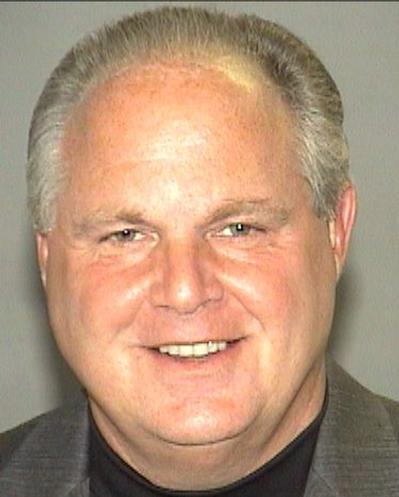
photos: Andre Royo as "Bubbles" from HBO's The Wire; Rush Limbaugh in his booking photo from the Palm Beach County Sheriff's Office in April 2006, from Wikimedia Commons; below, Papaver somniferum from Wikimedia Commons.


Sometimes I prescribe medicine; sometimes I prescribe drugs. Prescribing drugs is much more difficult.

The Drug Enforcement Agency gives every doctor a number, which allows tracking of prescriptions for "controlled substances"--in other words, medicine that can double up as what we more often call "drugs", i.e., the stuff that can get you high. Because I'm an intern, my DEA number only works when I'm working for my hospital; but it works nonetheless.

I am reminded every day of the distinction between medicines that can't get people high and medicines that can. I print up pages of prescriptions when discharging patients, and then go through them and--pulling out my DEA number from its concealed spot on my person--write out the number for the controlled substances.

Going through the list, I know that this one is an antibiotic that could send someone into anaphylactic shock, but it doesn't get my DEA number; this other one could destroy someone's kidneys, but it doesn't get my DEA number either. These medicines can be dangerous, but they're just medicine. They're controlled by professional self-regulation, and ordinary prescription and medical licensing laws.

But this prescription is for an "anti-anxiety medicine." It can roughly be thought of as vodka in a pill, and it does get my DEA number. And this one to treat pain--I only write for the exact number of pills required to get the patient to her next primary care appointment--is basically heroin in tablet form. These medicines are "controlled" in a different way. These are the medicines that the apparatus of the state won't just entrust to the good intentions and professional pride of doctors. If we write bad prescriptions for medicines, we can lose our medical licenses. But if we write too many prescriptions for "drugs"--for the controlled substances--we can be charged and imprisoned.

Though various drugs fit into the category of "controlled substances", it's the opiates--the variations on the chemical structure of the opium poppy--that cause interns the most trouble.

There are a lot of people who have pain serious enough to require intensive medical therapy, so we need to prescribe opiates fairly frequently. But there is also a whole class of people out there who are addicted to prescription drugs, the Rush Limbaughs of the world.

The two sets of people overlap considerably, so drawing a line between the "good" opiate-takers and the "bad" ones is as impossible as it is morally dubious. Even for someone who has no pain, the way to feed the addiction is to create the appearance of pain when coming into the room for the doctor's visit. And what is more subjective than pain? Who am I to say you don't have pain, when you say that you do?

This is where interns come in. Most of us start getting resentful early, because the structure of academic medical clinics means that people looking for prescription opiates are often looking for us. First of all, we look like easy marks; we maybe haven't seen every scam a dozen times yet. Also, we're the ones who are accepting new patients and have plenty of new patient appointment slots to fill. That's perfect for "doctor shopping", which is how some people try to get either the single doctor who prescribes the most opiates, or a bunch of simultaneous legitimate prescriptions for the same opiate medicine.

In the hospital, we're the doctors who actually write the orders; who see the patients most often; who get paged first when the patient hits the nurse call button again and again demanding to see the doctor. (If there's anyone in the hospital who gets more enraged and embittered by prescription drug addiction than interns, it's nurses, who spend exponentially more time than we do responding to requests for pain medicine.) So we have a lot of contact with people asking for opiate medicines.

The majority of the time they're asking for those medicines because whatever put them in the hospital hurts, a lot. Sometimes, though, we're not sure how much of what drives the request is pain and how much is craving. Or we're frankly pretty sure they're trying to feed cravings we don't want to satisfy. How we diagnose this formally is hard to say, exactly, but our gut feelings are unmistakable. In our workroom the other day, a colleague of mine said, "Sometimes you just want to give the diagnosis of FOS"--Full Of Shit.

I actually like caring for heroin addicts who are open about their use. I hope they kick the habit. But if they don't, I'm fine with talking about clean needles, getting tested for hepatitis, and avoiding skin infections. I'll look for endocarditis, send out HIV antibody tests, keep an eye out for toxic exposures from drug contaminants, and work the phone for liver clinic follow-up appointments. I'll even sit and listen to self-pity for a while, because maybe within some of the self-pity will come the realization of hitting bottom. And that's an opening for change.

Within all of this--much of which is difficult, and some of which sometimes involves some scams and silences and lies--at least the patient and I are both talking about heroin for what it is. It's an addictive substance that gives both pleasure and relief, and also carries risks and problems. It's a substance that someone is taking of their own volition, and isn't asking me to prescribe.

But much as I'd like to be the humanistic doctor who isn't bothered by what bothers other doctors, I have to say that prescription drug addicts do stretch me to my limits of forgiveness. They need me to prescribe them their addiction, in a cleaned-up denial-inducing form. And they inspire doubt in me even in my clearest moments, because I don't want to leave pain untreated. They know that my doubt is an opening, an emotional wedge.

I want to avoid being manipulated by people with hidden agendas. But I can't simply turn off my capacity for worrying about pain. How do I know at the beginning of a clinic visit that my empathy is not a human gesture, but merely the potential key to the DEA-regulated lockbox? And when someone says to me that I am not successfully treating their pain, how can I possibly know for sure when they're lying to me? (We do have some tricks up our sleeves to try to figure this out, but their reliability is somewhere from uncertain to quite low.)

At the end of an interaction with someone I think has crossed the line from complicated pain treatment into simple drug addiction, it is almost impossible to feel proud, or good at my job. And it is impossible not to feel a little abused.

I am not laboring under the illusion that by withholding or limiting prescriptions for opiates, I'm curing addiction. Far from it. I know that the pharmacy of the street contains every drug that the chain-store pharmacy carries, and more. If someone wants this stuff, they can get it. But I don't want to put a clean white coat over someone's addiction. I don't want my training to become someone else's denial. And if I'm not curing addiction by holding back on certain prescriptions, at least I'm not feeding it.

The problem with this is obvious. It's for all of these reasons, and more, that much of chronic pain does go undertreated in the United States. The prejudices that get layered onto this struggle also mean that an unemployed black man with a lot of back pain is probably less likely to get his pain treated than an employed white man with much less back pain. At the same time, it's simplistic to say that everyone who rates their pain as "10 out of 10" should get their opiate dose doubled as some kind of democratic principle.

I spent a lot of time in medical school thinking about what it meant to be a democratic doctor. In my ideal world, I am a doctor who acts as a consultant to people who are trying to manage their own health. I am not taking care of people; I am helping people take care of themselves.

But every democracy has its vulnerabilities, its way of being subverted by anti-democrats. Every democracy depends on a predominance of good intentions, and so too does the democratic clinic. Prescription opiates are where the democracy in my clinic is most tested, and where I most commonly fall short of my ideals. My eyes narrowed and my heart suspicious, my hands grip the lock firmly; I will let no one else open the box. My DEA number is mine, and mine alone.

When it comes to opiates, my democratic clinic is constantly at risk for becoming a failed state. Generally my clinic muddles along more or less as it is supposed to. The trains don't run on time, but they run. But with opiates, the slightest difficulty provokes an untenable choice between a chaotic ungoverned world of individual self-interest, and iron-fisted dictatorship.

The opium poppy: you say you want it for the receptors in your central nervous system, but is it really for the hunger in your heart?

Sunday, July 1, 2007

How to declare people dead.


First step:

Examine the person who may be dead.

Their pupils should be fixed and dilated--that is, showing no responsiveness to light and remaining fully open. They should not have a blink reflex when something brushes against the cornea of the eye. They should have no heart sounds for one minute of listening. They should have no breath sounds, and no other evidence of breathing. They should be unresponsive to deep painful stimuli (e.g., pushing down sharply and rubbing the sternum--the middle of the chest). Especially if they have been brought from somewhere else rather than dying in the hospital, they are "not dead until they are warm and dead", because hypothermia can mimic death by slowing down and dampening down all bodily functions.


Next:

Write a note in the chart. Like all other notes in the chart, sign it with your name followed by "MD".

Declare the person to be dead by filling out a form for the hospital admitting office. Call the office and let them know the patient is dead. If need be, they can tell you your medical license number which you are supposed to put on the form; you've only recently become a doctor, and you can be forgiven for forgetting it.

If the death meets any of the criteria listed on the admitting office's form, call the medical examiner's office, who has the right to require an autopsy. You were told in intern orientation to make sure to get the name of which doctor at the medical examiner's office refused the autopsy, or at least which staff person you talked to. You might forget this part. Thankfully you can call back and the ME's office can remind you.

You're required to ask the family if they want the autopsy. The pathology residents require a certain number to graduate from their program, and they've asked you to please try to get autopsies. In theory, autopsies improve healthcare by showing what we might have done wrong, and showing whether our ideas about a person's medical problems were correct. Still, your own inner compass demands that you be gentle about this, and fortunately the vulture-like quality that might surround the request has been taken out of your hands, so that if the autopsy is obviously a dumb idea, you might simply say, "We are required to tell the next-of-kin for everyone who dies that you have a right to an autopsy, at no cost to you."

If the family wants the autopsy there is a consent form. Walk them through it. Once they've consented, sign your name, with "MD" after it.

Based on your earlier phone call, the hospital admitting office fills out the death certificate and pages you when it's time to come down to sign it. Bring the rest of the paperwork also. If you get caught up in something and lose track of time, they'll page you again.

Fortunately, they're there all night. At 4:30 am, as the morning lab results are just starting to trickle in on your MICU patients; as the x-ray tech wheeling around the portable x-ray machine is calling out "X-ray!" as he presses the button to take the morning chest x-ray from outside your patient's room; as he goes and pulls the x-ray plate out from under your sedated and ventilated patient's back, and moves to the next room to repeat the process; and before the sun begins to illuminate the glassed-in walkway between one part of the hospital and another, you can take the elevator down to the little no-windows office with cubicles and dull flourescent lights.

The admitting office workers are sitting in one of the back cubicles with stacks of paper around them. At that time of night one of the admitting office staff members might be doing a crossword puzzle when you arrive. But they know right where the death certificate is; your arrival is a key item on their to-do list, because it has to be done before they can release the body to the funeral home. Don't fill out any of the information on the form--they do that, and anyway, you'll just mess it up. If you start filling out the address and time and date information, they'll have to start a new death certificate. So just sign it with your name, followed by "MD".

Then, when you have a moment:

Recognize that the structure of modern society is to make life and death themselves medical and then legal matters, and to subject the most basic elements of our existence to professional authority. The birth certificate and the death certificate are signed by doctors, and then registered by the civil authorities. The "MD" proves the certificate's legitimacy as a reflection of an actual biological fact.

The birth certificate is not simply an extra voter created by a political machine, but an actual person with a beating heart. The death certificate is not a way for someone to escape their creditors or start anew in another city or make an insurance claim; it reflects one body's stopped heart. The doctor declares a biological process to have definitely begun, or to have irrevocably finished; the declaration of biology is necessary for the legal and political legitimacy of the state. A modern state must be able to keep track of who is born and who dies. This is an important distinction between wealthy nations and impoverished failing ones.

A person who was born without a birth certificate is a person without a legal identity. And a person who is dead but does not have a death certificate is a body in limbo, kept in a hospital morgue until the form is signed with "MD". Without this the body can not be buried; our funeral rituals of helping the person to pass from this life into whatever follows can not take place until a doctor signs the form that verifies that the person has indeed left this life.

Taking the elevator, back up to the ICU, you might think how strange it is to hold a doctor's power. The fact that declaring death requires your presence, your examination of the body, your ritualized declaration, your signature on the forms, are all part of how we wrap death in our own forms of modern technical expert solemnity. You understand why it's a good idea to be sure that someone is dead before you declare them dead, and why a doctor is called on to make sure. Still, to find yourself called to verify the death of a human body that everyone knows is dead is a strange task. You understood that the power of prescription, and the knowledge you hold, and the social role you play, all give you power in the hospital and in the world. But you might now realize for the first time that you are also an official of biological fact, called on by your state to be the neutral observer, to translate the natural world into civil forms and statistics.


As I was taking pre-med classes, one of my dearest friends was going to get married to his then-girlfriend, who had also become a dear friend. They asked me to officiate at their wedding. Of course I was deeply honored, and went immediately to the internet to get myself ordained as a minister--because for the state, sealing the bonds of love requires other distinct forms of authority.

But I also asked them, "Why did you think of me?" Among the things they said was, "Well, you're, like, a doctor." And I said, "No I'm not!" (I still hadn't got through organic chemistry. The outcome was still deeply uncertain.) And they said, "Well, almost." And I said, "Anyway, what does that have to do with anything?"

They tried to explain, and I think what they meant was that by virtue of simply aiming to become a doctor, I had acquired a kind of gravity, a seriousness that was different than their other friends. Or perhaps even more likely, by announcing my intent of becoming a doctor, I had begun to publicly acknowledge the part of myself that wanted to play that kind of role within my community and my society.

That was a long time ago. The daughter they had well after their wedding now has opinions about tacos, burritos, and their relative merits. After all that time, I finally have actually become a doctor, and I have taken on that ceremonial gravity in other ways.

"...I examined him and found his pupils to be fixed and dilated; he had no corneal reflex; he had no heart sounds for one minute; he had no breath sounds, no air movement apparent at his mouth, and no chest excursions; he did not respond to sternal rub or firm pinching. Time of death: 4:45 pm.

Joe Wright, MD. Pager #81987."


*

Friday, June 8, 2007

"Found Down": HMS/HSDM Commencement speech


"Each of these stories become more subtle and often more difficult versions of the same question: when we see suffering, do we look away, or go towards it?"
Photo: rescue staging area after Hurricane Katrina.


...More to write about graduation soon (it was yesterday, June 7). First, here's the speech I gave at the commencement ceremony of the Harvard Medical School and Harvard School of Dental Medicine.

I’m going to start with a story. It starts when a man falls down on the sidewalk. He might be drunk, or he might not. He might be unconscious because he fell, or he might have fallen because he became unconscious. Hopefully sooner than later, someone realizes that he has fallen down.

The call to 911 comes from the first person to realize this and to care. Next comes the ambulance crew, and even the cars that get out of the way when the siren goes on. As the story continues, there are triage nurses and doctors, x-ray technicians and respiratory therapists. Maybe the man found down has a strange rash, goes to cardiac cath, or needs a CT scan; maybe he has blood in one of his eyes, or a shattered bone. There will be more to the story, but this is its essence: a person falls, and in small and large ways, a huge network of people begins to pick him up again.

Today, we step into a new role within this network. But we have already been part of this group of people: those who go to the man found down, and try to help him up.

We can’t be too romantic about this story. Almost as soon as the man’s story begins, promises and demands of money start moving through the wires underneath the sidewalk onto which he fell, perhaps even before he has been picked up off of it. But today is not about that part of the story. Today is about what we do because of who we are, and not just who we are paid to be.

Each of us will encounter different versions of this story in our work. A child is frightened of her father. A veteran is overwhelmed with anxiety inside an MRI machine. And a family is just down the hall, waiting to hear the news of an operation, and someone must tell them that the operation went badly. Hundreds and maybe thousands of stories like this are unfolding at this moment, right outside this tent, in the hospital and clinic buildings all around us. And each of these stories become more subtle and often more difficult versions of the same question: when we see suffering, do we look away, or go towards it?

We’ll have to answer this question day after day. I once heard an ICU nurse in an urban hospital say, “All of our patients have the same chief complaint: found down.” July’s novelty and excitement will be followed by February’s bleak repetition. Just about any hospital has many people found down for reasons that are easy to diagnose, but can seem impossible to solve.

To respond to this sometimes relentless suffering, we’ll have to push back against huge impersonal systems, even when those systems beat us back again and again. And we’ll sometimes have to forgive terrible human frailty even as that frailty pushes us to our limits of forgiveness. And so nearly all of us will succumb to frustration and even cynicism from time to time. This is nothing to be ashamed of, as long as we don’t wallow in it, and as long as we don’t mistake bitterness for truth. We are graduating from medical school, not saint school.

Nonetheless, we can hope to meet the basic moral standard of looking towards suffering instead of away from it. In clinics and hospitals, in our personal lives, and in research and policy, we’ll constantly face this moral challenge. Even the best of us will often fail it. But that should not stop us from continuing to try.

When we do reach this standard, we have one final important task: to avoid congratulating ourselves too vigorously for our own forms of benevolence. Sentimentality about our special virtue as doctors can be as dangerous as cynicism, because it causes us to forget that we are joining something much larger.

Our medical training means that we will bring our expertise, our intellectual curiosity, our readiness to work hard. We can be justifiably proud of ourselves for what we have already accomplished, and we know for sure that the people in the audience today are already proud of us.

But today we also join others—paramedics, nurses, social workers—and dentists—and many others who spend their lives responding to suffering. In the few blocks around us, there are thousands of people like this. And even more importantly, there are many other people who are not healthcare workers, but just caring people who also see suffering and find ways to respond. I came to medical school because of people like this—people who responded to the crisis of the AIDS epidemic in San Francisco, people who taught me about courage in the face of disaster.

In small or large ways, most of us have probably come to sit here today partly because of people like this, people who taught us how to behave in the face of suffering: teachers, friends, family. They have usually taught us by example, often because they cared for us when we were suffering. Some of those people are here today. They have seen us fall; in one way or another, they have found us down and helped us up, sometimes many times. As we graduate, we honor their acts of faith in us. Today we mark a moment in which their gifts to us have come to fruition. Now, we will join them in helping those who are found down.

Thursday, May 17, 2007

Testimony: Alberto Gonzales should be kicked out... of the ICU

Apropos of I'm not sure what, except to illustrate the general theme that Alberto Gonzales is an ethics-less toady, Senator Chuck Shumer (D-NY) drew the following story out of former deputy Attorney General James Comey, told below in an excerpt of the transcript from Wednesday May 16 2007.

Let the other blogs chatter about how this hurts or doesn't hurt Gonzales' chance at keeping his job. Here are the questions from the Hemodynamics.blogspot point of view:

Where was hospital security?

And where were the doctors? and John Ashcroft's nurse?

And if you were a resident that month in the ICU, and John Ashcroft were your guy, and you'd been having family meetings with Mrs. Ashcroft, and you knew that Mr. Ashcroft was not the acting attorney general at that moment, what would you do?

Finally, if the president calls the hospital and tells the nurse that Alberto Gonzales is coming and needs to talk to John Ashcroft, but Mrs. Ashcroft is forbidding all calls and does not want Alberto Gonzales to come, what is the legal right and what is the legal obligation of medical staff to stop Gonzales and Card?

Read, and discuss amongst yourselves.

_______________________________

SCHUMER: Before we get to the other issues, I want to go back to an incident from the time that Mr. Gonzales served as White House counsel. There have been media reports describing a dramatic visit by Alberto Gonzales and Chief of Staff Andrew Card to the hospital bed of John Ashcroft in March 2004, after you, as acting attorney general, decided not to authorize a classified program. First, can you confirm that a night-time hospital visit took place?

COMEY: Yes, I can.

SCHUMER: OK. Can you remember the date and the day?

COMEY: Yes, sir, very well. It was Wednesday, March the 10th, 2004.

SCHUMER: And how do you remember that date so well?

COMEY: This was a very memorable period in my life; probably the most difficult time in my entire professional life. And that night was probably the most difficult night of my professional life. So it's not something I'd forget.

SCHUMER: Were you present when Alberto Gonzales visited Attorney General Ashcroft's bedside?

COMEY: Yes.

SCHUMER: And am I correct that the conduct of Mr. Gonzales and Mr. Card on that evening troubled you greatly?

COMEY: Yes.

SCHUMER: OK. Let me go back and take it from the top. You rushed to the hospital that evening. Why?

COMEY: I'm only hesitating because I need to explain why.

SCHUMER: Please. I'll give you all the time you need, sir.

COMEY: I've actually thought quite a bit over the last three years about how I would answer that question if it was ever asked, because I assumed that at some point I would have to testify about it. The one thing I'm not going to do and be very, very careful about is, because this involved a classified program, I'm not going to get anywhere near classified information. I also am very leery of, and will not, reveal the content of advice I gave as a lawyer, the deliberations I engaged in. I think it's very important for the Department of Justice that someone who held my position not do that.

SCHUMER: In terms of privilege.

COMEY: Yes, sir.

SCHUMER: Understood.

COMEY: Subject to that, I -- and I'm uncomfortable talking about this...

SCHUMER: I understand.

COMEY: ... but I'll answer the question. I -- to understand what happened that night, I, kind of, got to back up about a week.

SCHUMER: Please.

COMEY: In the early part of 2004, the Department of Justice was engaged -- the Office of Legal Counsel, under my supervision -- in a reevaluation both factually and legally of a particular classified program. And it was a program that was renewed on a regular basis, and required signature by the attorney general certifying to its legality. [An NSA surveillance program.] And the -- and I remember the precise date. The program had to be renewed by March the 11th, which was a Thursday, of 2004. And we were engaged in a very intensive reevaluation of the matter. And a week before that March 11th deadline, I had a private meeting with the attorney general for an hour, just the two of us, and I laid out for him what we had learned and what our analysis was in this particular matter. And at the end of that hour-long private session, he and I agreed on a course of action. And within hours he was stricken and taken very, very ill...

SCHUMER: (inaudible) You thought something was wrong with how it was being operated or administered or overseen.

COMEY: We had -- yes. We had concerns as to our ability to certify its legality, which was our obligation for the program to be renewed. The attorney general was taken that very afternoon to George Washington Hospital, where he went into intensive care and remained there for over a week. And I became the acting attorney general. And over the next week -- particularly the following week, on Tuesday -- we communicated to the relevant parties at the White House and elsewhere our decision that as acting attorney general I would not certify the program as to its legality and explained our reasoning in detail, which I will not go into here. Nor am I confirming it's any particular program. That was Tuesday that we communicated that.

COMEY: The next day was Wednesday, March the 10th, the night of the hospital incident. And I was headed home at about 8 o'clock that evening, my security detail was driving me. And I remember exactly where I was -- on Constitution Avenue -- and got a call from Attorney General Ashcroft's chief of staff telling me that he had gotten a call...

SCHUMER: What's his name?

COMEY: David Ayers. That he had gotten a call from Mrs. Ashcroft from the hospital. She had banned all visitors and all phone calls. So I hadn't seen him or talked to him because he was very ill. And Mrs. Ashcroft reported that a call had come through, and that as a result of that call Mr. Card and Mr. Gonzales were on their way to the hospital to see Mr. Ashcroft.

SCHUMER: Do you have any idea who that call was from?

COMEY: I have some recollection that the call was from the president himself, but I don't know that for sure. It came from the White House. And it came through and the call was taken in the hospital. So I hung up the phone, immediately called my chief of staff, told him to get as many of my people as possible to the hospital immediately. I hung up, called Director Mueller and -- with whom I'd been discussing this particular matter and had been a great help to me over that week -- and told him what was happening. He said, "I'll meet you at the hospital right now." Told my security detail that I needed to get to George Washington Hospital immediately. They turned on the emergency equipment and drove very quickly to the hospital. I got out of the car and ran up -- literally ran up the stairs with my security detail.

SCHUMER: What was your concern? You were in obviously a huge hurry.

COMEY: I was concerned that, given how ill I knew the attorney general was, that there might be an effort to ask him to overrule me when he was in no condition to do that.

SCHUMER: Right, OK.

COMEY: I was worried about him, frankly. And so I raced to the hospital room, entered. And Mrs. Ashcroft was standing by the hospital bed, Mr. Ashcroft was lying down in the bed, the room was darkened. And I immediately began speaking to him, trying to orient him as to time and place, and try to see if he could focus on what was happening, and it wasn't clear to me that he could. He seemed pretty bad off.

SCHUMER: At that point it was you, Mrs. Ashcroft and the attorney general and maybe medical personnel in the room. No other Justice Department or government officials.

COMEY: Just the three of us at that point. I tried to see if I could help him get oriented. As I said, it wasn't clear that I had succeeded. I went out in the hallway. Spoke to Director Mueller by phone. He was on his way. I handed the phone to the head of the security detail and Director Mueller instructed the FBI agents present not to allow me to be removed from the room under any circumstances. And I went back in the room. I was shortly joined by the head of the Office of Legal Counsel assistant attorney general, Jack Goldsmith, and a senior staffer of mine who had worked on this matter, an associate deputy attorney general. So the three of us Justice Department people went in the room. I sat down...

SCHUMER: Just give us the names of the two other people.

COMEY: Jack Goldsmith, who was the assistant attorney general, and Patrick Philbin, who was associate deputy attorney general. I sat down in an armchair by the head of the attorney general's bed. The two other Justice Department people stood behind me. And Mrs. Ashcroft stood by the bed holding her husband's arm. And we waited. And it was only a matter of minutes that the door opened and in walked Mr. Gonzales, carrying an envelope, and Mr. Card. They came over and stood by the bed. They greeted the attorney general very briefly. And then Mr. Gonzales began to discuss why they were there -- to seek his approval for a matter, and explained what the matter was -- which I will not do. And Attorney General Ashcroft then stunned me. He lifted his head off the pillow and in very strong terms expressed his view of the matter, rich in both substance and fact, which stunned me -- drawn from the hour-long meeting we'd had a week earlier -- and in very strong terms expressed himself, and then laid his head back down on the pillow, seemed spent, and said to them, "But that doesn't matter, because I'm not the attorney general."

SCHUMER: But he expressed his reluctance or he would not sign the statement that they -- give the authorization that they had asked, is that right?

COMEY: Yes.

And as he laid back down, he said, "But that doesn't matter, because I'm not the attorney general. There is the attorney general," and he pointed to me, and I was just to his left. The two men did not acknowledge me. They turned and walked from the room. And within just a few moments after that, Director Mueller arrived. I told him quickly what had happened. He had a brief -- a memorable brief exchange with the attorney general and then we went outside in the hallway.

SCHUMER: OK. Now, just a few more points on that meeting. First, am I correct that it was Mr. Gonzales who did just about all of the talking, Mr. Card said very little?

COMEY: Yes, sir.

SCHUMER: OK. And they made it clear that there was in this envelope an authorization that they hoped Mr. Ashcroft -- Attorney General Ashcroft would sign.

COMEY: In substance. I don't know exactly the words, but it was clear that's what the envelope was.

SCHUMER: And the attorney general was -- what was his condition? I mean, he had -- as I understand it, he had pancreatitis. He was very, very ill; in critical condition, in fact.

COMEY: He was very ill. I don't know how the doctors graded his condition. This was -- this would have been his sixth day in intensive care. And as I said, I was shocked when I walked in the room and very concerned as I tried to get him to focus.

SCHUMER: Right. OK. Let's continue. What happened after Mr. Gonzales and Card left? Did you have any contact with them in the next little while?

COMEY: While I was talking to Director Mueller, an agent came up to us and said that I had an urgent call in the command center, which was right next door. They had Attorney General Ashcroft in a hallway by himself and there was an empty room next door that was the command center. And he said it was Mr. Card wanting to speak to me.

COMEY: I took the call. And Mr. Card was very upset and demanded that I come to the White House immediately. I responded that, after the conduct I had just witnessed, I would not meet with him without a witness present. He replied, "What conduct? We were just there to wish him well." And I said again, "After what I just witnessed, I will not meet with you without a witness. And I intend that witness to be the solicitor general of the United States."

SCHUMER: That would be Mr. Olson.

COMEY: Yes, sir. Ted Olson. "Until I can connect with Mr. Olson, I'm not going to meet with you." He asked whether I was refusing to come to the White House. I said, "No, sir, I'm not. I'll be there. I need to go back to the Department of Justice first." And then I reached out through the command center for Mr. Olson, who was at a dinner party. And Mr. Olson and the other leadership of the Department of Justice immediately went to the department, where we sat down together in a conference room and talked about what we were going to do. And about 11 o'clock that night -- this evening had started at about 8 o'clock, when I was on my way home. At 11 o'clock that night, Mr. Olson and I went to the White House together.

SCHUMER: Just before you get there, you told Mr. Card that you were very troubled by the conduct from the White House room (ph), and that's why you wanted Mr. Olson to accompany you. Without giving any of the details -- which we totally respect in terms of substance -- just tell me why. What did you tell him that so upset you? Or if you didn't tell him just tell us.

COMEY: I was very upset. I was angry. I thought I just witnessed an effort to take advantage of a very sick man, who did not have the powers of the attorney general because they had been transferred to me. I thought he had conducted himself, and I said to the attorney general, in a way that demonstrated a strength I had never seen before. But still I thought it was improper. And it was for that reason that I thought there ought to be somebody with me if I'm going to meet with Mr. Card.

SCHUMER: Can you tell us a little bit about the discussion at the Justice Department when all of you convened? I guess it was that night.

COMEY: I don't think it's appropriate for me to go into the substance of it. We discussed what to do. I recall the associate attorney general being there, the solicitor general, the assistant attorney general in charge of the Office of Legal Counsel, senior staff from the attorney general, senior staff of mine. And we just -- I don't want to reveal the substances of those...

SCHUMER: I don't want you to reveal the substance. They all thought what you did -- what you were doing was the right thing, I presume.

COMEY: I presume. I didn't ask people. But I felt like we were a team, we all understood what was going on, and we were trying to do what was best for the country and the Department of Justice. But it was a very hard night.

SCHUMER: OK. And then did you meet with Mr. Card?

COMEY: I did. I went with Mr. Olson driving -- my security detail drove us to the White House. We went into the West Wing. Mr. Card would not allow Mr. Olson to enter his office. He asked Mr. Olson to please sit outside in his sitting area. I relented and went in to meet with Mr. Card alone. We met, had a discussion, which was much more -- much calmer than the discussion on the telephone. After -- I don't remember how long, 10 or 15 minutes -- Mr. Gonzales arrived and brought Mr. Olson into the room. And the four of us had a discussion.


...

SCHUMER: Let me ask you this: So in sum, it was your belief that Mr. Gonzales and Mr. Card were trying to take advantage of an ill and maybe disoriented man to try and get him to do something that many, at least in the Justice Department, thought was against the law? Was that a correct summation?

COMEY: I was concerned that this was an effort to do an end-run around the acting attorney general and to get a very sick man to approve something that the Department of Justice had already concluded -- the department as a whole -- was unable to be certified as to its legality. And that was my concern.

SCHUMER: OK. And you also believe -- and you had later conversations with Attorney General Ashcroft when he recuperated, and he backed your view?

COMEY: Yes, sir.

SCHUMER: Did you ever ask him explicitly if he would have resigned had it come to that?

COMEY: No.

SCHUMER: OK. But he backed your view over that what was being done, or what was attempting to being done, going around what you had recommended, was wrong, against the law?

COMEY: Yes. And I already knew his view from the hour we had spent together going over it in great detail a week before the hospital incident.


...

SCHUMER: OK. Well, let me just say this, and then I'll call on Senator Specter who can have as much time as he thinks is appropriate. The story is a shocking one. It makes you almost gulp. And I just want to say, speaking for myself, I appreciate your integrity and fidelity to rule of law. And I also appreciate Attorney General Ashcroft's fidelity to the rule of law as well, as well as the men and women who worked with you and stuck by you in this. When we have a situation where the laws of this country -- the rules of law of this country are not respected because somebody thinks there's a higher goal, we run askew of the very purpose of what democracy and rule of law are about. And this -- again, this story makes me gulp.

Thursday, May 10, 2007

A glass ceiling in academic medicine?

Rosie the Riveters of academic medicine: the first women admitted to Harvard Medical School, in 1944. Women limited to 5-10% of the class for decades thereafter. From the Countway Library, HMS.

Medical academic extraordinaire Orah Platt putting a white coat on med student Tara Benjamin in 2001. Women are becoming a majority of entering medical students, but it's not yet clear how quickly the highest ranks of academic medicine will catch up with the lowest. From HMS's Focus newsletter.

Boston.com's "White Coat Notes" has a brief article about recent adding-up-the-basic-numbers findings, showing a lack of women in leadership positions in medical schools in Boston. A man who has been one of those looking into the problem says, "People might reflexively think that it's discrimination or a glass ceiling, and there may well be an element of that."

Right. There may well be.

Then he says, "It may be in some cases that women choose not even to apply for these positions or don't aspire to them because they are not appealing to women at that stage in life."

So, let's take the second proposition as true, for the sake of argument. Let's say that the medical schools have designed a set of powerful positions that they realize may not be appealing to women. That IS discrimination and a glass ceiling. It's discrimination against women the same way a set of stairs without a ramp is discrimination against wheelchair users. It's a way of saying we don't want you here, we don't want to find a way of getting you to come here, and in fact, we can't even imagine you being here--without actually having to say it to anyone's face.

For my part, I don't think there's really much functional difference between that kind of discrimination and the kind of discrimination that happens when some department chair just plain hates women in some kind of more personal and visceral way.

Thursday, April 26, 2007

White coats at protests? Maybe not.


Photo: Treatment Action Campaign and Student Global AIDS Campaign protesters at last year's International AIDS Conference, part of a coalition opposing Abbott Laboratories' approach to access to AIDS drugs.

I'm going to be taking part in a global day of action to condemn Abbott Laboratories for their attempt to block compulsory licensing of one of their AIDS drugs, known in the United States as Kaletra. This is an important medicine for people with AIDS, and Thailand wants to produce generic versions of it for impoverished people living with HIV and AIDS, who could not otherwise afford it.

The Bangkok Post has an editorial which lays out the legal issue from a Thai point of view. This one is pretty stark: Abbott is deliberately trying to roll back agreements about international trade rules, because the company doesn't like them.

There's more to say about Abbott, but I'll save that for now. In the meantime, I am now wrestling with a less important problem familiar to all 4 or 5 regular Hemodynamics readers, and a problem that afflicts all casual activists who only attend protests now and then: what to wear.

On its face, this is a silly thing to spend much time worrying over. But protests in the television age, and even more so in the digital image age, require careful attention to symbolism. And it turns out that as a future doctor I've got a lot of symbolism to think carefully about.

Medical students have often worn white coats to protests, as have doctors. This is a way of bringing professional credibility as a form of solidarity. But I've never done this, and though I thought about it earlier this evening, I don't think I will this time either.

This particular issue is fairly clear: when people don't get medicines to treat HIV, they often die of AIDS. Incredibly enough, and despite everything bad you can say about an organization like the World Trade Organization, nations around the world have agreed on ways that countries can make sure people get medicines. If you want to reap the benefits of global capitalism you should at least play by its very limited rules.

This message does not require a white coat for its credibility.

To say that you should listen to my views about intellectual property policy because I'm going to be a doctor would be absurd. After all, so many other doctors have been so egregiously wrong about this kind of issue that I would hate to encourage people to listen to doctors about patent policy. As far as the embroidery on my white coat, it says "Harvard Medical School" and it doesn't say my name. And I don't believe there's anything about my Harvard Medical School education that makes me any more equipped than any other reasonably well-informed person to express my opinion about Abbott's approach to intellectual property. All I know now that I didn't know before is the details of how people die from lack of medicines, and what happens to their various organ systems as they get more ill.

You could argue that wearing the white coat is a kind of threat to Abbott, along the lines of the anti-Abbott coalition's suggestions for doctors that they prescribe equivalent generics instead of Abbott products, refuse to talk to Abbott drug reps, and refuse to accept gifts from Abbott reps. But for me, this would not be sending the right message: whether or not Abbott cares about Thai people living with HIV and AIDS, I will prescribe generics when I can, I won't talk to drug reps, and I won't accept gifts. If I was the kind of doctor who was actually thoughtlessly prescribing unneeded overpriced brand name drugs and getting chummy with drug reps, I probably wouldn't be going to a protest at Abbott headquarters anyway.

Another entirely opposite direction would be the Treatment Action Campaign's "HIV Positive" t-shirt. But I've always felt that this shirt has a different meaning in the United States than it does in South Africa, and it definitely means something different when worn by groups of people which do not include many people living with HIV. In the US, the meaning of this shirt can be helpful but it can also be presumptuous; tomorrow, at least, I'm not taking this approach.

The only visual signal I might feel comfortable displaying is letting people know that I am a health worker--someone who makes it their life's work to care about the well-being of people who are sick. I'm uncertain about the political value of that gesture, but I think that at least it is a visual reminder that the protest is an issue of health, and survival, and not just an issue of market rules.

In other words, I've reduced my protest wardrobe to two alternatives: I can either dress as just me, a concerned citizen--or I can dress as a health worker. Considering the health worker option, I realized once again that if I take this route, I would not wear the clothes of the profession (the white coat), but of the hospital and all who work on its clinical floors: I would wear scrubs.

Monday, April 16, 2007

The doctors of The Sopranos

The Sopranos is a show about the frailty of mafiosi; because of this, it's a show about the power of medicine.

Tony Soprano's sessions with his psychiatrist frame the show by showing Tony's psychological frailty; in fact, the whole show started with Tony going to the psychiatrist because of panic attacks.

After a long struggle, Tony has basically given in to the psychotherapeutic approach to his own narrative. This week, Dr. Melfi asked, "Are you sure you aren't reading too much into this?" Tony replies, "I been comin' here for years. I know too much about the subconscious now."

Another running theme of the show has been the top bosses getting knocked down not by their enemies, but by their own physical frailty.

This week, New York boss Johnny Sack got bad news about his lung cancer, first from a specialist he flew to see, and then from a fellow inmate working as a hospital orderly. The orderly had been an oncologist, specializing in liver cancer, before shooting his wife and two others. "You saw Cohen?" the oncologist-orderly asks Sacks, flipping through Sack's chart when the prison doctor isn't looking. Sacks asks, you know him?

"I saw him talk once at an ASCO meeting." (That's American Society of Clinical Oncology to you, bub.)

The oncologist-turned-orderly is film director Sydney Pollack, who looks and acts exactly right for the role. I've seen a dozen internists who look and talk just like this guy. (Tony's psychiatrist's psychiatrist is played by film director Peter Bogdanovich, who does look like a psychiatrist.)

First Pollack's oncologist character tells Johnny Sack he should live longer than Dr Cohen has told him. Then, as the disease progresses, he says, "The aggressiveness. It surprises me. I've gotta concur with Cohen."

Johnny Sacks has brain metastases ("The headaches", he says, when Cohen tells him, recognizing the correlation of disease progression and symptoms); Phil Leotardo is still melancholy after his 5-vessel CABG; Tony had his long stay in the ICU.

And Paulie is super-proud of himself for "beating" prostate cancer. He thinks he's a badass for that; when Paulie proudly contrasts his survival to the death of Johnny Sacks, he thinks he's comparing like and like. Actually, comparing localized prostate cancer to metastatic lung cancer is like comparing Paulie Walnuts to Johnny Sack, seriousness-wise. (Though metastatic prostate cancer can be terribly painful and frighteningly lethal, localized prostate cancer is extremely common among older men, and more people die with it than of it.)

The feds make their mark from time to time, but they're mainly annoyances. On The Sopranos, the only people who are always more powerful than the mob–even in prison, there's an oncologist who tells Johnny Sack he's going to die–are doctors.

It makes sense. Doctors are probably the only people who can illuminate a mobster's deep psychological and physical frailty, and still have the mobster thank them for it. That's why a show that is about the frailty of mobsters needs doctors.

Postscript: I was struck by how Leroy Sievers, who's blogging about his cancer on NPR.org, saw this episode differently. He was struck by the episode (and a little bothered by it, despite his wishes not to be) because Johnny Sack's course was so realistic. I was impressed by that too, but I didn't think about it much. It just made sense. If they're going to show the underlings being shot to death, why not show the bosses die of cancer with the same realism? But the fact that the cancer part didn't bother me (while the gunshots still make me wince) probably just confirms that I've spent a lot of time in the hospital, and on oncology floors specifically. Johnny Sack's death seemed ordinary to me. I'm sure that's different from how I would have seen this three years ago.

Saturday, April 14, 2007

Patient-doctor relationships during possible viral outbreak associated with toxic-waste-created-river-monster

I've kept a clip from The Host (Gwoemul) at the top of this blog (and I'll put it back into this post once this post is archived), because it's the best three-way battle of US-military-toxic-waste-created-river-monster vs. Centers for Disease Control vs. ramen-stand-owning-family-on-the-run that you'll see this year.

Or any year.

It's definitely not going to be even 50% as good on DVD, so go see it before it leaves the theater.

Buy popcorn.

And since the clip kept playing whether you wanted it to or not, I've removed it for now... you can get clips and previews at the movie's web site.

Tuesday, April 10, 2007

What's a doctor? (When in doubt, return to Oliver Sacks.)


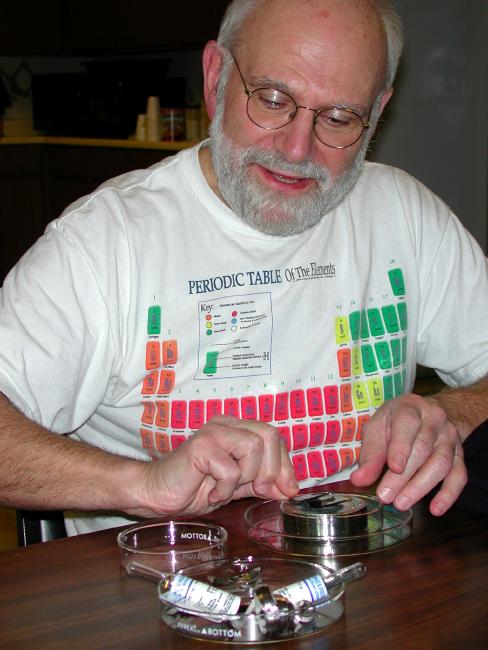
[Picture from the website of Theodore Gray, who had what looks like a great day with Oliver Sacks.]

Is a doctor a consultant, giving her patients advice about how to select medical interventions (or avoid them) based on her understanding of her patient's values? Or is she something else--something more complicated, and emotional?

I was thinking about this after part of a small discussion/debate with one of my favorite teachers, someone who makes it a big part of her job to be extremely thoughtful about the doctor-patient relationship. In my thesis (which I defended yesterday), I cited Robert Rimer, a person with AIDS who wrote a book called "HIV+: Working The System" in 1993, who describes a doctor as being a consultant to the patient; she was responding to this theme with both agreement and skepticism.

But I was thinking about the conversation later in part because I misunderstood part of one of the questions my teacher was asking in our conversation. In retrospect, I think she was arguing that part of what a doctor is supposed to do is care, not just in the sense of providing medical care, but also building an emotional connection and a sense of emotional investment that both the doctor and the patient feel. I agree that this is an important–and extremely rewarding–part of the doctor's job. But when she said, "You describe this as a very intellectual kind of relationship" I agreed with that too.

I'd like to think that part of how I care for people is to be their expert, to be the dork that works for them, their personal geek. And I'm skeptical about the people who dwell too much on the theme of "humanism in medicine", which I think more often than not is just the latest medical buzz phrase for common decency–and yet another chance to pat ourselves on the back. I think doctors are supposed to be decent human beings who treat their patients with respect and concern, but I don't think that's any special calling or anything unique to medicine. I think it's a basic rule of human interaction in an egalitarian society.

Of course, when we are talking with our doctors about really serious parts of our lives, we need to believe that they care about the content of our conversation. And I admit that there is a unique kind of vulnerability that we have with our doctors. Often we are talking with doctors about our own physical frailty, our mortality, and the private intimacies of bodily sensations, bad smells, and objectionable substances. These are things we go to great lengths to hide under all other circumstances.

And so there is also a special emotional obligation on doctors to honor and attend to that vulnerability. And it's true that this is where the "consultant" metaphor begins to break down a little. This vulnerability, not to mention social class, social convention, and even the architecture of the exam room, all conspire to create a real power difference between patient and doctor that is not quite like a classic consulting relationship.

This is not some corporate CEO calling in some Harvard kid who works for McKinsey, to ask how to improve web site traffic.

The emotional currents that run between doctor and patient make a kind of live wire. Those currents can be exploited on both ends. Doctors get a lot of training (especially informal training, which often reinforces some bad values) on how to prevent getting used and manipulated by people who are walking into the clinic or the hospital with a set of agendas that doctors don't want to serve. Psychiatrists spend a lot of time talking to each other about monitoring their own emotions during sessions as a way of using their own emotional state as a kind of sensor to help them understand what the patient is going through. For instance, if psychiatrists start to feel agitated and confused during a visit, if they can stand back from that sensation for a moment they can recognize what it is about the patient (usually agitation and confusion) that is triggering this feeling.

But most patients walk in without that kind of tool. When the electricity of powerful emotions begins in the exam room, they're caught without gloves on. This sometimes clouds people's thinking and makes it difficult to contrast their own agendas with the doctor's agenda. When this happens, it's not until later, when they've left the exam room and gone home, and the electrical current fades and then shuts off, that they realize that they wanted something different from this visit than the doctor did. In other words, I think sometimes people can sink into the emotional connection they get from the clinic–which can be powerful–and lose the ability to clearly and precisely advocate for themselves.

So when I talk about being a consultant, it is not with the aim of eliminating emotion from the exam room, nor with the aim of failing to care for the patient. But that care has to give some breathing room; it can't be enveloping, or it will suffocate the patient's own power and initiative, or constrain its birth and growth.

Anatole Broyard wrote:
"My ideal doctor would be my Virgil, leading me through my purgatory or inferno, pointing out the sights as we go. He would resemble Oliver Sacks, the neurologist who wrote Awakenings and The Man Who Mistook His Wife for a Hat. I can imagine Dr. Sacks entering my condition, looking around at it from the inside like a benevolent landlord with a tenant, trying to see how he could make the premises more livable for me. He would see the genius of my illness. He would mingle his daemon with mine: we would wrestle with my fate together."

This is a complicated, even jumbled, set of metaphors. But the ideas are useful, and not just because they're about Oliver Sacks. Broyard describes the doctor first as a guide; and then, as a kind of owner of one's own condition, a guide who can not only show you around but help improve the premises.

In this way of describing the doctor, the doctor is important because of his expertise; but also because he employs that expertise with kindness. It's important here to note that Oliver Sacks as a man is actually frankly odd, or so it seems from his lovely book Oaxaca Journal. In the book he takes a tour of Oaxaca with a group of fern aficionados; he is also a quite dedicated fern aficionado. He often sets himself apart from the group, most of whom are paired off in couples. He is clearly the nerd, and the striking thing about this, of course, is that he is the nerd among a group of people who have devoted a considerable amount of their free time to thinking about ferns.

Nonetheless, after a while, he begins to become engaged in some mild running jokes with a couple of his fellow travelers, and to build relationships in a way that seems totally ordinary to me as a reader. (He seems to be thrilled by one of his dorky running jokes, even perhaps by the very idea of a running joke. I have this kind of running joke with various people in my world all the time, as do most of you, dear readers.) And yet by the end of his trip he feels completely happy in a way that he rarely has before.

He writes:

"I myself may be the only single person here, but I have been single, a singleton, all my life. Yet here this does not matter in the least, either. I have a strong feeling of being one of the group, of belonging, of communal affection–a feeling that is extremely rare in my life, and may be in part a cause of a strange "symptom" that I have had, an odd feeling in the last day or so, which I was hard put to diagnose, and first ascribed to the altitude. It was, I suddenly realized, a feeling of joy, a feeling so unusual I was slow to recognize it. There are many causes for this joyousness, I suspect–the plants, the ruins, the people of Oaxaca–but the sense of this sweet community, belonging, is surely a part of it."


I believe, reading Oliver Sacks, that he must be a good doctor. Clearly Anatole Broyard believed the same thing. And yet if we are to believe his journal it seems to take him completely by surprise to feel a sense of belonging among other human beings, and that only transiently. How can this be if the essence of being a good doctor is human connection?

There are a couple of possible answers. One is that Oliver Sacks is a wonderful writer but a lousy doctor. It's hard to know if this is true, but even harder to believe. Another is that Oliver Sacks feels as if he is not making human connections even when he is. This seems more likely.

Most of all, Oaxaca Journal made me think that Oliver Sacks has a sense of solidarity with his patients in the neurology clinic, in the sense that he is acutely and intuitively aware of the idea of neurodiversity. However it is that his brain works, he is quite aware that it is not like other peoples' brains. And when Temple Grandin described herself as "an anthropologist on Mars", and he titled his book of essays with this phrase, it's hard not to wonder whether Sacks himself does not feel sometimes like an anthropologist on Mars, albeit a very kind and enthusiastic anthropologist.

But we know for sure that Oliver Sacks is driven by fascination, by intellectual interest in people and how they think and how they perceive the world. He is able to be fascinated in a kind way, and his fascination is infused by solidarity. And this is what is moving and wonderful about his writing. I think this is also what probably makes him a good doctor, and a good consultant.

He is not taking you out of hell, though if he can walk you towards the door out, he will. He is showing you around, and explaining what is going on there, and working with you to see if things can be better if this turns out to be where you are going to have to live. Anatole Broyard and I read Oliver Sacks and see this in him, and we think that this seems like what a doctor is supposed to be.

I hope to do the same for my patients: to be kindly fascinated, to feel a sense of solidarity with them, and help show them around. Is this caring? Sort of; in fact, it can even feel like a kind of love. But not exactly. It is not a parental or even a fraternal kind of love; it is not even friendship, really.

When we are ill, and live in fogs of pain or nausea or fear of death, it is the people who love us who should love us, and hold us, and remind us of what is good about the fact that we lived on this world and breathed its air. Doctors can do this in a pinch; but so too can many other people. Most people think their nurses are actually better at it.

So what's the point of a doctor? What's the doctor supposed to be? The answer is somewhere in this area of metaphors, of consultants and guides. The point of the doctor is to illuminate the inner landscape and history of our own bodies, to show us around when it becomes confusing, to suggest a way out when we get lost, or a way to get comfortable if we are trapped.

If I did not believe deeply in the value of that expertise, and if I only wanted to be kind and concretely useful to people who were suffering, I would have been a nurse, or perhaps a hospice volunteer. I actually spent a lot of time thinking about this choice, and it was not an easy one for me. But to become a doctor, I needed to accept the idea that I am not first a carer. I am a guide, who cares.

Saturday, March 31, 2007

Fleeced.

After many loud denials and proclamations against it, I have reversed my position: I have purchased a class fleece.

But before we come to why I finally committed this dastardly act, it's worth explaining the broader phenomenon of medical fleece. I'm not sure exactly how it happened. But I'm pretty sure it started happening about two years ago: every health-related group started getting fleece jackets and vests with their logos and team names embroidered on the left chest.

This is not unique to healthcare. In fact, I think the first local fleece explosion came from the Harvard Business School students. They've been walking around town for the last several years with HBS fleeces, each with their section name on them, full of mysterious significance. The HBS logo, initials and class year are accompanied by a big proclamation of "Section A" or "Section C", and so on, generic and externally meaningless, only serving to alert fellow HBS students to the room of people to whom the fleece-wearer was randomly assigned. In fact, it is their sheer meaninglessness which is their meaning. The fleece above all is an expression of group membership, and what is more in-group than a piece of arbitrary jargon? I'm sure that computer companies and consulting firms have been handing out team fleeces for even longer, and for the same reason. (I feel like I've seen fleeces that say stuff like "HDC Implementation Task Team" or similarly obscure nonsense, but who can remember that kind of thing?)

Last year or the year before, I'm not sure which, doctors-in-training in the Boston area joined the fleece craze. They started getting fleeces with their hospital logos and the name of their department: "Internal Medicine" or "Surgery." Soon after, nurses and attending physicians started getting more specific kinds of team fleeces: "Obstetrics L &D"; "MICU"; "Emergency". (This has the effect of one-upping the housestaff fleece. Because it says you work on a particular floor, doing a particular job, it also says that you are not a trainee.) These fleeces began replacing the white coat as a way to walk around the hospital and look like you belong there. For medical residents, they also were a proclamation of your team. If you were a meddie, you walked about in your team fleece that said "medicine" loud and proud.

Other hospital fashion changes started earlier, and I think they're related. Housestaff long ago started wearing scrubs around the hospital, even in situations where they clearly don't really need them, as did many other kind of healthcare workers. Scrubs have become a hospital worker uniform. Doctors and radiology techs can all wear the same pajamas.

It's not like hospitals have ditched hierarchy. So we should probably wonder why scrubs appeal to so many different healthcare workers regardless of status.

The first reason is utilitarian. The hospital gives them to you and then takes them back and washes them; you don't have to iron anything; and they're comfy.

But scrubs also signify more than sheer laziness. For those who wear them when they don't have to, scrubs signify a kind of industrial worker of healthcare, too busy saving lives to put on pressed shirts and ties. There's a kind of reverse glamour to scrubs. Scrubs originally come from the operating room, and they're designed for people who are ready at any moment to get themselves splattered with blood. Now people in the hospital who have nothing to do with surgery or fluid-splattering of any kind wear scrubs, as if to signify that they are part of the larger project of fluids splattering about, even if they personally are not going to get splattered.

I think scrubs and fleeces are part of the same set of social changes. Obviously no one intends to get their $100 Patagonia logo-embroidered fleece jacket splattered with body fluids. And yet it's common for fleece-wearers to be wearing scrubs underneath the fleece, walking down the empty lonely corridors in what is an outfit of pajamas, a jacket made out of material that feels like an infant's blanket, and round shoes without laces. In other words, medical fashion and toddler fashion have nearly met up. This is about comfy coziness, and definitely not about fighting through spurting arteries.

Housestaff and other healthcare workers sometimes wear their fleeces over other outfits, too. It's common to see medical housestaff wearing clogs, khakis, a shirt and tie, and their fleece, with their ID flapping around on a lanyard over the fleece. This is where the social functions of the scrubs and the fleece are headed in the same non-toddler direction. These are elements of a postindustrial factory-floor look. The fleece takes the role of the corporate identity (the hospital and department, without specifying the profession), rather than the white coat taking the role of the professional identity (the doctor, from a particular hospital).

As long as they avoid those nutty teddy-bear print scrubs that so many nurses have unfortunately become afflicted with (talk about toddler fashion!), the outfits of nurses and doctors start looking more and more alike: scrubs, fleeces, clogs. (Folks like radiology techs, respiratory therapists, and physical therapists can all potentially get in on the act too, although they've been slower to get the whole outfit together.) The scrubs and the fleece become about team membership, just like a white coat is about team membership. But it's in the hospital team sense rather than the professional team sense. I'm not sure that this provides any less distance from patients, but it's a different kind of distance. It says, "We're part of the hospital" rather than "I am a doctor."

So, why am I getting a medical school class fleece? Partly because my partner J says, "I got some of that college stuff when I graduated and later I was grateful"; partly because I want another warm zip-up sweatery thing for spring and fall. And then there's the problem that I'm just dying for a team fleece, even as I know it's a little ridiculous. I'm secretly as eager to be part of the world of medical fleeces as I once was to be a paramedic and wear a special paramedic uniform and drive around in a red truck with sirens.

At first, I had proclaimed against the fleece because it had our school's coat of arms. Also, it was crazy expensive. But proceeds beyond the retail price of an unadorned fleece jacket go to some kind of class party, which is fine. And at the end of the day, I have to admit that I'm actually proud to be graduating from medical school. I went from not remembering how to multiply fractions when I decided I was going to try to take chemistry, to getting a medical degree from a coat-of-arms kind of place. If the medical school fleece is some kind of aggressive status symbol, I at least feel as if I more or less earned it.

And what I earned is under the coat of arms: "MD 2007". The business school students can have their "Section A" and wear their fleeces like they're headed out to the team-building ropes course, I say smugly to myself; my fleece says "MD 2007" and I'm ready for the MICU. Their fleeces are practice for the consulting firms and investment banks which will give them their next fleeces; our fleeces are pre-hospital fleeces.

I'll get the actual hospital fleece soon enough. But for now, the medical school class fleece is a kind of hospital fashion/professional fashion hybrid. It's a white coat statement with a hospital floor sentiment. And right now, that's exactly who I am. That's the right fleece for me.

Thursday, March 29, 2007

Reason for consult: "This patient is driving me crazy"

I've just finished my last rotation of medical school. Half of it involved working on a psychiatry consult team, which was a new experience for me.

Consult teams are a big part of how big academic hospitals work; when your primary team calls in an expert to consult, your team is "calling a consult." And I found last month that a common reason to call a psychiatry consult can be summed up as "This patient is driving me crazy!"– expressed in more technical terms, of course. Some of the consult team wryly referred to these as "staff distress consults."

One version of the "this patient is driving me crazy" consult is often the question of capacity. Capacity is determined by doctors – mainly, psychiatrists. They decide whether you have the ability (and therefore the right) to make decisions about your own health care. This is one place where your right to autonomy can be taken from you: the law assumes that to be autonomous you need to have the cognitive capacity to make autonomous decisions. Reasonable enough, but obviously there's a lot of wiggle room in how you define that capacity, and who decides whether you have it.

Competence is the legal term; if you do not have capacity, a court can declare you to be not competent. If you're not competent, the court will require you to have a guardian to represent your interests – and if no one is immediately available or your family is arguing about who should do it, the court can appoint a guardian. If you google "capacity" and "competence" together, you'll get a set of instructions for residents from one institution about how to approach this issue. It rightly instructs doctors to evaluate capacity even when the patient agrees with their recommendations.

But I can't remember ever seeing a consult like that. In my limited experience, capacity most often gets evaluated when a patient disagrees with the doctor for what the doctor thinks are wacky reasons, and can't be budged: thus, the "this patient is driving me crazy!" undertone. A common variant: "The patient doesn't want surgery which I have told her she needs, and the fact that I can't just tell her what to do is driving me crazy."

When the patient agrees, even if they have completely cuckoo-for-cocoa-puffs reasons for agreeing, the doctor is more likely to feel that the patient has the capacity to make medical decisions, because the patient is making a good decision; that is, the patient is making the decision that the doctor has already decided.

Hospitals concerned about quality and patient dignity should evaluate the purpose of capacity consults, to establish the ratio of calls for a capacity evaluation of patients who disagree with their doctor, versus patients who agree. If capacity evaluations were being conducted appropriately, the ratio should be around 1:1. It doesn't take long working on a psychiatric consult service to think that a 1:1 ratio seems impossibly utopian. But it would be good to try.