If you thought talking smack about CAC scans got people mad...
The man who discovered PSA writes an op-ed piece arguing for scrapping it as a screening tool.
The man who discovered PSA writes an op-ed piece arguing for scrapping it as a screening tool.
A member of our CSA, on our farm's Facebook page, laying out a week's small share on the counter, and sharing the photo with the world.
Today was the last day of the year to pick up produce from our farmer. Our farmer is an old punk rocker, now a single dad and farmer. His son (who is maybe 6?) was enthusiastically shilling the hen-of-the-woods mushrooms that our farmer was selling as an extra if we wanted to add it to our regular farm share: "It's fifteen dollars! You have to buy them!" No thank you, I said, bemused.
This last couple of pick-ups are extras beyond what we originally expected. We'd negotiated which of our two-out-of-three bonus sessions we'd attend, because we're going off on vacation soon, and getting married. He remembered this, and cut me off a hunk of hen-of-the-woods mushroom and said, "You're getting married, right?" Yep. "It's a gift." His son, still in salesman mode, shouted, "Fifteen dollars!" No, our farmer told him, it's a gift.
Our farmer has been frustrated and disappointed all season. Earlier this summer, the weather was so lousy that even our NPR station had started doing lengthy stories about the fact that it was raining; and we heard him on the radio talking about how the rainy weather had flooded out his corn. That was how we knew we were able to prepare ourselves for the disappointment of not getting any corn from our farmer later in the summer. We did get lots of good greens, though, and turnips, and radishes, and green beans, and cilantro, and kale, and some green tomatoes and some red ones. It was a tough year for our farmer. He was a little bitter, a little sad-seeming, and a lot apologetic at the end of the season.
But we were happy. It was our first season with a community supported agriculture program, and although it was apparently a bad year for our farmer, it made a tough summer a little sweeter to go get our produce from our farmer every week. Every Thursday we'd go to a corner about six blocks from our house, where he'd have a truck pulled into someone's driveway, handing out produce, often with some other guy who looked like he was probably an old punk rocker too. (Old punk rockers don't wear punk clothes any more. I'm not sure why old punk rockers look like they were once punk rockers, but there's a look. I think there are a lot of people in Narcotics Anonymous who look like that.)
"Large or small?" he'd ask when we approached--the two categories of shares. We had a small share for the two of us, so we'd hear instructions something like "One each of each of these, then a pound of the beans, and three peppers." We'd fill one of those reusable grocery bags with our loot for the week, and come home and have farm dinner--this year, very often roasted root vegetables and a salad, and then from the big store, maybe some turkey sausage or some chicken. Everything tasted great, and it was pleasing too: it was from our farmer.
There is no particular reason that all kinds of people couldn't have a farmer. Back in my hometown in California, there were Hmong families taking spots of empty land in poor neighborhoods, and farming the hell out of those little spots, suddenly bursting with green. They fed their own families, I'm sure; but with just a bit more land--knock down a couple foreclosed homes that aren't getting sold, till the land, and make a neighborhood farm--you could imagine these folks becoming neighborhood farmers, so that people would amble down the street and pick up the week's produce from their farmer.
I know from my dad--who's spent his life thinking about stuff like this, and in many ways dreaming of the day that ordinary people would be talking about going to their farmer like they talk about going to their doctor or their hair cutter--that there are all kinds of reasons this is harder than it sounds. Still, I'm kind of incredulous and pleased that by paying a sum up front that is almost certainly less than what we spent on produce last year over the same amount of time, we got great produce every week, from an old punk rocker who we can call our farmer.
Our farmer: there is something about these kinds of relationships that is different than the more fragmented retail marketplace, something that is important and good. It is how I want people to feel about having me as their doctor; I want them to see me in good times and bad. And even when they see that I'm frustrated with the insurance system, or apologetic that I'm running late, I want them to feel that I am their doctor, like I feel that my farmer is my farmer; and to feel like, at the end of the summer, they got a decent deal even in a bum year.
I've been working for the past couple of weeks in Provincetown, at Outer Cape Health Services, getting a taste of a funny kind of rural primary care. Though Provincetown itself has an urban feeling in many ways, because it's a resort and tourist town and a gay mecca, still, the nearest actual hospital is a community-level hospital 50 miles away, and emergency transport to tertiary care (like my hospital) requires a helicopter.
And if the fabulousness of P-town summer means lots of young men walking around the streets with hundred dollar sunglasses and no shirts, looking so relaxed and languid that is seems as if they've never had to work a day in their lives, it also means lots of people working double shifts so they can make the money they'll need when they're unemployed or underemployed in the winter. It means that in clinic, a lot of people want to push their follow-up appointments and specialist referrals a little bit farther away: "Can we do it after Labor Day?" It's like harvest time in other small towns, but the harvest is tips and hotel guests.
Provincetown has an annual Carnival, which is sort of a mixture between gay pride parades and Mardi Gras and a small town parade, except that it happens at a time with no apparent historic or religious significance other than being at the peak of high season, and presumably it helps brings in that last bit of income in before Labor Day. Like gay pride parades, the community's institutions get in the act right along with the clubs, liquor companies (Bacardi had a big float), and random assortments of people who just want to dress up in crazy outfits.
There were lots of guys in their underwear, sometimes with cowboy boots (the theme was "Wild Wild West" this year). My hero was the guy in his underwear, presumably with Type 1 diabetes, who had a device the shape and size of an insulin pump taped to his leg with tubing running up into his underwear. A heroine came while we were waiting around in line: a queen dressed as Ann Richards who was going around shaking hands with everyone and acting like she was the governor of Texas. I assume "Ann Richards" has been doing this schtick for some time now, given that the original Ann Richards is no longer with us, but maybe for your average Wonkette queen, Ann Richards has become a kind of eternal reference point, a nouveau-nerdy Judy.
Anyway, Outer Cape Health Services had a float because that's how these things work; in a gay community, if a community institution doesn' t show up for the parade, it's a troubling hint that the institution may be either a) filled with incompetents who can't get their shit together to organize a float, much less an all-year organization, or b) homophobic, or worse, both a) and b). Outer Cape Health Services has many highly competent and definitely not homophobic staff people, and therefore there was a float, and an enthusiastically staffed float at that.
Of course, I had to represent at the Carnival, not only for myself but also for other residents who will rotate out here; I would hardly want the people out here to think that the residents of my hospital are not ready to be a part of the float at Carnival, since I hope that we too acquire a reputation for being competent and queer-friendly. Other staff members kept asking me if I was ready for what was about to happen, and I acted nonchalant: "I'm from San Francisco," I said, "and I worked a lot of Pride Parades." Which is true. I've thrown a lot of condoms to crowds of hundreds of thousands.
But in fact, I wasn't ready for what was about to happen, because when we took our float down Commercial Street, unlike at San Francisco Pride, there was no wide street and there were no police barricades separating us from the crowd. And we were throwing out Mardi Gras beads to the crowd, as had a number of other floats before us, and for some reason we must have been arriving at the crest of the wave of bead frenzy because there were a fair number of people who had literally become insane with bead-madness. So although the crowd was much smaller, they were right in our faces, shouting, "BEADS! BEADS!" At one point in the route something had happened to the crowd in one particular area; they had clearly made the ugly transition from crowd to mob, crazed for beads, reaching into our float to try to grab beads that were on the floor of the float. We were literally having to push and slap people's hands away from us. It was very Lord of the Flies.
Still, other than the terrible bead mob moment, I had a great time tossing beads to people.
I had visited the nursing home in the morning, and the biographies of some of the residents are reminders that this has been a bohemian outpost for a very very long time. The old people here are not the same old people that I see in my clinic; and the young people are not the same young people either. This is a refuge, a destination, a hide-away and a place to be seen. It is not your average small town. And at the same time, it's still a small town. Two days earlier I'd had a long session with a patient, in which she was talking about secrets and deeply personal things. And this afternoon, as we drove by, I saw her, and she was shouting "BEADS!"
I tossed her some beads.
Some addicts we love...
...and--despite our best efforts at forgiveness--some addicts we loathe.
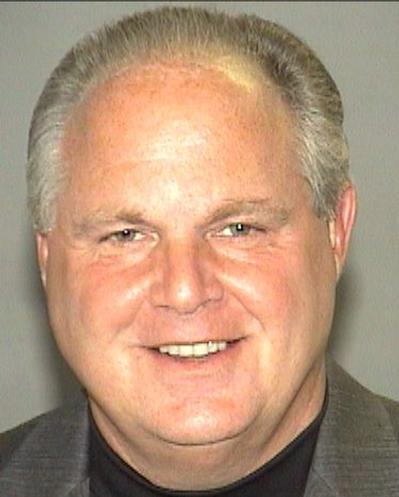
photos: Andre Royo as "Bubbles" from HBO's The Wire; Rush Limbaugh in his booking photo from the Palm Beach County Sheriff's Office in April 2006, from Wikimedia Commons; below, Papaver somniferum from Wikimedia Commons.
Sometimes I prescribe medicine; sometimes I prescribe drugs. Prescribing drugs is much more difficult.
The Drug Enforcement Agency gives every doctor a number, which allows tracking of prescriptions for "controlled substances"--in other words, medicine that can double up as what we more often call "drugs", i.e., the stuff that can get you high. Because I'm an intern, my DEA number only works when I'm working for my hospital; but it works nonetheless.
I am reminded every day of the distinction between medicines that can't get people high and medicines that can. I print up pages of prescriptions when discharging patients, and then go through them and--pulling out my DEA number from its concealed spot on my person--write out the number for the controlled substances.
Going through the list, I know that this one is an antibiotic that could send someone into anaphylactic shock, but it doesn't get my DEA number; this other one could destroy someone's kidneys, but it doesn't get my DEA number either. These medicines can be dangerous, but they're just medicine. They're controlled by professional self-regulation, and ordinary prescription and medical licensing laws.
But this prescription is for an "anti-anxiety medicine." It can roughly be thought of as vodka in a pill, and it does get my DEA number. And this one to treat pain--I only write for the exact number of pills required to get the patient to her next primary care appointment--is basically heroin in tablet form. These medicines are "controlled" in a different way. These are the medicines that the apparatus of the state won't just entrust to the good intentions and professional pride of doctors. If we write bad prescriptions for medicines, we can lose our medical licenses. But if we write too many prescriptions for "drugs"--for the controlled substances--we can be charged and imprisoned.
Though various drugs fit into the category of "controlled substances", it's the opiates--the variations on the chemical structure of the opium poppy--that cause interns the most trouble.
There are a lot of people who have pain serious enough to require intensive medical therapy, so we need to prescribe opiates fairly frequently. But there is also a whole class of people out there who are addicted to prescription drugs, the Rush Limbaughs of the world.
The two sets of people overlap considerably, so drawing a line between the "good" opiate-takers and the "bad" ones is as impossible as it is morally dubious. Even for someone who has no pain, the way to feed the addiction is to create the appearance of pain when coming into the room for the doctor's visit. And what is more subjective than pain? Who am I to say you don't have pain, when you say that you do?
This is where interns come in. Most of us start getting resentful early, because the structure of academic medical clinics means that people looking for prescription opiates are often looking for us. First of all, we look like easy marks; we maybe haven't seen every scam a dozen times yet. Also, we're the ones who are accepting new patients and have plenty of new patient appointment slots to fill. That's perfect for "doctor shopping", which is how some people try to get either the single doctor who prescribes the most opiates, or a bunch of simultaneous legitimate prescriptions for the same opiate medicine.
In the hospital, we're the doctors who actually write the orders; who see the patients most often; who get paged first when the patient hits the nurse call button again and again demanding to see the doctor. (If there's anyone in the hospital who gets more enraged and embittered by prescription drug addiction than interns, it's nurses, who spend exponentially more time than we do responding to requests for pain medicine.) So we have a lot of contact with people asking for opiate medicines.
The majority of the time they're asking for those medicines because whatever put them in the hospital hurts, a lot. Sometimes, though, we're not sure how much of what drives the request is pain and how much is craving. Or we're frankly pretty sure they're trying to feed cravings we don't want to satisfy. How we diagnose this formally is hard to say, exactly, but our gut feelings are unmistakable. In our workroom the other day, a colleague of mine said, "Sometimes you just want to give the diagnosis of FOS"--Full Of Shit.
I actually like caring for heroin addicts who are open about their use. I hope they kick the habit. But if they don't, I'm fine with talking about clean needles, getting tested for hepatitis, and avoiding skin infections. I'll look for endocarditis, send out HIV antibody tests, keep an eye out for toxic exposures from drug contaminants, and work the phone for liver clinic follow-up appointments. I'll even sit and listen to self-pity for a while, because maybe within some of the self-pity will come the realization of hitting bottom. And that's an opening for change.
Within all of this--much of which is difficult, and some of which sometimes involves some scams and silences and lies--at least the patient and I are both talking about heroin for what it is. It's an addictive substance that gives both pleasure and relief, and also carries risks and problems. It's a substance that someone is taking of their own volition, and isn't asking me to prescribe.
But much as I'd like to be the humanistic doctor who isn't bothered by what bothers other doctors, I have to say that prescription drug addicts do stretch me to my limits of forgiveness. They need me to prescribe them their addiction, in a cleaned-up denial-inducing form. And they inspire doubt in me even in my clearest moments, because I don't want to leave pain untreated. They know that my doubt is an opening, an emotional wedge.
I want to avoid being manipulated by people with hidden agendas. But I can't simply turn off my capacity for worrying about pain. How do I know at the beginning of a clinic visit that my empathy is not a human gesture, but merely the potential key to the DEA-regulated lockbox? And when someone says to me that I am not successfully treating their pain, how can I possibly know for sure when they're lying to me? (We do have some tricks up our sleeves to try to figure this out, but their reliability is somewhere from uncertain to quite low.)
At the end of an interaction with someone I think has crossed the line from complicated pain treatment into simple drug addiction, it is almost impossible to feel proud, or good at my job. And it is impossible not to feel a little abused.
I am not laboring under the illusion that by withholding or limiting prescriptions for opiates, I'm curing addiction. Far from it. I know that the pharmacy of the street contains every drug that the chain-store pharmacy carries, and more. If someone wants this stuff, they can get it. But I don't want to put a clean white coat over someone's addiction. I don't want my training to become someone else's denial. And if I'm not curing addiction by holding back on certain prescriptions, at least I'm not feeding it.
The problem with this is obvious. It's for all of these reasons, and more, that much of chronic pain does go undertreated in the United States. The prejudices that get layered onto this struggle also mean that an unemployed black man with a lot of back pain is probably less likely to get his pain treated than an employed white man with much less back pain. At the same time, it's simplistic to say that everyone who rates their pain as "10 out of 10" should get their opiate dose doubled as some kind of democratic principle.
I spent a lot of time in medical school thinking about what it meant to be a democratic doctor. In my ideal world, I am a doctor who acts as a consultant to people who are trying to manage their own health. I am not taking care of people; I am helping people take care of themselves.
But every democracy has its vulnerabilities, its way of being subverted by anti-democrats. Every democracy depends on a predominance of good intentions, and so too does the democratic clinic. Prescription opiates are where the democracy in my clinic is most tested, and where I most commonly fall short of my ideals. My eyes narrowed and my heart suspicious, my hands grip the lock firmly; I will let no one else open the box. My DEA number is mine, and mine alone.
When it comes to opiates, my democratic clinic is constantly at risk for becoming a failed state. Generally my clinic muddles along more or less as it is supposed to. The trains don't run on time, but they run. But with opiates, the slightest difficulty provokes an untenable choice between a chaotic ungoverned world of individual self-interest, and iron-fisted dictatorship.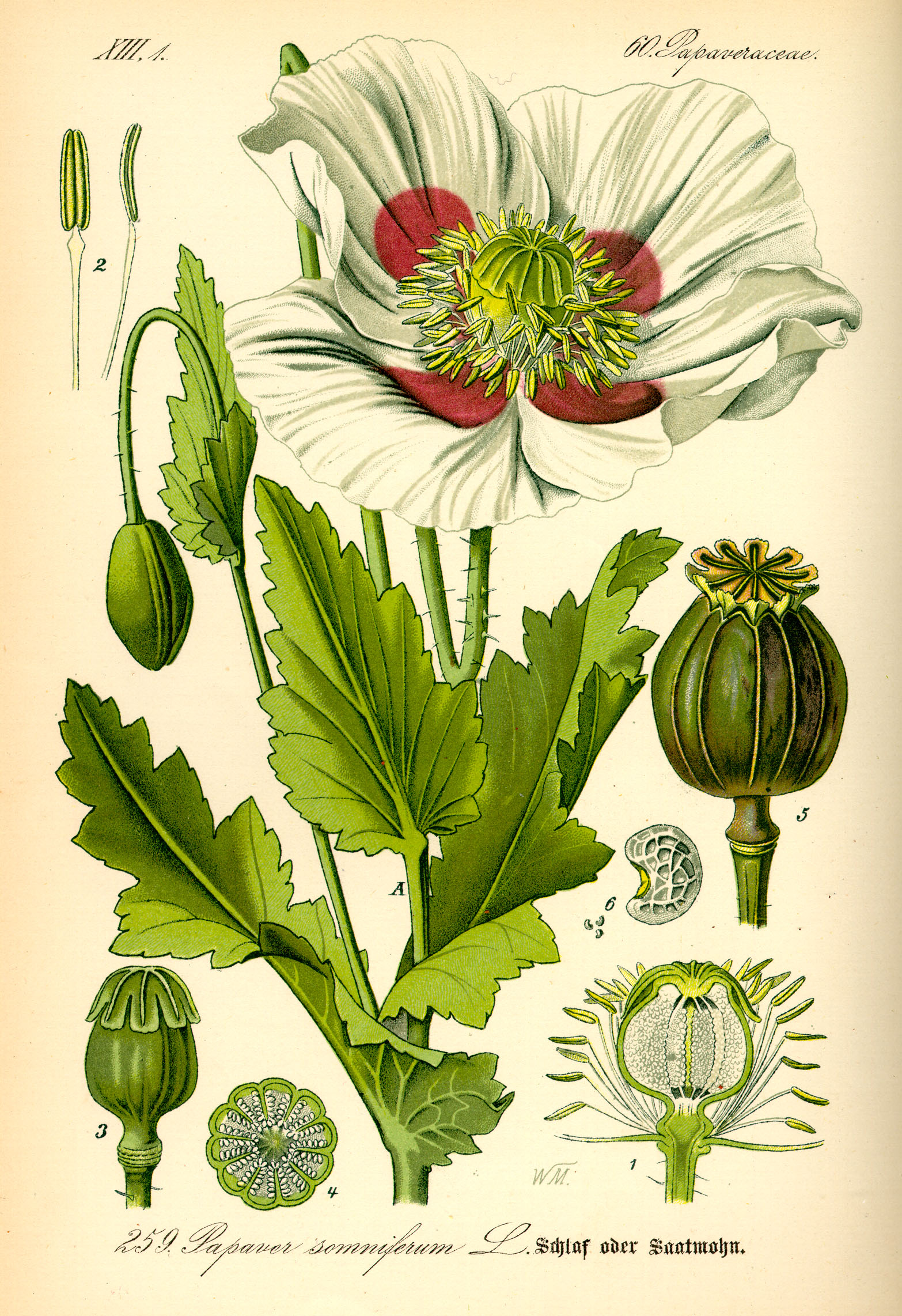
I saw my first two primary care patients today, in the clinic that will be my regular clinic through the year.
I had two patients scheduled; the night before I read their records, nervous and excited, making notes about what past issues needed follow-up. In reality, one cancelled and one didn't arrive. Instead I saw two completely different patients.
I've had lots of outpatient experience, and I figured I'd be able to breeze through easily. I didn't. That was fine, actually--but it reminded me of how outpatient medicine looks easy at first, and then really isn't at all.
The AIDS Action Committee of Boston now has a blog with updates on policy issues and perspectives on various AIDS and service issues. Recently this post made me feel like my instincts about what people living with HIV are looking for in their medical care are at least headed in the right direction... and this post reminded me that the difference between a thoughtful doctor and a thoughtless one makes a huge difference to some of the folks I hope will be my patients.
What makes me feel good about both of these posts is the feeling that people are writing a job description for me that I'm eager to fill.
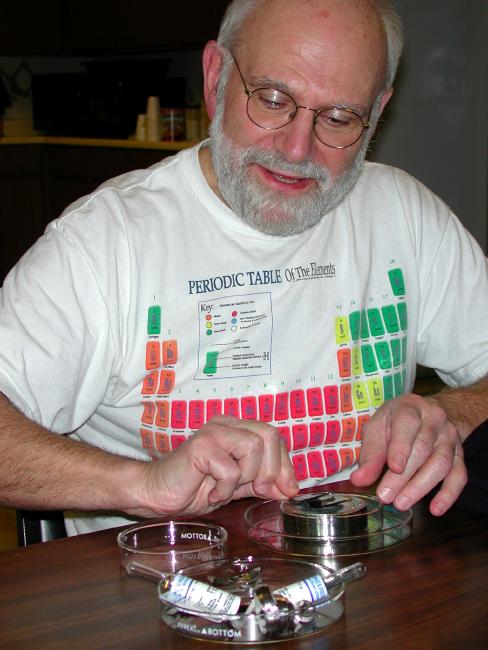
[Picture from the website of Theodore Gray, who had what looks like a great day with Oliver Sacks.]
Is a doctor a consultant, giving her patients advice about how to select medical interventions (or avoid them) based on her understanding of her patient's values? Or is she something else--something more complicated, and emotional?
I was thinking about this after part of a small discussion/debate with one of my favorite teachers, someone who makes it a big part of her job to be extremely thoughtful about the doctor-patient relationship. In my thesis (which I defended yesterday), I cited Robert Rimer, a person with AIDS who wrote a book called "HIV+: Working The System" in 1993, who describes a doctor as being a consultant to the patient; she was responding to this theme with both agreement and skepticism.
But I was thinking about the conversation later in part because I misunderstood part of one of the questions my teacher was asking in our conversation. In retrospect, I think she was arguing that part of what a doctor is supposed to do is care, not just in the sense of providing medical care, but also building an emotional connection and a sense of emotional investment that both the doctor and the patient feel. I agree that this is an important–and extremely rewarding–part of the doctor's job. But when she said, "You describe this as a very intellectual kind of relationship" I agreed with that too.
I'd like to think that part of how I care for people is to be their expert, to be the dork that works for them, their personal geek. And I'm skeptical about the people who dwell too much on the theme of "humanism in medicine", which I think more often than not is just the latest medical buzz phrase for common decency–and yet another chance to pat ourselves on the back. I think doctors are supposed to be decent human beings who treat their patients with respect and concern, but I don't think that's any special calling or anything unique to medicine. I think it's a basic rule of human interaction in an egalitarian society.
Of course, when we are talking with our doctors about really serious parts of our lives, we need to believe that they care about the content of our conversation. And I admit that there is a unique kind of vulnerability that we have with our doctors. Often we are talking with doctors about our own physical frailty, our mortality, and the private intimacies of bodily sensations, bad smells, and objectionable substances. These are things we go to great lengths to hide under all other circumstances.
And so there is also a special emotional obligation on doctors to honor and attend to that vulnerability. And it's true that this is where the "consultant" metaphor begins to break down a little. This vulnerability, not to mention social class, social convention, and even the architecture of the exam room, all conspire to create a real power difference between patient and doctor that is not quite like a classic consulting relationship.
This is not some corporate CEO calling in some Harvard kid who works for McKinsey, to ask how to improve web site traffic.
The emotional currents that run between doctor and patient make a kind of live wire. Those currents can be exploited on both ends. Doctors get a lot of training (especially informal training, which often reinforces some bad values) on how to prevent getting used and manipulated by people who are walking into the clinic or the hospital with a set of agendas that doctors don't want to serve. Psychiatrists spend a lot of time talking to each other about monitoring their own emotions during sessions as a way of using their own emotional state as a kind of sensor to help them understand what the patient is going through. For instance, if psychiatrists start to feel agitated and confused during a visit, if they can stand back from that sensation for a moment they can recognize what it is about the patient (usually agitation and confusion) that is triggering this feeling.
But most patients walk in without that kind of tool. When the electricity of powerful emotions begins in the exam room, they're caught without gloves on. This sometimes clouds people's thinking and makes it difficult to contrast their own agendas with the doctor's agenda. When this happens, it's not until later, when they've left the exam room and gone home, and the electrical current fades and then shuts off, that they realize that they wanted something different from this visit than the doctor did. In other words, I think sometimes people can sink into the emotional connection they get from the clinic–which can be powerful–and lose the ability to clearly and precisely advocate for themselves.
So when I talk about being a consultant, it is not with the aim of eliminating emotion from the exam room, nor with the aim of failing to care for the patient. But that care has to give some breathing room; it can't be enveloping, or it will suffocate the patient's own power and initiative, or constrain its birth and growth.
Anatole Broyard wrote:
"My ideal doctor would be my Virgil, leading me through my purgatory or inferno, pointing out the sights as we go. He would resemble Oliver Sacks, the neurologist who wrote Awakenings and The Man Who Mistook His Wife for a Hat. I can imagine Dr. Sacks entering my condition, looking around at it from the inside like a benevolent landlord with a tenant, trying to see how he could make the premises more livable for me. He would see the genius of my illness. He would mingle his daemon with mine: we would wrestle with my fate together."
This is a complicated, even jumbled, set of metaphors. But the ideas are useful, and not just because they're about Oliver Sacks. Broyard describes the doctor first as a guide; and then, as a kind of owner of one's own condition, a guide who can not only show you around but help improve the premises.
In this way of describing the doctor, the doctor is important because of his expertise; but also because he employs that expertise with kindness. It's important here to note that Oliver Sacks as a man is actually frankly odd, or so it seems from his lovely book Oaxaca Journal. In the book he takes a tour of Oaxaca with a group of fern aficionados; he is also a quite dedicated fern aficionado. He often sets himself apart from the group, most of whom are paired off in couples. He is clearly the nerd, and the striking thing about this, of course, is that he is the nerd among a group of people who have devoted a considerable amount of their free time to thinking about ferns.
Nonetheless, after a while, he begins to become engaged in some mild running jokes with a couple of his fellow travelers, and to build relationships in a way that seems totally ordinary to me as a reader. (He seems to be thrilled by one of his dorky running jokes, even perhaps by the very idea of a running joke. I have this kind of running joke with various people in my world all the time, as do most of you, dear readers.) And yet by the end of his trip he feels completely happy in a way that he rarely has before.
He writes:
"I myself may be the only single person here, but I have been single, a singleton, all my life. Yet here this does not matter in the least, either. I have a strong feeling of being one of the group, of belonging, of communal affection–a feeling that is extremely rare in my life, and may be in part a cause of a strange "symptom" that I have had, an odd feeling in the last day or so, which I was hard put to diagnose, and first ascribed to the altitude. It was, I suddenly realized, a feeling of joy, a feeling so unusual I was slow to recognize it. There are many causes for this joyousness, I suspect–the plants, the ruins, the people of Oaxaca–but the sense of this sweet community, belonging, is surely a part of it."
I believe, reading Oliver Sacks, that he must be a good doctor. Clearly Anatole Broyard believed the same thing. And yet if we are to believe his journal it seems to take him completely by surprise to feel a sense of belonging among other human beings, and that only transiently. How can this be if the essence of being a good doctor is human connection?
There are a couple of possible answers. One is that Oliver Sacks is a wonderful writer but a lousy doctor. It's hard to know if this is true, but even harder to believe. Another is that Oliver Sacks feels as if he is not making human connections even when he is. This seems more likely.
Most of all, Oaxaca Journal made me think that Oliver Sacks has a sense of solidarity with his patients in the neurology clinic, in the sense that he is acutely and intuitively aware of the idea of neurodiversity. However it is that his brain works, he is quite aware that it is not like other peoples' brains. And when Temple Grandin described herself as "an anthropologist on Mars", and he titled his book of essays with this phrase, it's hard not to wonder whether Sacks himself does not feel sometimes like an anthropologist on Mars, albeit a very kind and enthusiastic anthropologist.
But we know for sure that Oliver Sacks is driven by fascination, by intellectual interest in people and how they think and how they perceive the world. He is able to be fascinated in a kind way, and his fascination is infused by solidarity. And this is what is moving and wonderful about his writing. I think this is also what probably makes him a good doctor, and a good consultant.
He is not taking you out of hell, though if he can walk you towards the door out, he will. He is showing you around, and explaining what is going on there, and working with you to see if things can be better if this turns out to be where you are going to have to live. Anatole Broyard and I read Oliver Sacks and see this in him, and we think that this seems like what a doctor is supposed to be.
I hope to do the same for my patients: to be kindly fascinated, to feel a sense of solidarity with them, and help show them around. Is this caring? Sort of; in fact, it can even feel like a kind of love. But not exactly. It is not a parental or even a fraternal kind of love; it is not even friendship, really.
When we are ill, and live in fogs of pain or nausea or fear of death, it is the people who love us who should love us, and hold us, and remind us of what is good about the fact that we lived on this world and breathed its air. Doctors can do this in a pinch; but so too can many other people. Most people think their nurses are actually better at it.
So what's the point of a doctor? What's the doctor supposed to be? The answer is somewhere in this area of metaphors, of consultants and guides. The point of the doctor is to illuminate the inner landscape and history of our own bodies, to show us around when it becomes confusing, to suggest a way out when we get lost, or a way to get comfortable if we are trapped.
If I did not believe deeply in the value of that expertise, and if I only wanted to be kind and concretely useful to people who were suffering, I would have been a nurse, or perhaps a hospice volunteer. I actually spent a lot of time thinking about this choice, and it was not an easy one for me. But to become a doctor, I needed to accept the idea that I am not first a carer. I am a guide, who cares.
For the last couple of days, various people on Paul Levy's blog have been weighing in about the prospects of primary care, in response to a question from a student about whether he should go into primary care. Mr. Levy is optimistic about the prospects for primary care, and concludes that the student should do what he loves. Other respondents are not so sure about Mr. Levy's optimism, and a lively discussion has ensued.
These debates almost always take for granted that there is a crisis in primary care; the question is just whether we should be optimistic or pessimistic about whether the crisis might be solved. It's important, though, to ask whether there actually is a crisis.
My stepfather was for many years a professor of US History. He would assign an essay topic early in his introductory course: "The current crisis in education." Each year, students could write passionately about the current crisis, often supported by discussion in the media about how the American education system was falling apart and the country was going to hell in a handbasket if we did not do something to reverse this change. There was always truth in the specifics; on the other hand, the fact that he assigned this essay topic for thirty years straight and always got the same response suggested that something else was also going on.
Sometimes we like to assert a unique historical crisis as a way of just expressing our feelings of not liking something. There is a lot not to like about the healthcare system, and about primary care's place in it. On the other hand, many of the most distressing problems are deep structural problems which have existed for decades, and which Americans (and their physicians) have endured for decades. We don't have to believe that there is an imminent collapse to look back and dislike what we've been doing thus far. In fact, what is actually more distressing is that we've lived with some of the same lousy aspects of our healthcare system for so long.
A few years ago there were several articles on one important aspect of this topic: time spent with patients per visit. Each showed that visit length had not declined during the period in which people had begun to become especially alarmed about managed care and what it was doing to all of us. And physician income had not declined despite many protestations to the contrary.
A New England Journal of Medicine article in 2001 reviewed visit data from the late 1980s through the late 1990s, a time period in which managed care had greatly increased its impact on American healthcare. It found that visit length was actually stable. (Admittedly, the number of guidelines telling physicians what they were supposed to accomplish via prevention and counseling during this time may have increased--perhaps contributing to the sense of inadequacy of the time spent.)
An Archives of Internal Medicine paper in 2003 confirmed (using the same data set) that visit lengths had not changed from 1987-1998; further, they showed that except in obstetrics and gynecology, physician incomes had increased relative to inflation during this period.
This just goes to show that what physicians complain about may not be what they are actually unhappy about, although they themselves are unlikely to recognize the discrepancy. It is also not clear that physician dissatisfaction has actually increased much over time. Therefore, physician complaints are likely to be highly unreliable markers of the actual problems we will face as physicians. That physicians are much more dissatisfied may or may not be true; why they are dissatisfied is even harder to say. David Mechanic, who was lead author on one of the studies of visit time, had an interesting editorial on the topic in JAMA in 2003, which I recommend to interested readers (cited below).
If there is one clear problem in primary care, it's probably undersupply of MDs trained in the United States, and that's a problem in part because of what it does to other countries. But this is one problem that the medical profession has refused to fix; instead, we've been perfectly content to import physicians from other countries (which can't really afford to lose them) to fill some of the gaps, rather than increase the number of medical school slots, and students qualified to step into them, in the United States.
Though there is much more to be said about this topic, I will conclude that from all of this, I personally take the lesson: do what you love.
I also would like to add a caveat: having said all of this, I reserve the right to complain about anything and everything related to my work as a primary care physician in the future.
From:
Weeks WB, Wallace AE. Time and money: a retrospective evaluation of the inputs, outputs, efficiency and income of physicians. Archives of Internal Medicine, 2003;163:944-948: the authors conclude:
"...our findings are provocative. They do not confirm the prevailing concern that physicians are working harder or longer, are spending less time with patients, or are experiencing declining incomes. In contrast, they suggest that physicians are maintaining incomes without changing work hours and are able to command higher reimbursement per patient visit than in the past. There is a great deal of dissatisfaction with the health care system among physicians; exploration of perceptual reasons for that dissatisfaction may outline a course of action needed to resolve it."
Also cited:
Mechanic D, McAlpine DD, Rosenthal M. Are patients' office visits with physicians getting shorter? N Engl J Med 2001;344:198-204.
Mechanic D. Physician Discontent: Challenges and Opportunities. JAMA. 2003;290:941-946.
This post has been modified since its original posting. See end of post.
When I was choosing a residency, I decided to choose one where HIV care was part of their primary care program, supported by specialists, rather than exclusively part of a specialty clinic. This factor was actually far and away the biggest determinant of my choice, and I think studying the history of AIDS was part of what convinced me of the importance of the distinction.
Over the long run, scientists who worked on antiretrovirals to target HIV's replication were correct in their ultimate goals. It's this strain of HIV research and clinical strategy that gave us Highly Active Antiretroviral Therapy (HAART). And HAART dramatically increased survival times. But for a long time, antiretroviral
drugs were actually accomplishing little other than temporary improvements in immune cell counts.
Until 1996, the biggest gains were made in thinking about how to better prevent and treat opportunistic infections and other problems of HIV and AIDS. Paradoxically, for some time, it was doctors like Joseph Sonnabend and activists like Michael Callen (the picture above is of Callen), who did not believe that HIV caused AIDS, who probably provided some of the best clinical advice for most of the 1980s.
For people who were focused on the virus, it seemed like madness to avoid a drug like AZT when it first came out. It had demonstrated activity against the virus and people who took it often had rises in their CD4 counts (the cell marker that serves as a main indicator of immune health in people living with HIV). But AZT gave people sometimes severe anemia, as well as other problems like sometimes intolerable nausea. That was especially true at the high doses which AZT partisans initially recommended. Worst of all, it turned out that giving AZT alone really didn't give a clear survival advantage. (The debate about how much time it bought for some people, and at what cost, was never really resolved.)
In other words, in the 1980s, people like Sonnabend and Callen were scientifically wrong, but clinically right. And people who emphasized antivirals over all else – pushing high-dose AZT and not attending aggressively enough to opportunistic infections and other issues of immune well-being – were scientifically right, at least in the narrow sense, but clinically wrong.
The people who thought about AIDS research in a hyper-reductionist way did later win big gains for people with AIDS. In fact, they eventually transformed the epidemic. (Sonnabend now presecribes HAART and concedes the point of HIV's importance.)
But in the meantime, until 1996 or so, I think people with AIDS were probably usually served best by clinicians who started from observable clinical problems (opportunistic infections, immune collapse, and the personal issues that made it difficult for people to care for their health) and worked their way in. That was different from clinicians who started with the virus and worked their way out. Starting from observable clinical problems yielded better results than focusing on a theoretical model of the disease and treating the clinical problems as mere signals and stages of that model.
And that's despite the fact that the theoretical model was essentially correct.
At the triumphalist moment of the world AIDS conference in Vancouver in 1996, protease inhibitor maven Dr. David Ho started a presentation with the slide "It's the virus, stupid." This was the picture of a previously-frustrated reductionist slam-dunking his opponents. Ho had actually told Science reporter Jon Cohen that he was making a button with this slogan in 1993, but Vancouver was the moment of victory.
At the Vancouver conference, after a decade of developing antiretroviral drugs with essentially no impact on survival time, the virologists could finally claim the unequivocal success they'd been waiting for. The skeptics of the Callen and Sonnabend school finally had to admit that there was a direct relationship between the virus and the disease. (Denialists of the Duesberg school and its like have never been swayed by evidence, and the mounting evidence that proves them wrong has only made them stronger.)
But if Ho and other virologists were right about the value of targeting the virus from a variety of angles through combination therapy, they were wrong about what the target of AIDS therapy should be.
The point of HIV medicine is not HIV. The point of HIV medicine is people living with HIV.
On first blush that sounds like one of those cloying "humanism in medicine" truisms. But I've started thinking it's worth stating, forcefully.
I thought a lot about this when I was interviewing for a residency spot in internal medicine. I'm planning to be a primary care doctor with an emphasis on HIV. That's a different path than many HIV doctors take these days, particularly in my city, where an academic specialist-driven model is more prominent. (This really varies city-by-city, depending on what powerful people got behind which model.)
I still may end up getting training as an infectious disease specialist just because it will be practical to do so: to get the HIV training, I'll spend a year doing general hospital ID, doing consults on surgical wound infections, even knowing that this part of the specialty has almost nothing to do with HIV care.
There are also year-long HIV fellowships which train especially for HIV care; that's a more likely path for me. HIV medicine is not for the faint-of-heart; it's technically tough and full of insider jargon, so it's worth thinking of it as a specialized area of knowledge. But is that specialized area of medicine really more related to surgical wound infections than it is to heroin addiction, liver failure and vascular disease? I think it's not, and that's why I've chosen to think of HIV medicine, and my training for it, as part of primary care, not as a branch of infectious diseases.
In fact, we might ask: is the virus actually the biggest problem of people with HIV these days? In the United States, the phenomenal success of the HIV reductionists has created its own problems. People with HIV are starting to have cardiovascular and metabolic complications which are often still poorly understood. Some are the result of living for a long time with the virus itself. Others are the result of taking anti-HIV medicines for a long time.
It's not clear how much this will contribute to problems like heart attacks and stroke and diabetes, but a lot of folks think these will be bigger problems for people with HIV in the coming years. Plus, some of the people most at risk for HIV – people of color in poor neighborhoods – are also independently at higher risk for problems like diabetes and vascular disease, as well as other problems like addiction, social disruption and violence.
People with HIV still have all the challenges of taking medicines every day that they've always had. It's difficult for anyone to pull it off, no matter what their social circumstances. Addiction and poverty bring extra barriers. And for immigrants, language and discriminatory health access policies often make taking control of one's own medical care more difficult. The people who are hit hardest by the HIV epidemic in the United States are often people who also have significant problems other than HIV. And no matter how snazzy a doctor gets in prescribing drug combinations to get around the latest resistance mutation, the person living with HIV is the one who has to take the medicine every day.
In other words, many of the toughest challenges for people with HIV are once again challenges that are only indirectly related to the virus itself. These are primary care problems: How do people make their medical regimens a part of their lives? How do people reduce their risk for chronic problems like diabetes? How do you balance the benefit of medicines for one problem, versus the other problems they create? (And for that matter, one might very well ask, how can people with HIV live happy lives that are not entirely dominated by health concerns? but that is another story.)
The fact that infectious disease specialists are often the doctors responsible for HIV care is not inevitable. In fact, at the beginning of the epidemic, many ID doctors shied away from AIDS, as did many academic medical centers. The most academic of academic medical centers often avoided taking on much AIDS care in the early days of the epidemic. Their ID departments focused on other things. Perhaps coincidentally, but probably not, when big money started flowing in for AIDS research, they all started taking the epidemic seriously – hiring researchers and building up more serious clinical programs. But this approach didn't take the agendas of people with HIV as a starting point. It was built around the idea that AIDS was a problem caused by a virus, and that specialists in infectious agents should be the ones who provided HIV care.
There is an important difference in how different doctors think about the goal of HIV care. I think that a primary care model of HIV care is important not just because it's nicer or more medical-humanities-groovy; it's important because it is targeting the issues that are actually most clearly facing people with HIV. How do I live with these medications? How do I keep taking them? how do I live with the side effects? And how do I take care of my health beyond HIV? The success of the antiviral agenda has created a situation where we can generally take it for granted that we can knock down the virus that replicates inside people, but only if the person with the virus is able to commit to the effort to treat it, and only if other things don't kill that person first.
In other words, David Ho was wrong: It's the person, stupid.
Two post-scripts: I should add that even from the basic science point of view, the idea that "it's the virus, stupid" is disputed by HIV researchers who look at AIDS from the immune system's point of view. They point out that immune damage associated with HIV infection is partly caused by the immune response to the virus itself, and that the specific interaction of virus and immune system is more important than simply how much virus is present. See this paper and this erudite old-style medical journal commentary for more from the immunologists.
The second post-script: Looking at retrospective data for survival time it appears that using one antiretroviral like AZT in the late 1980s did not do anything for survival, but using two in people who had not taken one of them before did lengthen survival time somewhat. So, in hindsight, Callen and Sonnabend's particular kind of advice may have been less effective starting at some point in the early-to-mid-1990s, before 1996, when other drugs like AZT came out and could be used in combination with AZT.


 This
work is licensed under a
Creative Commons Attribution-Noncommercial-No Derivative Works 3.0 License.
This
work is licensed under a
Creative Commons Attribution-Noncommercial-No Derivative Works 3.0 License.