Showing posts with label AIDS activism. Show all posts

Saturday, May 15, 2010

Stop Obama's misguided global AIDS policy


Photo: Kaytee Riek, whose other photos of this recent demo can be found at kayteeriek.com

President Obama is making big mistakes on global AIDS. Click to read South African AIDS activist Zackie Achmat explaining why.

See also:

TakeANumber.org

New York Times

Zackie Achmat in New York, May 13 2010:

Wednesday, November 26, 2008

Mbeki as Macbeth

Someone has actually tried to do the math now that he's gone: how many people died as the direct result of Thabo Mbeki's AIDS policies? This particular estimate puts it at 365,000 lives and 3.8 million years of life.

Whatever the number, it was a lot:

As Zackie Achmat says in this NYT article:

“He is like Macbeth. It’s easier to walk through the blood than to turn back and admit you made a mistake.”

Wednesday, November 19, 2008

Hank Wilson, community organizer.


I wrote in my last post about Hank Wilson. Here's a much more lovely long remembrance of Hank Wilson, by his friend Bob Ostertag. Read it.

Here's the last paragraph:
What, exactly, is a "community?" At the university where I teach, there are "experts" in this matter who will give you definitions of community that use so many big words, you will need a PhD of your own just to figure out what they are talking about. Hank Wilson had a definition his kindergarten students could understand: a community was something that took care of its least privileged members. If this simple thing could not be done, then you didn't have much in the way of community. This was Hank's life project, his singular, profound contribution to the gay and lesbian community, and to the city of Saint Francis.

Also, some memories at the San Francisco Bay Guardian's web site (read the comments section);

the Chronicle's article;

for the historians in the crowd, here's the finding aid to the Hank Wilson Papers, which Hank donated when he thought he was about to die of AIDS in 1996, right before highly active antiretroviral therapy saved his life;

and finally, a Magnum Photos photo essay about the Ambassador Hotel.

Of course, you can always help out with the Wikipedia page, in progress.

Thursday, November 13, 2008

Hank Wilson, whistle-blower.


I wrote a while ago about the "No Obits" moment in the Bay Area Reporter.

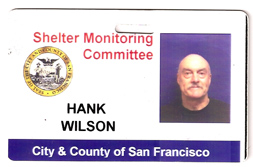
Today I read a BAR obituary that made me pretty sad. Veteran activist Hank Wilson has died.

Here's Liz Highleyman's nicely-written obituary in the BAR; I'm pasting the text below my own.

Hank was a perennial presence in San Francisco political life and AIDS activism, before, during, and after the time I lived there. Many other people know Hank much better than I do. This is my testimony to Hank, and bear this in mind: I barely knew the guy. I never sat down individually with him and had any conversation with just him and me, never so much as had coffee with him. I saw him at meetings--a lot of meetings. And he was always kind to me.

Here are two things I remember about Hank.

1.
I was working at the STOP AIDS Project and Hank called us. I didn't know Hank but I knew ACT UP, and Hank was calling from ACT UP. He told us that the CDC was having a meeting about HIV prevention for young people and that he thought they should have young people at the meeting. He knew we'd just started a young men's project, and he thought we were the sort of young people who should go to the meeting. He told us who to call.

We called. I told the person at the CDC that I was a young person, I was doing AIDS work, and I wanted to go to the meeting. She bought me an airplane ticket to Atlanta. I went to the meeting. I was in my early 20s, and it was the first time I went to a meeting like that--the first of what later became many. I don't know that we accomplished much. The CDC has its own momentum, and when we demanded youth representation in planning prevention campaigns they just hired some guy who was a CDC yes-man already. But I learned a lot about how the system worked. These were pieces of observation and understanding which I used later, things I still instinctively understand about government and public health now.

Hank was a true community organizer, and by this, I mean that Hank's whole life was spent making phone calls like the one he made to us. That was fifteen minutes he spent making a phone call, which still influences how I think about the world today. What a community organizer does is to organize the community, obviously. But what this actually means is finding the secret strength of the community. Especially, it means finding people scattered here and there, and bringing them together. Making them stronger. Teaching them new skills. Hank believed in this process in a deep way. It was not his job, though it later became his job; it was just who he was. The existence of Hank means that I know more about public health politics--just from that one phone call--than I would have if Hank had not existed.

Hank could drive you crazy by talking about poppers, but he never lost sight of bigger goals. Liz Highleyman's account in his obituary of the organizations he was involved in and helped start is likely hard to comprehend for those outside Hank's community. If that's you, you'll just have to trust me: a remarkable amount of cultural uplift, political power, and improvements in health came from these organizations.

2.
I once saw Hank speak--characteristically, as part of a panel--at a community forum organized by the STOP AIDS Project. He talked about the Butterfly Brigade.

In the 1970s, the Butterfly Brigade was started because there had been gay-bashings in the Castro. And people started thinking, how the hell are there gay men getting beat up in the middle of a totally gay neighborhood? How is this hapenning? And the Butterfly Brigade was started as a self-defense organization. They started passing out whistles. And they set up the community expectation that when someone started blowing a whistle, that everyone else should come run to try to help. This included the Butterfly Brigade--which went on patrols, Guardian Angels-style--but everyone else too.

Hank said that this expectation of community mutual aid and self-defense helped stop gay-bashing in the Castro. Thugs stopped thinking they could get away with it. It sounds basic now--the idea that it would be a bad idea to try to gay-bash in a gay neighborhood--but it wasn't basic until people started sticking together.

But the whistles also did something even more important later, Hank said. When AIDS came a few years later, there was an idea already in place: we defend each other. We stick up for each other. This is not just some zone full of bars and cruising spots; it is a community. That was an idea that people were just starting to understand in the 1970s.

In other words, Hank believed that these whistles were a symbol of the underlying idea of how much of the community responded to AIDS--and in some way, a kind of disaster drill that prepared the community for what was to come. They already understood the principle. They just had to apply it to a new example.

The idea: community organizing builds strength that lasts beyond particular causes.

Hank Wilson, a kindergarten teacher who became a community organizer, has died. Keep him in your thoughts, not for his sake, but for the sake of your community. We all need to figure out what kind of whistles we can be passing out now, for the threats our communities will face in the future.

+++++++++++++++++

Veteran activist Hank Wilson dies

by Liz Highleyman
liz@black-rose.com

Longtime gay and AIDS activist Henry "Hank" Wilson died Sunday, November 9, at Davies Medical Center in San Francisco. A longtime HIV/AIDS survivor, Mr. Wilson succumbed to lung cancer at age 61.

Mr. Wilson was a veteran of countless struggles, from the fight against the Briggs initiative to AIDS and homeless activism. Over more than 30 years, he played a pivotal role in San Francisco's LGBT history.

"If ever there was a man whose vocation was helping others less fortunate and speaking truth to power, it was Hank," said friend and fellow activist Michael Petrelis.

Mr. Wilson was born and raised in Sacramento. He graduated with a bachelor's degree in education from the University of Wisconsin in 1971. Soon thereafter, he moved to San Francisco, where he taught kindergarten and grade school and was a swimming coach.

In the mid-1970s, Mr. Wilson, together with fellow teacher Tom Ammiano (now a city supervisor and assemblyman-elect), started the Gay Teachers Coalition. The group fought discrimination against gay teachers, culminating in the San Francisco school board's decision to add gays and lesbians to its non-discrimination policy in 1975.

"Hank was impressive even then," Ammiano recalled. "He was big, he was handsome, his energy was boundless, but his ego was very, very small. I just can't imagine the number of people he has touched and how much he's going to be missed."

In the late 1970s, Mr. Wilson participated in the fight against the nascent religious right and its efforts to roll back advances in gay equality. He was instrumental in the successful No on 6 campaign against the 1978 Briggs initiative to ban gay teachers in public schools – a battle many have likened to this year's Proposition 8 in its national significance.

The activism that emerged in that era spurred the creation of many long-standing LGBT organizations. Mr. Wilson served on the board of the Gay Youth Advocacy Council, which gave rise to the Lavender Youth Recreation and Information Center. He helped shape school district policies regarding anti-gay harassment and comprehensive health and sexuality education, and with Ammiano, he started a speakers bureau to inform students about gay and lesbian issues.

Mr. Wilson helped launch a small gay film festival, which later evolved into Frameline. An early advocate of gay self-defense, he started distributing whistles in the late 1970s and co-founded the Butterfly Brigade, which became the Castro Street Safety Patrol. Both the speakers bureau and the safety patrol later became part of Community United Against Violence.

"[Hank] was a sort of Johnny Appleseed of gay and lesbian organizing; wherever he went, organizations sprouted," said longtime friend and caretaker Bob Ostertag. "As soon as something was up and running, he would move on to start something else."

In 1976, Mr. Wilson co-founded the San Francisco Gay Democratic Club, which was renamed after Harvey Milk following his assassination in November 1978. Mr. Wilson took part in the May 1979 White Night riot to protest Dan White's lenient manslaughter conviction, and he later regaled younger activists with tales of throwing flaming newspapers into unoccupied police cruisers outside City Hall.

The poignancy of Mr. Wilson's death so soon after the premiere of the Milk biopic and the recent election was not lost on friends and fellow activists. Before he died, he had the opportunity to see the film and he celebrated Barack Obama's victory from his hospital bed.

"We watched Obama's acceptance speech, and he couldn't have been more delighted," said Stephen LeBlanc, who spent election night with Mr. Wilson. "He cheered out loud when Obama said 'gay and straight.'"

Direct services
While Ammiano and Milk directed their activism into political careers, Mr. Wilson devoted himself to providing direct services for people in need. In the late 1970s, he and a friend, Ron Lanza, took over management of a group of SRO hotels in the Tenderloin – as well as the Valencia Rose, an influential queer performance venue.

One hotel, the Ambassador, was frequented by many queer and transgender people and became an early epicenter of the AIDS epidemic. Mr. Wilson put together a team of care providers, and with a small group of activists including Dennis Conkin and the Reverend Glenda Hope of San Francisco Network Ministries, started the Tenderloin AIDS Network in 1986. After running on a shoestring budget, TAN obtained city funding to open a storefront in 1990, becoming the Tenderloin AIDS Resource Center.

During Mr. Wilson's tenure, the Ambassador was known as housing of last resort for people no one else would take. By the early 1990s, it was the largest supportive AIDS housing program in the country, and it came to be regarded as a model of community care and harm reduction.

"People took advantage of him, ripped him off, disrespected him, but he just kept taking them back," said Hope. "If there was one person who taught me the meaning of forgiveness and unconditional love, it was Hank Wilson."

"There was nothing quite like the experience of Hank Wilson reading some bureaucrat's beads or telling it like it was," Conkin added. "I learned a lot about speaking the truth from Hank. And how to maintain kindness and compassion, and not get stuck in rage or despair or hopelessness."

Mr. Wilson – who was himself diagnosed HIV positive in the early 1980s – was also instrumental in starting the city's earliest AIDS activist groups. He helped form the PWA Coalition and Mobilization Against AIDS, and organized the city's first AIDS memorial candlelight march in 1983.

Before the cause of AIDS was known, Mr. Wilson suspected poppers had a detrimental effect on the immune system, and he started the Committee to Monitor Poppers in 1981. He compiled volumes of research and opposed the sale and advertisement of poppers – a campaign he revived periodically as community awareness waned. With John Lauritsen, he co-authored the book Death Rush: Poppers and AIDS (1986).

In the late 1980s, Mr. Wilson joined ACT UP/San Francisco and participated in countless actions, including an early demonstration against Burroughs Wellcome demanding a lower price for AZT. Over the years, he advocated for alternative therapies, expanded access to experimental drugs, needle exchange, and medical marijuana.

"Hank was one hell of a committed AIDS activist who fought against all injustice," said fellow ACT UP member Matthew Sharp. "The only meetings or demonstrations he missed were because he was involved with another activist project or was in someone else's face."

Mr. Wilson was a founder and integral member of ACT UP/Golden Gate when it split off from ACT UP/San Francisco in 1990, and he remained active through the group's evolution to Survive AIDS in 2000 until it folded four years later.

"Hank insisted that we could still make a difference, even when we were just a handful of people," added longtime member Michael Lauro. "It didn't matter whether he had 20 people beside him or just himself, if he saw a wrong he'd try to right it."

Mr. Wilson's activism extended beyond HIV/AIDS to encompass a broader view of community health, and he attended several gay men's and LGBT health summits starting in the late 1990s.

"Hank was one of the pillars of the gay men's health movement in the U.S., and he fought for many other communities too," said Chris Bartlett of the LGBT Leadership Initiative. "He dedicated his life's work to the health and welfare of the underdog, and he based that work on the principles of gay liberation, human rights, and a powerful awareness of the structural forces that impact our day-to-day health."

Mr. Wilson managed the Ambassador until 1996, when he left due to his own worsening health and to care for his ailing parents (the Tenderloin Neighborhood Development Corporation now runs the hotel). Having fallen to just 20 T-cells and plagued with Kaposi's sarcoma and opportunistic infections, he was told his death was imminent, but he was among the first to gain access to effective new antiretroviral drugs and his health turned around.

Mr. Wilson soon got back to work, managing TARC's homeless drop-in resource center and volunteer program from 1998 through the mid-2000s (TARC and Continuum HIV Day Services merged to become Tenderloin Health in 2006). His final job was with the Shelter Monitoring Committee, verifying that city homeless shelters were providing mandated services.


Write-in campaign
Though he eschewed a political career, Mr. Wilson never strayed far from politics. In 1999, he spearheaded the effort to convince Ammiano to run for mayor against incumbent Willie Brown. Along with Robert Haaland and Tommi Avicolli Mecca, he managed a write-in campaign that forced Brown into a runoff and is credited with reviving the city's progressive movement. After district supervisor elections were reinstated in 2000, Mr. Wilson ran – unsuccessfully – for the District 6 seat.

Always unassuming, Mr. Wilson lived for more than 30 years in a small studio apartment near Civic Center, sleeping on a mat on the floor until he entered home hospice care and friends insisted he get a bed. He remained active until his final months and was hesitant to reveal the severity of his illness.

"Hank wasn't intimidated by anything. He could be outnumbered, outspent, and overpowered, but he was rarely outsmarted," said friend and fellow activist Gary Virginia. "I don't think he was 'fearless' in the sense that he wasn't afraid or scared. He just didn't let that stifle him. He empowered himself, and in doing so, empowered others."

Mr. Wilson is survived by a sister and a brother. A public memorial has been set up at the corner of Castro and 18th streets, and a memorial service is being planned (most likely for December). Donations in his memory may be made to one of the many causes he supported, including the Quan Yin Healing Arts Center and the GLBT Historical Society.

11/13/2008

Saturday, April 12, 2008

Your glamour was their genius


photo of ACT UP Chicago demonstration from wockner.blogspot.com/

An essay I wrote a while ago, that grew out of my ongoing project in AIDS history:

I have to admit that despite a lifelong professed hatred of musicals, I went to the movie version of Rent when it came out, and I started getting a little teary almost as soon as it started. Rent shows earnest people with AIDS singing about their lives until interrupted by beepers reminding them to take their next dose of AZT; it shows a support group of people with AIDS sharing their fears and finding community. Plus there’s an almost unforgivably sentimental but nonetheless lovely song about measuring the quality of one’s time in the world by the love you find in it. Sometimes I am a sentimental person, and Rent’s sentimentality hits me right where I live.

Rent
seemed at first to be an unlikely candidate for mainstream success; half of its characters are HIV-positive, half are gay or lesbian, and two are heroin addicts. But that’s how some of the biggest hits are made. To understand Rent now, we have to remember what preceded it.

Fear and hate of people with AIDS are still widespread in our society, but those feelings were so common, so intense and so irrational in the nineteen-eighties that the counter-reaction eventually created a strange kind of glamour. AIDS acquired a glamour of stigma, like the glamour of Billie Holiday or drag queens. As the glamour gained momentum, politicians who voted for money for AIDS, or scientists who did AIDS research, or celebrities who wore red ribbons all got to benefit from the glamour, without having to suffer from the stigma. To stand up for the stigmatized is to cloak one’s self with the righteousness of the underdog and the aura of the enlightened.

But if we view AIDS simply through the glamour of stigma, we miss essential parts of the story. The lesbian writer and activist Sarah Schulman has written about the way that Rent combines parts of the opera La Boheme with elements of a novel of hers, People in Trouble, for important parts of its plot. But as she herself argues, whether you view Rent’s similarities to her novel as theft, honest borrowing, or coincidence, the bigger problem with Rent is the part of the story it does not tell.

You can find Schulman’s side of the story by reading her novel or in her essay critiquing Rent’s approach to AIDS and gay and lesbian lives in her book Stagestruck. But I think her point is actually made most forcefully by another project of hers that has nothing to do with Rent: an extensive set of interviews, found at www.actuporalhistory.org, with members of the AIDS activist group ACT UP.

The interviews make clear that in real life, it would have been essentially impossible for the characters of Rent to avoid ACT UP. In the time and neighborhood where the story takes place, ACT UP’s posters and protests were everywhere. Mimi might well have traded in her used needles for new ones at a needle exchange set up by ACT UP activists. Activists wearing ACT UP t-shirts would have been at the eviction protest staged by Maureen, passing out flyers for their next protest. And the people in the AIDS support group might have worried about losing their dignity, as they do in Rent, but they also would have traded ACT UP activists’ insider tips about clinical trials and experimental drugs.

One part of ACT UP’s legacy comes from building collective expertise that allowed activists to sit across the table from scientists and bureaucrats and demand new approaches to health policy and scientific research. But another part of ACT UP’s brilliance could be found in their demonstrations. Some were huge and carefully orchestrated, as when they took over the headquarters of the Food and Drug Administration. Others were smaller, including political funerals in which activists carried coffins out into the streets, blocking traffic while they marched with the bodies of their dead friends, protesting against a government and a healthcare system that seemed not to care about their deaths. At the time, that sort of thing made a lot of people furious, and all sorts of people hated ACT UP for their in-your-face stridency.

But with more than a decade gone by, it’s now clear that the provocations of ACT UP and other AIDS activists worked. They changed the science, politics and culture of AIDS. It was after ACT UP that scientists started listening to activists, and after ACT UP that federal lawmakers passed legislation to fund comprehensive AIDS care.

Let us not distort history by thinking that Hollywood led the way to tolerance. It was only after the scientists and politicians had already signed on that celebrities started wearing red ribbons. Even then, though, the red ribbons carried a little of the electricity of being on the right side of a struggle.

AIDS activists had succeeded by transforming the stigma that marked them into a weapon of power and social change. A few years later, based on the energy they had created by angrily drawing a line between right and wrong, Rent became a runaway hit. Viewed in the light of this history, Rent is a musical about the glamour of stigma. The ACT UP oral histories document the genius of the stigmatized.

Thursday, July 26, 2007

HIV meets diabetes meets HIV

In the early 1990s, I never believed it would happen. But in mid-February 2007, I heard a cardiologist talking about the cardiovascular effects of HIV, who then put his talk in context by casually saying, “Even so, I’d choose to have HIV over having diabetes.” The doctors-in-training listening nodded in agreement. They probably didn’t remember that people used to talk about comparing HIV to diabetes like it was an impossible dream.

In 1992, Bob Rafsky, a person with AIDS and a member of the activist group ACT UP, wrote in the New York Times, “It's always possible we'll win. The drug, or drugs, that will turn AIDS into a chronic illness like diabetes will finally be discovered.” But, he wrote, “it's not likely, at least not in time for me.” Rafsky died the next year, in 1993.

Just three years later, starting in 1996, the kinds of drugs Rafsky had hoped for arrived in wealthy countries like the United States, used in combinations of medicines that together became more than the sum of their parts. Along with other improvements in HIV care, that allowed people to live with HIV for much longer periods of time than before.

Even back in 1996 and 1997, people were starting to say that living with HIV could finally be like living with diabetes, a difficult but manageable chronic disease. This didn't mean that it would be easy.

With modern medical strategies, the most common and serious effects of diabetes aren’t short term crises of sugar levels, but the effects of long-term damage to blood vessels: problems like stroke, heart attacks, kidney failure, blindness, nerve problems, and foot and leg infections that can sometimes require amputation.

Avoiding these problems over the long-term requires constant vigilance. In fact, as HIV medications become easier and simpler to take, sticking to them is often less complicated than sticking to diabetes regimens.

Especially early on, most Americans with HIV got the virus either from unprotected gay sex or sharing needles, which is part of how HIV got the stigma that it still has today. By contrast, Type I diabetes often comes in childhood, as a result of an autoimmune problem; no one blames people with Type I diabetes for their disease.

But stigma does influence how society responds to the much more common kind of diabetes, called Type II diabetes. Whether people get Type II diabetes has a lot to do with genetics. But higher amounts of body fat are associated with higher risk for Type II diabetes. That’s political poison for mobilizing a response to Type II diabetes, because Americans tend to misunderstand why people gain weight, think of fat as a kind of moral shame, and vastly underestimate the difficulty of losing weight and keeping it off. And so society can distance itself from Type II diabetes, by blaming the disease on the people who have it.

When AIDS was a more lethal disease in the US than it is now, it inspired intense fear and stigma and discrimination. In the late 1980s and early 1990s, people with AIDS and their allies, including activists like Bob Rafsky, began speaking against that fear and demanding the solidarity of others. They won the support of many; red ribbons became de rigeur for celebrities for a while. That kind of activism (both the angry kind and the syrupy Oscar ceremony kind) helped bring the day that HIV infection became more like diabetes.

Now, as Type II diabetes becomes more common, and also stigmatized for its increasingly well-publicized association with fat, the new challenge might be for Type II diabetes to become more like HIV—in which people with the disease and their allies stand up to demand that the society get over its prejudices, and start paying more attention.

Wednesday, May 30, 2007

Prevention Works still fighting in DC


When I lived in DC, I worked at an immunology lab, and I volunteered for Prevention Works, Washington, DC's beleaguered needle exchange program. Ron Daniels was one of the staff members who was often on the van supervising sessions where I was a volunteer. I did simple work like counting out new needles and giving them out to people, or explaining the basics of the program to new participants, while Ron and others would be talking to people about tougher stuff, like drug treatment options and doing HIV testing.

Ron and people like Ron are incredibly inspiring to me. For anyone who becomes a part of Prevention Works or supports it, needle exchange is a great way to make a difference. But for people like Ron Daniels, needle exchange is not just that; it's also a way of reclaiming the meaning and value of their own lives, and the lives of many other people as well. It's a beautiful thing.

Ron Daniels was recently in the New York Times in an article that gives a little bit of hope that maybe the Democratic Congress will finally take off the obscene funding restrictions that prevent the DC city government from spending its own local tax money on needle exchange. This restriction is not only a terrible piece of public health policy, it's an insult to the people of Washington, DC, who should have a right to make their own political choices. (For more about the wisdom of this choice, check this recent quick .pdf summary of the benefits of needle exchange programs.)

Lots of Washingtonians need what Ron Daniels and the other staff and volunteers of Prevention Point have to give. Please tell your congressional representative to lift the ban on funding. But until the Congress finally gets out of DC's way, I can't think of a better or more effective place to spend your philanthropic dollar. Here's a link to give the money that Republicans from Missouri and Oklahoma won't.

(And thanks to John S. for sending the NYT article around to an email list to which I subscribe.)


video: uploaded on Current TV, a video about Prevention Point's work.

Wednesday, May 9, 2007

Abbott protest follow-up: "In a word, yes."

photo of Chicago protest with Thai activist Mai Rewthong speaking, from abbottsgreed.com

Bill Clinton recently endorsed the decision of the Thai government to issue compulsory licenses for pharmaceuticals to be used in the Thai public sector medical system. It was really during Clinton's presidency that a global shift took place about intellectual property rules. As I wrote in my thesis/book-in-progress,

A debate about [global trade rules] came into the open in 1999, while pharmaceutical companies were suing the South African government. They objected to a 1997 law that permitted compulsory licensing for generic versions of patented medicines. In the United States, the Clinton Administration backed the pharmaceutical companies’ position, threatening trade sanctions. And the companies threatened to stop selling drugs in South Africa. When a New York Times reporter asked an industry spokeswoman if that meant they were “literally threatening to let people die if the law stands”, she “hemmed a bit and then answered: ‘In a word, yes.’”

Activist groups started strategizing. In the United States, a coalition of AIDS activists–who later formed the core of a group called Health GAP–began discussing how they could influence American trade policy. In South Africa, a small group of activists, led by the HIV-positive activist Zackie Achmat, had formed the Treatment Action Campaign (TAC) in late 1998.

TAC targeted the pharmaceutical companies and the US government with protests in South Africa, raising the visibility and political risk of the companies’ lawsuit and of US trade policy. In the United States, activists targeted then-vice president Al Gore as he began a run for president. At campaign appearance after campaign appearance, ACT UP activists shouted the slogan “Gore’s Greed Kills!” linking pharmaceutical companies’ contributions to Gore’s campaign with the government’s trade policy.

Gore and the Clinton administration faced a no-win political situation in the making. They started backing away from the fight. The companies kept up their lawsuit, but the activists had isolated them.


It's important to remember this history in the current controversy over Abbott: this fight has been fought (and won) before. Abbott is trying to roll back global trade rules to 1997, at a time when it thinks no one will notice. It's really important that we keep noticing.

I promised an update from the protest. (Links to media coverage are in a post below.) Three Thai AIDS activists accompanied a group of 60-70 student protesters (along with Brook Baker, from Health GAP) to Abbott Labs' facility in Worcester, MA. As a group, we staged a die-in, some activists delivered speeches, and won only slight coverage from the media. (The Worcester media covered it, though, which is more important than it sounds: for local Abbott employees, it's important to know why people are protesting in front of their building.) More coverage came from the Chicago Tribune and others covering the shareholders' meeting the next day; for this more important coverage, the Worcester protest and its many counterparts served mainly as a backdrop to emphasize the theme of a globally-coordinated activist movement opposing this global company.

A small group of UMass medical students, whose school and hospital is right across the street, were the only other med students there. I didn't get a chance to talk to them. They had an array of style choices--scrubs, white coat over jeans, white coat+tie, and so on--reflecting that some had just come over from the hospital while others had come from classes or a day off. "I've got to get back soon," one said to another, "My guy is going to have a thoracentesis to get two liters off." "Two liters?!" After a little bit of "Drugs Cost Pennies! Greed Costs Lives!" he was off.

I got to hang out a little bit with two activists from the Thai Network of People Living with HIV and AIDS, TNP+, including its head, and a woman translating for him (pictured above, ID'ed as Mai Rewthong by abbottsgreed.com; I didn't write down either of their names, to my shame now). They were there with Jon Ungphakorn, a former Thai senator and long-time AIDS activist; the group of three were touring as many of these protest actions as they could. They were in Chicago at the shareholders' meeting the next day.

For my current work as a historian of AIDS activism, the most interesting moment was when someone shouted, "People with AIDS, under attack! What do we do?" and everyone immediately and vigorously responded, "ACT UP! Fight back!" This chant--and ACT UP itself--was invented twenty years ago, before many of the protesters were born. Everyone--Thai activists, college students, med students--felt that it somehow represented them. There are some amazing continuities in the AIDS activist movement, from gay men with AIDS in 1983 to the coalition of people with AIDS and queer activists in ACT UP in 1987 to today's student groups and global groups of people with AIDS.

On the bus back, I found out that many of the Harvard Student Global AIDS Campaign members who were coming to the protest were pre-med students, and I found myself giving pre-med advice to a small group of them during the bus ride. It is more than a little bit startling and disconcerting--but, I think, ultimately inspiring--to find that a number of Harvard pre-meds make it part of their pre-med process to get on a bus and shout "ACT UP! Fight back!" at a pharmaceutical company. Let's hope for more of that in the future. Perhaps one day, the pre-med mantra for getting ready to apply for medical school will be, "grades, MCATs, research, volunteering, going to die-ins."

Thursday, April 26, 2007

White coats at protests? Maybe not.


Photo: Treatment Action Campaign and Student Global AIDS Campaign protesters at last year's International AIDS Conference, part of a coalition opposing Abbott Laboratories' approach to access to AIDS drugs.

I'm going to be taking part in a global day of action to condemn Abbott Laboratories for their attempt to block compulsory licensing of one of their AIDS drugs, known in the United States as Kaletra. This is an important medicine for people with AIDS, and Thailand wants to produce generic versions of it for impoverished people living with HIV and AIDS, who could not otherwise afford it.

The Bangkok Post has an editorial which lays out the legal issue from a Thai point of view. This one is pretty stark: Abbott is deliberately trying to roll back agreements about international trade rules, because the company doesn't like them.

There's more to say about Abbott, but I'll save that for now. In the meantime, I am now wrestling with a less important problem familiar to all 4 or 5 regular Hemodynamics readers, and a problem that afflicts all casual activists who only attend protests now and then: what to wear.

On its face, this is a silly thing to spend much time worrying over. But protests in the television age, and even more so in the digital image age, require careful attention to symbolism. And it turns out that as a future doctor I've got a lot of symbolism to think carefully about.

Medical students have often worn white coats to protests, as have doctors. This is a way of bringing professional credibility as a form of solidarity. But I've never done this, and though I thought about it earlier this evening, I don't think I will this time either.

This particular issue is fairly clear: when people don't get medicines to treat HIV, they often die of AIDS. Incredibly enough, and despite everything bad you can say about an organization like the World Trade Organization, nations around the world have agreed on ways that countries can make sure people get medicines. If you want to reap the benefits of global capitalism you should at least play by its very limited rules.

This message does not require a white coat for its credibility.

To say that you should listen to my views about intellectual property policy because I'm going to be a doctor would be absurd. After all, so many other doctors have been so egregiously wrong about this kind of issue that I would hate to encourage people to listen to doctors about patent policy. As far as the embroidery on my white coat, it says "Harvard Medical School" and it doesn't say my name. And I don't believe there's anything about my Harvard Medical School education that makes me any more equipped than any other reasonably well-informed person to express my opinion about Abbott's approach to intellectual property. All I know now that I didn't know before is the details of how people die from lack of medicines, and what happens to their various organ systems as they get more ill.

You could argue that wearing the white coat is a kind of threat to Abbott, along the lines of the anti-Abbott coalition's suggestions for doctors that they prescribe equivalent generics instead of Abbott products, refuse to talk to Abbott drug reps, and refuse to accept gifts from Abbott reps. But for me, this would not be sending the right message: whether or not Abbott cares about Thai people living with HIV and AIDS, I will prescribe generics when I can, I won't talk to drug reps, and I won't accept gifts. If I was the kind of doctor who was actually thoughtlessly prescribing unneeded overpriced brand name drugs and getting chummy with drug reps, I probably wouldn't be going to a protest at Abbott headquarters anyway.

Another entirely opposite direction would be the Treatment Action Campaign's "HIV Positive" t-shirt. But I've always felt that this shirt has a different meaning in the United States than it does in South Africa, and it definitely means something different when worn by groups of people which do not include many people living with HIV. In the US, the meaning of this shirt can be helpful but it can also be presumptuous; tomorrow, at least, I'm not taking this approach.

The only visual signal I might feel comfortable displaying is letting people know that I am a health worker--someone who makes it their life's work to care about the well-being of people who are sick. I'm uncertain about the political value of that gesture, but I think that at least it is a visual reminder that the protest is an issue of health, and survival, and not just an issue of market rules.

In other words, I've reduced my protest wardrobe to two alternatives: I can either dress as just me, a concerned citizen--or I can dress as a health worker. Considering the health worker option, I realized once again that if I take this route, I would not wear the clothes of the profession (the white coat), but of the hospital and all who work on its clinical floors: I would wear scrubs.