I wrote a while ago about the "No Obits" moment in the Bay Area Reporter.
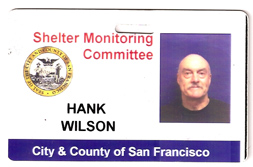
Today I read a BAR obituary that made me pretty sad. Veteran activist Hank Wilson has died.
Here's Liz Highleyman's nicely-written obituary in the BAR; I'm pasting the text below my own.
Hank was a perennial presence in San Francisco political life and AIDS activism, before, during, and after the time I lived there. Many other people know Hank much better than I do. This is my testimony to Hank, and bear this in mind: I barely knew the guy. I never sat down individually with him and had any conversation with just him and me, never so much as had coffee with him. I saw him at meetings--a lot of meetings. And he was always kind to me.
Here are two things I remember about Hank.
1.
I was working at the STOP AIDS Project and Hank called us. I didn't know Hank but I knew ACT UP, and Hank was calling from ACT UP. He told us that the CDC was having a meeting about HIV prevention for young people and that he thought they should have young people at the meeting. He knew we'd just started a young men's project, and he thought we were the sort of young people who should go to the meeting. He told us who to call.
We called. I told the person at the CDC that I was a young person, I was doing AIDS work, and I wanted to go to the meeting. She bought me an airplane ticket to Atlanta. I went to the meeting. I was in my early 20s, and it was the first time I went to a meeting like that--the first of what later became many. I don't know that we accomplished much. The CDC has its own momentum, and when we demanded youth representation in planning prevention campaigns they just hired some guy who was a CDC yes-man already. But I learned a lot about how the system worked. These were pieces of observation and understanding which I used later, things I still instinctively understand about government and public health now.
Hank was a true community organizer, and by this, I mean that Hank's whole life was spent making phone calls like the one he made to us. That was fifteen minutes he spent making a phone call, which still influences how I think about the world today. What a community organizer does is to organize the community, obviously. But what this actually means is finding the secret strength of the community. Especially, it means finding people scattered here and there, and bringing them together. Making them stronger. Teaching them new skills. Hank believed in this process in a deep way. It was not his job, though it later became his job; it was just who he was. The existence of Hank means that I know more about public health politics--just from that one phone call--than I would have if Hank had not existed.
Hank could drive you crazy by talking about poppers, but he never lost sight of bigger goals. Liz Highleyman's account in his obituary of the organizations he was involved in and helped start is likely hard to comprehend for those outside Hank's community. If that's you, you'll just have to trust me: a remarkable amount of cultural uplift, political power, and improvements in health came from these organizations.
2.
I once saw Hank speak--characteristically, as part of a panel--at a community forum organized by the STOP AIDS Project. He talked about the Butterfly Brigade.
In the 1970s, the Butterfly Brigade was started because there had been gay-bashings in the Castro. And people started thinking, how the hell are there gay men getting beat up in the middle of a totally gay neighborhood? How is this hapenning? And the Butterfly Brigade was started as a self-defense organization. They started passing out whistles. And they set up the community expectation that when someone started blowing a whistle, that everyone else should come run to try to help. This included the Butterfly Brigade--which went on patrols, Guardian Angels-style--but everyone else too.
Hank said that this expectation of community mutual aid and self-defense helped stop gay-bashing in the Castro. Thugs stopped thinking they could get away with it. It sounds basic now--the idea that it would be a bad idea to try to gay-bash in a gay neighborhood--but it wasn't basic until people started sticking together.
But the whistles also did something even more important later, Hank said. When AIDS came a few years later, there was an idea already in place: we defend each other. We stick up for each other. This is not just some zone full of bars and cruising spots; it is a community. That was an idea that people were just starting to understand in the 1970s.
In other words, Hank believed that these whistles were a symbol of the underlying idea of how much of the community responded to AIDS--and in some way, a kind of disaster drill that prepared the community for what was to come. They already understood the principle. They just had to apply it to a new example.
The idea: community organizing builds strength that lasts beyond particular causes.
Hank Wilson, a kindergarten teacher who became a community organizer, has died. Keep him in your thoughts, not for his sake, but for the sake of your community. We all need to figure out what kind of whistles we can be passing out now, for the threats our communities will face in the future.
+++++++++++++++++
Veteran activist Hank Wilson dies
by Liz Highleyman
liz@black-rose.com
Longtime gay and AIDS activist Henry "Hank" Wilson died Sunday, November 9, at Davies Medical Center in San Francisco. A longtime HIV/AIDS survivor, Mr. Wilson succumbed to lung cancer at age 61.
Mr. Wilson was a veteran of countless struggles, from the fight against the Briggs initiative to AIDS and homeless activism. Over more than 30 years, he played a pivotal role in San Francisco's LGBT history.
"If ever there was a man whose vocation was helping others less fortunate and speaking truth to power, it was Hank," said friend and fellow activist Michael Petrelis.
Mr. Wilson was born and raised in Sacramento. He graduated with a bachelor's degree in education from the University of Wisconsin in 1971. Soon thereafter, he moved to San Francisco, where he taught kindergarten and grade school and was a swimming coach.
In the mid-1970s, Mr. Wilson, together with fellow teacher Tom Ammiano (now a city supervisor and assemblyman-elect), started the Gay Teachers Coalition. The group fought discrimination against gay teachers, culminating in the San Francisco school board's decision to add gays and lesbians to its non-discrimination policy in 1975.
"Hank was impressive even then," Ammiano recalled. "He was big, he was handsome, his energy was boundless, but his ego was very, very small. I just can't imagine the number of people he has touched and how much he's going to be missed."
In the late 1970s, Mr. Wilson participated in the fight against the nascent religious right and its efforts to roll back advances in gay equality. He was instrumental in the successful No on 6 campaign against the 1978 Briggs initiative to ban gay teachers in public schools – a battle many have likened to this year's Proposition 8 in its national significance.
The activism that emerged in that era spurred the creation of many long-standing LGBT organizations. Mr. Wilson served on the board of the Gay Youth Advocacy Council, which gave rise to the Lavender Youth Recreation and Information Center. He helped shape school district policies regarding anti-gay harassment and comprehensive health and sexuality education, and with Ammiano, he started a speakers bureau to inform students about gay and lesbian issues.
Mr. Wilson helped launch a small gay film festival, which later evolved into Frameline. An early advocate of gay self-defense, he started distributing whistles in the late 1970s and co-founded the Butterfly Brigade, which became the Castro Street Safety Patrol. Both the speakers bureau and the safety patrol later became part of Community United Against Violence.
"[Hank] was a sort of Johnny Appleseed of gay and lesbian organizing; wherever he went, organizations sprouted," said longtime friend and caretaker Bob Ostertag. "As soon as something was up and running, he would move on to start something else."
In 1976, Mr. Wilson co-founded the San Francisco Gay Democratic Club, which was renamed after Harvey Milk following his assassination in November 1978. Mr. Wilson took part in the May 1979 White Night riot to protest Dan White's lenient manslaughter conviction, and he later regaled younger activists with tales of throwing flaming newspapers into unoccupied police cruisers outside City Hall.
The poignancy of Mr. Wilson's death so soon after the premiere of the Milk biopic and the recent election was not lost on friends and fellow activists. Before he died, he had the opportunity to see the film and he celebrated Barack Obama's victory from his hospital bed.
"We watched Obama's acceptance speech, and he couldn't have been more delighted," said Stephen LeBlanc, who spent election night with Mr. Wilson. "He cheered out loud when Obama said 'gay and straight.'"
Direct services
While Ammiano and Milk directed their activism into political careers, Mr. Wilson devoted himself to providing direct services for people in need. In the late 1970s, he and a friend, Ron Lanza, took over management of a group of SRO hotels in the Tenderloin – as well as the Valencia Rose, an influential queer performance venue.
One hotel, the Ambassador, was frequented by many queer and transgender people and became an early epicenter of the AIDS epidemic. Mr. Wilson put together a team of care providers, and with a small group of activists including Dennis Conkin and the Reverend Glenda Hope of San Francisco Network Ministries, started the Tenderloin AIDS Network in 1986. After running on a shoestring budget, TAN obtained city funding to open a storefront in 1990, becoming the Tenderloin AIDS Resource Center.
During Mr. Wilson's tenure, the Ambassador was known as housing of last resort for people no one else would take. By the early 1990s, it was the largest supportive AIDS housing program in the country, and it came to be regarded as a model of community care and harm reduction.
"People took advantage of him, ripped him off, disrespected him, but he just kept taking them back," said Hope. "If there was one person who taught me the meaning of forgiveness and unconditional love, it was Hank Wilson."
"There was nothing quite like the experience of Hank Wilson reading some bureaucrat's beads or telling it like it was," Conkin added. "I learned a lot about speaking the truth from Hank. And how to maintain kindness and compassion, and not get stuck in rage or despair or hopelessness."
Mr. Wilson – who was himself diagnosed HIV positive in the early 1980s – was also instrumental in starting the city's earliest AIDS activist groups. He helped form the PWA Coalition and Mobilization Against AIDS, and organized the city's first AIDS memorial candlelight march in 1983.
Before the cause of AIDS was known, Mr. Wilson suspected poppers had a detrimental effect on the immune system, and he started the Committee to Monitor Poppers in 1981. He compiled volumes of research and opposed the sale and advertisement of poppers – a campaign he revived periodically as community awareness waned. With John Lauritsen, he co-authored the book Death Rush: Poppers and AIDS (1986).
In the late 1980s, Mr. Wilson joined ACT UP/San Francisco and participated in countless actions, including an early demonstration against Burroughs Wellcome demanding a lower price for AZT. Over the years, he advocated for alternative therapies, expanded access to experimental drugs, needle exchange, and medical marijuana.
"Hank was one hell of a committed AIDS activist who fought against all injustice," said fellow ACT UP member Matthew Sharp. "The only meetings or demonstrations he missed were because he was involved with another activist project or was in someone else's face."
Mr. Wilson was a founder and integral member of ACT UP/Golden Gate when it split off from ACT UP/San Francisco in 1990, and he remained active through the group's evolution to Survive AIDS in 2000 until it folded four years later.
"Hank insisted that we could still make a difference, even when we were just a handful of people," added longtime member Michael Lauro. "It didn't matter whether he had 20 people beside him or just himself, if he saw a wrong he'd try to right it."
Mr. Wilson's activism extended beyond HIV/AIDS to encompass a broader view of community health, and he attended several gay men's and LGBT health summits starting in the late 1990s.
"Hank was one of the pillars of the gay men's health movement in the U.S., and he fought for many other communities too," said Chris Bartlett of the LGBT Leadership Initiative. "He dedicated his life's work to the health and welfare of the underdog, and he based that work on the principles of gay liberation, human rights, and a powerful awareness of the structural forces that impact our day-to-day health."
Mr. Wilson managed the Ambassador until 1996, when he left due to his own worsening health and to care for his ailing parents (the Tenderloin Neighborhood Development Corporation now runs the hotel). Having fallen to just 20 T-cells and plagued with Kaposi's sarcoma and opportunistic infections, he was told his death was imminent, but he was among the first to gain access to effective new antiretroviral drugs and his health turned around.
Mr. Wilson soon got back to work, managing TARC's homeless drop-in resource center and volunteer program from 1998 through the mid-2000s (TARC and Continuum HIV Day Services merged to become Tenderloin Health in 2006). His final job was with the Shelter Monitoring Committee, verifying that city homeless shelters were providing mandated services.
Write-in campaign
Though he eschewed a political career, Mr. Wilson never strayed far from politics. In 1999, he spearheaded the effort to convince Ammiano to run for mayor against incumbent Willie Brown. Along with Robert Haaland and Tommi Avicolli Mecca, he managed a write-in campaign that forced Brown into a runoff and is credited with reviving the city's progressive movement. After district supervisor elections were reinstated in 2000, Mr. Wilson ran – unsuccessfully – for the District 6 seat.
Always unassuming, Mr. Wilson lived for more than 30 years in a small studio apartment near Civic Center, sleeping on a mat on the floor until he entered home hospice care and friends insisted he get a bed. He remained active until his final months and was hesitant to reveal the severity of his illness.
"Hank wasn't intimidated by anything. He could be outnumbered, outspent, and overpowered, but he was rarely outsmarted," said friend and fellow activist Gary Virginia. "I don't think he was 'fearless' in the sense that he wasn't afraid or scared. He just didn't let that stifle him. He empowered himself, and in doing so, empowered others."
Mr. Wilson is survived by a sister and a brother. A public memorial has been set up at the corner of Castro and 18th streets, and a memorial service is being planned (most likely for December). Donations in his memory may be made to one of the many causes he supported, including the Quan Yin Healing Arts Center and the GLBT Historical Society.
11/13/2008