Saturday, April 19, 2008

Dockworkers, doctors, and democracy

Photo from the Sydney Morning Herald: the Chinese ship, and South African church members protesting its cargo.

The dockworkers of Durban, South Africa, did what their government wouldn't: stopped a shipment of arms from China to Zimbabwe, including 3 million rounds of ammunition for AK-47s, rocket-propelled grenades, and mortar rounds. The arms would help the doddering dictator Robert Mugabe try to hold on to power, after an election that appears to have not gone well for him.

The Durban dockworkers refused to unload the arms. Then an Anglican archbishop filed a motion in court to stop the shipment. When the court affirmed the motion, the Chinese ship pulled up anchor and headed for Mozambique--or was it Angola?

Whichever port it heads towards next, the Chinese ship will likely eventually find a port, and a road to deliver its bullets. Nonetheless, the collaboration between the church and the unions exposes the banal exchanges of money, bullets and bureaucratic documents which move violence around the world. Mugabe sends money (though surely not in his own currency, which he has made worthless). The Chinese send bullets. The South African government signs the papers which allow the bullets to move from its ports to landlocked Zimbabwe. Stopping the bullets for a few days or weeks may or may not influence the outcome of the struggle in Zimbabwe, but it does help highlight who may share responsibility for the violence of that struggle.

The collaboration recalls some of the proudest moments of the fight against apartheid in South Africa, when the church and the unions led the struggle in the streets while much of the African National Congress leadership was in exile or prison. It also reminded me of a moment closer to home, when dockworkers in Oakland, California, refused to unload a South African ship's cargo as a protest against apartheid. At that time, they were supporting the work of the African National Congress as well as the Congress of South African Trade Unions in their collective struggle for justice and democracy.

This time, though, the unions and officials of the African National Congress were on two different sides of the question. COSATU members refused to unload the Chinese ship, while African National Congress government officials had already cleared the cargo to cross South Africa on the way to Zimbabwe, and the president of South Africa continues to coddle Mugabe.

The dockworkers' refusal to unload the cargo illustrates a broader political principle. In Zimbabwe, the ruling party was able to assert its primacy above all other political organizations. In South Africa, even those who have been fiercely proud members of the African National Congress also remained part of other organizations, like churches and unions, and these organizations remain an active and vital part of the political landscape. (In fact, they've helped change the leadership of the ANC, and President Mbeki's faction appears to be on the way out.)

When people in South Africa split their loyalties--voting for the ANC, but marching in a COSATU or Treatment Action Campaign march, and supporting an Anglican archbishop who speaks truth to power--their nation's politics, their own interests, and the well-being of the entire region are better served.

Thinking about the dockworkers' choice, it seems to me that in this election season, we should choose our candidate wisely, and then join an organization that also reflects our values but stands ready to oppose our chosen candidate. This is how we create the checks-and-balances of true democracy--not just by courts and legislatures, but by votes and protests, and by support and opposition by issue rather than by allegiance. Democracy is formal and informal; it involves the dockworkers refusing to unload the cargo, and the Anglican church going to court to stop it, and an independent judicial system willing to fairly judge the motion.

I've often been disappointed with myself during my medical training that I have not as been politically active as I think I should be. The dockworkers are a reminder of why a vote is not enough. My excuse this year is internship, which is my excuse for a lot of things; but that excuse will be over at the end of June. And then I will need to think about what I can do to make the world a better place, and to do my small part in exposing its violence.

Doctors sometimes convince ourselves that we are taking our own stands for what is right when we refuse to order a useless study, or fight for a medicine that an insurance company seeks to deny. But these actions are the quiet battles that take place inside the industrial process of healthcare delivery. Unlike the dockworkers, we actually conceal the violence of the system when we make private phone calls to soften its blows. Sometimes we should be ready to choose our times when we simply refuse to unload the ship.

I don't know which times these would be. The work of doctors and dockworkers is very different. Our struggles are rarely as clear-cut as stopping a shipment of arms to someone who will use them to kill civilians and suppress democracy. And a leader of a grassroots healthcare workers' movement could not in good conscience make this classic dockworkers "just try to fight us" threat:

Randall Howard, general secretary of the South African Transport and Allied Workers Union, said the dock workers had no intentions of allowing the Chinese cargo to be unloaded. "If they bring in replacement labor to do the work, our members will not stand and look at them and smile," he said.


Still, if the nature of who we are and what we stand for forbids busting heads for political gain, we can do more than vote and make quiet phone calls. What this will be for me, I'm not sure. But I'm in a mood for change, and I'm pretty sure that Obama won't be enough.

Sunday, April 13, 2008

Hospitals and farmer's markets

Should every medical center have a farmer's market?

This is the brilliant idea of a Kaiser Permanente physician in Northern California, who has convinced Kaiser to host farmer's markets at many of its medical centers.

Saturday, April 12, 2008

Your glamour was their genius


photo of ACT UP Chicago demonstration from wockner.blogspot.com/

An essay I wrote a while ago, that grew out of my ongoing project in AIDS history:

I have to admit that despite a lifelong professed hatred of musicals, I went to the movie version of Rent when it came out, and I started getting a little teary almost as soon as it started. Rent shows earnest people with AIDS singing about their lives until interrupted by beepers reminding them to take their next dose of AZT; it shows a support group of people with AIDS sharing their fears and finding community. Plus there’s an almost unforgivably sentimental but nonetheless lovely song about measuring the quality of one’s time in the world by the love you find in it. Sometimes I am a sentimental person, and Rent’s sentimentality hits me right where I live.

Rent
seemed at first to be an unlikely candidate for mainstream success; half of its characters are HIV-positive, half are gay or lesbian, and two are heroin addicts. But that’s how some of the biggest hits are made. To understand Rent now, we have to remember what preceded it.

Fear and hate of people with AIDS are still widespread in our society, but those feelings were so common, so intense and so irrational in the nineteen-eighties that the counter-reaction eventually created a strange kind of glamour. AIDS acquired a glamour of stigma, like the glamour of Billie Holiday or drag queens. As the glamour gained momentum, politicians who voted for money for AIDS, or scientists who did AIDS research, or celebrities who wore red ribbons all got to benefit from the glamour, without having to suffer from the stigma. To stand up for the stigmatized is to cloak one’s self with the righteousness of the underdog and the aura of the enlightened.

But if we view AIDS simply through the glamour of stigma, we miss essential parts of the story. The lesbian writer and activist Sarah Schulman has written about the way that Rent combines parts of the opera La Boheme with elements of a novel of hers, People in Trouble, for important parts of its plot. But as she herself argues, whether you view Rent’s similarities to her novel as theft, honest borrowing, or coincidence, the bigger problem with Rent is the part of the story it does not tell.

You can find Schulman’s side of the story by reading her novel or in her essay critiquing Rent’s approach to AIDS and gay and lesbian lives in her book Stagestruck. But I think her point is actually made most forcefully by another project of hers that has nothing to do with Rent: an extensive set of interviews, found at www.actuporalhistory.org, with members of the AIDS activist group ACT UP.

The interviews make clear that in real life, it would have been essentially impossible for the characters of Rent to avoid ACT UP. In the time and neighborhood where the story takes place, ACT UP’s posters and protests were everywhere. Mimi might well have traded in her used needles for new ones at a needle exchange set up by ACT UP activists. Activists wearing ACT UP t-shirts would have been at the eviction protest staged by Maureen, passing out flyers for their next protest. And the people in the AIDS support group might have worried about losing their dignity, as they do in Rent, but they also would have traded ACT UP activists’ insider tips about clinical trials and experimental drugs.

One part of ACT UP’s legacy comes from building collective expertise that allowed activists to sit across the table from scientists and bureaucrats and demand new approaches to health policy and scientific research. But another part of ACT UP’s brilliance could be found in their demonstrations. Some were huge and carefully orchestrated, as when they took over the headquarters of the Food and Drug Administration. Others were smaller, including political funerals in which activists carried coffins out into the streets, blocking traffic while they marched with the bodies of their dead friends, protesting against a government and a healthcare system that seemed not to care about their deaths. At the time, that sort of thing made a lot of people furious, and all sorts of people hated ACT UP for their in-your-face stridency.

But with more than a decade gone by, it’s now clear that the provocations of ACT UP and other AIDS activists worked. They changed the science, politics and culture of AIDS. It was after ACT UP that scientists started listening to activists, and after ACT UP that federal lawmakers passed legislation to fund comprehensive AIDS care.

Let us not distort history by thinking that Hollywood led the way to tolerance. It was only after the scientists and politicians had already signed on that celebrities started wearing red ribbons. Even then, though, the red ribbons carried a little of the electricity of being on the right side of a struggle.

AIDS activists had succeeded by transforming the stigma that marked them into a weapon of power and social change. A few years later, based on the energy they had created by angrily drawing a line between right and wrong, Rent became a runaway hit. Viewed in the light of this history, Rent is a musical about the glamour of stigma. The ACT UP oral histories document the genius of the stigmatized.

Sunday, March 2, 2008

snapshots of the VA

For two weeks, I'm on nightfloat at a Veteran's Administration hospital, a dark quiet place at night.

***

There's a big photo of the president at the entrance. Each night as I walk in, I think, I hope that photo looks a lot different next year.

***

There's no cafeteria at night. There is a room full of vending machines. I had a 20 dollar bill and I wanted a Coke Zero. In a quiet hour, I walked down to the emergency department and asked the clerk if there was a cashier anywhere who took payments at night, so I could get change. He sent me to the security desk, staffed by a VA police officer who told me that there was no cashier anywhere, and no change machine he could think of. I thanked him, and started to turn to walk away.

"But there's a stamp machine," he said; "You could buy a stamp and it'll give you change. It'll be all coins though."

"That's brilliant!" I said. A minute later I was the proud owner of a few US flag stamps, and seventeen one-dollar coins, sixteen of which had the picture of Sacajawea and her baby, and one of which had Susan B. Anthony. I filled my scrubs shirt pocket with them.

***

Near the physical therapy section, across from an office of the Disabled Veterans of America, there is a xerox copy of an article on a bulletin board commemorating the passage of the Americans With Disabilities Act. In a nearby hallway, there is a sentimental print of a painting of a man in a wheelchair, seen from the back, with each of his strong arms extending out to the hands of his children, his son on one side and daughter on the other. I say sentimental because of the style, a style of illustration that is seen on sentimental family portraits of all kinds; on the other hand, among the kitsch and sentiment of all the other hospital art I have seen, I have never seen this picture before.

***

At night, there are tasks that the nightfloat intern does that are done for us at the larger hospitals. For instance, I draw blood overnight, and take it down to the lab for processing.

Recently I went down to the lab in the middle of the night, around the corner from the darkened entrance to the building. In the waiting room just inside the entrance, a TV was playing Law and Order reruns to a dark lobby full of empty chairs. The lab itself, hidden behind a couple of turned corners, is a big brightly-lit room full of equpiment, which would be loud and busy by day, but is all quiet in the middle of the night. One technician was on duty, a friendly man who looked not too far from being eligible for his federal pension, and when I walked into the room, he was looking at a computer screen showing an internet page that said in big letters, "When You Will Die": an internet death clock.

***

In a back control room in the radiology department, there's a picture posted up, with a headline above it: "The terrorists have won the toss, and they have chosen to receive." The picture (of course) is of a huge bomber photographed from above with its potential payload of bombs and missiles lined up impressively on the tarmac in front of it.

***

We have a patient getting a scan, for which the nurse and I need to roll him down to radiology because it's the middle of the night. As we are in the control room, the tech says one or two things about the patient that are not too terrible, but not entirely kind. But after the study is done, as we transfer the patient back onto his bed, and start wheeling it out of the room, the tech looks down at the patient and says with evident sincerity, "I hope you feel better soon. Thank you for your service."

***

There is a whole sub-genre of New England VA patients, large men with large unruly beards. They live in Maine or New Hampshire in the woods or some back corner of a town, maybe in some shack or trailer, maybe just in their cars.

Without betraying the confidence of any one of these patients, let me just say that as I leave hospital rooms at night after being called to evaluate another such man, it is not infrequently that I recall the state slogan of New Hampshire, emblazoned proudly on every license plate, including cars used as homes by large veterans with unruly beards and worsening medical problems:

"Live Free or Die."

Sunday, January 20, 2008

Friday, December 28, 2007

Just your average campaign song: "Bring Me My Machine Gun"


This is Jacob Zuma, the new leader of South Africa's ruling party, the African National Congress--and because of this, the instant front-runner for the presidency. He's singing Mshini Wami, "Bring Me My Machine Gun", his signature song, one that dates back to the liberation struggle. I can't say that it seems like an entirely good thing that Zuma is on track to be South Africa's next president, but watching him sing this song with his supporters embodies some part of what is wonderful yet terrifying, unstable yet enduring, and both ugly and beautiful about South Africa.

Wednesday, November 21, 2007

The Differential: Pain vs. FOS vs. Pain + FOS


Some addicts we love...

...and--despite our best efforts at forgiveness--some addicts we loathe.

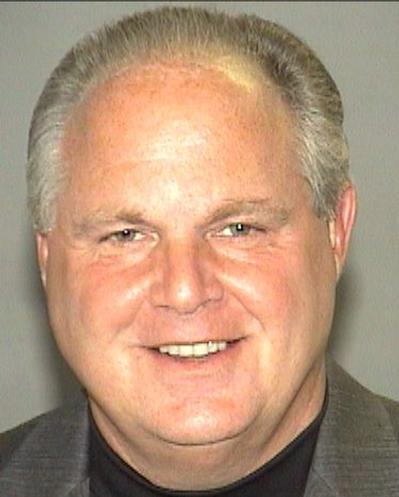
photos: Andre Royo as "Bubbles" from HBO's The Wire; Rush Limbaugh in his booking photo from the Palm Beach County Sheriff's Office in April 2006, from Wikimedia Commons; below, Papaver somniferum from Wikimedia Commons.


Sometimes I prescribe medicine; sometimes I prescribe drugs. Prescribing drugs is much more difficult.

The Drug Enforcement Agency gives every doctor a number, which allows tracking of prescriptions for "controlled substances"--in other words, medicine that can double up as what we more often call "drugs", i.e., the stuff that can get you high. Because I'm an intern, my DEA number only works when I'm working for my hospital; but it works nonetheless.

I am reminded every day of the distinction between medicines that can't get people high and medicines that can. I print up pages of prescriptions when discharging patients, and then go through them and--pulling out my DEA number from its concealed spot on my person--write out the number for the controlled substances.

Going through the list, I know that this one is an antibiotic that could send someone into anaphylactic shock, but it doesn't get my DEA number; this other one could destroy someone's kidneys, but it doesn't get my DEA number either. These medicines can be dangerous, but they're just medicine. They're controlled by professional self-regulation, and ordinary prescription and medical licensing laws.

But this prescription is for an "anti-anxiety medicine." It can roughly be thought of as vodka in a pill, and it does get my DEA number. And this one to treat pain--I only write for the exact number of pills required to get the patient to her next primary care appointment--is basically heroin in tablet form. These medicines are "controlled" in a different way. These are the medicines that the apparatus of the state won't just entrust to the good intentions and professional pride of doctors. If we write bad prescriptions for medicines, we can lose our medical licenses. But if we write too many prescriptions for "drugs"--for the controlled substances--we can be charged and imprisoned.

Though various drugs fit into the category of "controlled substances", it's the opiates--the variations on the chemical structure of the opium poppy--that cause interns the most trouble.

There are a lot of people who have pain serious enough to require intensive medical therapy, so we need to prescribe opiates fairly frequently. But there is also a whole class of people out there who are addicted to prescription drugs, the Rush Limbaughs of the world.

The two sets of people overlap considerably, so drawing a line between the "good" opiate-takers and the "bad" ones is as impossible as it is morally dubious. Even for someone who has no pain, the way to feed the addiction is to create the appearance of pain when coming into the room for the doctor's visit. And what is more subjective than pain? Who am I to say you don't have pain, when you say that you do?

This is where interns come in. Most of us start getting resentful early, because the structure of academic medical clinics means that people looking for prescription opiates are often looking for us. First of all, we look like easy marks; we maybe haven't seen every scam a dozen times yet. Also, we're the ones who are accepting new patients and have plenty of new patient appointment slots to fill. That's perfect for "doctor shopping", which is how some people try to get either the single doctor who prescribes the most opiates, or a bunch of simultaneous legitimate prescriptions for the same opiate medicine.

In the hospital, we're the doctors who actually write the orders; who see the patients most often; who get paged first when the patient hits the nurse call button again and again demanding to see the doctor. (If there's anyone in the hospital who gets more enraged and embittered by prescription drug addiction than interns, it's nurses, who spend exponentially more time than we do responding to requests for pain medicine.) So we have a lot of contact with people asking for opiate medicines.

The majority of the time they're asking for those medicines because whatever put them in the hospital hurts, a lot. Sometimes, though, we're not sure how much of what drives the request is pain and how much is craving. Or we're frankly pretty sure they're trying to feed cravings we don't want to satisfy. How we diagnose this formally is hard to say, exactly, but our gut feelings are unmistakable. In our workroom the other day, a colleague of mine said, "Sometimes you just want to give the diagnosis of FOS"--Full Of Shit.

I actually like caring for heroin addicts who are open about their use. I hope they kick the habit. But if they don't, I'm fine with talking about clean needles, getting tested for hepatitis, and avoiding skin infections. I'll look for endocarditis, send out HIV antibody tests, keep an eye out for toxic exposures from drug contaminants, and work the phone for liver clinic follow-up appointments. I'll even sit and listen to self-pity for a while, because maybe within some of the self-pity will come the realization of hitting bottom. And that's an opening for change.

Within all of this--much of which is difficult, and some of which sometimes involves some scams and silences and lies--at least the patient and I are both talking about heroin for what it is. It's an addictive substance that gives both pleasure and relief, and also carries risks and problems. It's a substance that someone is taking of their own volition, and isn't asking me to prescribe.

But much as I'd like to be the humanistic doctor who isn't bothered by what bothers other doctors, I have to say that prescription drug addicts do stretch me to my limits of forgiveness. They need me to prescribe them their addiction, in a cleaned-up denial-inducing form. And they inspire doubt in me even in my clearest moments, because I don't want to leave pain untreated. They know that my doubt is an opening, an emotional wedge.

I want to avoid being manipulated by people with hidden agendas. But I can't simply turn off my capacity for worrying about pain. How do I know at the beginning of a clinic visit that my empathy is not a human gesture, but merely the potential key to the DEA-regulated lockbox? And when someone says to me that I am not successfully treating their pain, how can I possibly know for sure when they're lying to me? (We do have some tricks up our sleeves to try to figure this out, but their reliability is somewhere from uncertain to quite low.)

At the end of an interaction with someone I think has crossed the line from complicated pain treatment into simple drug addiction, it is almost impossible to feel proud, or good at my job. And it is impossible not to feel a little abused.

I am not laboring under the illusion that by withholding or limiting prescriptions for opiates, I'm curing addiction. Far from it. I know that the pharmacy of the street contains every drug that the chain-store pharmacy carries, and more. If someone wants this stuff, they can get it. But I don't want to put a clean white coat over someone's addiction. I don't want my training to become someone else's denial. And if I'm not curing addiction by holding back on certain prescriptions, at least I'm not feeding it.

The problem with this is obvious. It's for all of these reasons, and more, that much of chronic pain does go undertreated in the United States. The prejudices that get layered onto this struggle also mean that an unemployed black man with a lot of back pain is probably less likely to get his pain treated than an employed white man with much less back pain. At the same time, it's simplistic to say that everyone who rates their pain as "10 out of 10" should get their opiate dose doubled as some kind of democratic principle.

I spent a lot of time in medical school thinking about what it meant to be a democratic doctor. In my ideal world, I am a doctor who acts as a consultant to people who are trying to manage their own health. I am not taking care of people; I am helping people take care of themselves.

But every democracy has its vulnerabilities, its way of being subverted by anti-democrats. Every democracy depends on a predominance of good intentions, and so too does the democratic clinic. Prescription opiates are where the democracy in my clinic is most tested, and where I most commonly fall short of my ideals. My eyes narrowed and my heart suspicious, my hands grip the lock firmly; I will let no one else open the box. My DEA number is mine, and mine alone.

When it comes to opiates, my democratic clinic is constantly at risk for becoming a failed state. Generally my clinic muddles along more or less as it is supposed to. The trains don't run on time, but they run. But with opiates, the slightest difficulty provokes an untenable choice between a chaotic ungoverned world of individual self-interest, and iron-fisted dictatorship.

The opium poppy: you say you want it for the receptors in your central nervous system, but is it really for the hunger in your heart?