Showing posts with label academic medicine. Show all posts

Tuesday, November 24, 2009

Monkeys in a cage

Watching a patient in an altered mental state sit in a bed, I realized that if my patient were a monkey, and my relationship with my patient were governed by a laboratory's animal care and use committee, I would be cited or censured for not providing enough activities for my lab monkey. But there is no one to cite me. So my patient sits in a room, isolated, a TV on in the corner, a sad lonely primate.

Saturday, August 1, 2009

Night float

Our department chair decided at some point that the people on night float shifts--interns who cover the medicine patients overnight, and residents who admit new patients coming in after the regular teams have stopped admitting--should have a teaching session. And so we met this morning, all the night float residents and interns. I've been doing a pinch hitter sort of job, in which I do overnight medicine consults and also support the night float interns; next week I'll be doing admissions. The relationship among all of these people is an odd one. Except for me (because I spend a reasonable amount of time checking in with my early-in-the-year interns and backing them up in various medical crises), we are mostly working alone. But we see each other through the night, crossing paths in the hallways or sharing a workroom for an hour here or an hour there.

In our conference this morning, we started talking about a patient. It turned out she'd been admitted two days prior by one of the admitting residents. An ICU resident on call overnight came down to evaluate her when we thought she might go to the ICU, and spent a good long time afterwards thinking about the patient's situation. In a workroom, thinking aloud, getting excited about some ideas about the patient's situation, the ICU resident talked to another nightfloat resident, and had pitched her theory to a couple of us. One of the interns had been called a couple of times to go see her overnight, and I'd gone to back him up for some of the hairier calls, and I had helped arrange the patient's possible transfer to the ICU before we decided she was OK to stay on the regular medical floor.

In conference, then, the admitting resident presented the case, but the group started talking about it in an engaged and interested way, because so many of us had thought about the patient, cared for the patient, or heard about the patient already. I'd seen the admitting resident a couple of nights before and had talked about this patient even then, because the resident was excited about the admission. She wasn't too busy and with an interesting case to think about and read about, she got the chance to do real medicine instead of setting up a holding pattern to be handed off to the day team. I'd spent a long time thinking about the patient when I was trying to figure out whether she should go to the ICU. And the nightfloat intern had spent a lot of time seeing the patient because of multiple problems over several nights, trying to figure out which of the calls represented real crises and which ones didn't.


I was reminded of another time I was in the ICU and a patient came in with an unusual problem; within a couple of hours, cardiologists, pulmonologists, and oncologists had mobilized for procedures and studies, teams were passing the chart back and forth as they worked on plans and notes and recommendations, and people kept buzzing in and out of our MICU team rounds to give updates on the latest detail of the plan. A cardiology fellow showed up and so did an echo tech, and within an hour of us asking for the study, there was a detailed echocardiogram and an attending reading it. Someone else was planning for a biopsy. One consult team was calling another consult team to help work out details.

"This is when I love being at a teaching hospital," I said quietly to one of my fellow residents, as our intern was presenting data and we were watching out of the sides of our eyes as one of the consult teams was bustling about nearby. "These moments of this massive mobilization of expertise, all of these people with this insane amount of training, coming together for one sick person. It's beautiful."


Overnight, the hospital often seems like it's in a holding pattern. We try to keep people alive until care can be advanced during the day. So it was a surprise to me to find myself in conference with a little bit of that teaching hospital feeling: the feeling that there were all of these smart and engaged and caring people watching the progress of one sick patient and sometimes being a part of her care, wondering how it would turn out, wondering whether she would come to the unit or stay on the floor, wondering whether she'd get sicker or better, hoping for the best.

The senior admitting resident had come up with a long set of possibilities for what might explain the patient's symptoms, and ordered a bunch of tests right away to start sorting them out. The ICU resident was pitching an obscure diagnosis but one with some credibility; though I wasn't buying it, I had to give her props for zeroing in on a particularly striking lab value which I had skimmed over. I was pitching another theory, but at the same time telling the intern to cover for gram-negative infection, which was actually a counter-move to anticipate what could happen if I was wrong. The attending, writing a note in the morning when we emerged back onto the floor from our conference, thought we were all wrong, was stopping the antibiotics I'd told the intern to start, and had another theory entirely. But we all had opinions without certainty, which meant that we really listened to each other, and we all had a sense of suspense:

"Poor lady," said the attending, "I haven't seen a case like this for a while";

"I really think the team should start treating now, even without knowing everything!" opined the department chair;

"I know what you mean, but they could get in trouble with that in other ways," said the chief resident, deferential but firm;

and the intern, new to it all, was listening to the primary attending with eyes much brighter than his fatigue should have permitted, truly a part of this thing that we all had spent so much time working towards, and which he had finally just joined a few weeks before.

We felt ourselves to be a part of a community of highly trained people, late at night when others are asleep, part of the world of doctors as doctors themselves hope for and imagine it should be. A team of experts and people becoming experts, mobilizing, caring, theorizing, arguing; and at the same time, perhaps above all, walking briskly down the hall towards the patient's room after getting a page from the nurse about low blood pressure.

Thursday, December 11, 2008

variation on a theme: romance of long hours

written post-call after a long ICU shift, which after I wrote it I realize is a reworking of some things I've written before

I used to work at a public health job, working for the city, with good benefits, and time to go to the gym before going home to make myself dinner. When I started talking about becoming a doctor, a lot of people said that was nuts, most of all some doctors who looked back on their experience bitterly. Others were more encouraging, and I chose medicine.

I have no idea what my life would have been like if I hadn't chosen medicine; but what I usually tell people is that although I've sometimes been exhausted or miserable or depressed or discouraged, I've almost never been bored. I hated being bored at work. Now I'm not bored.

But aside from medical training being totally absorbing, part of the dirty little secret of long work hours is that it is part of a romance that doctors and patients have with each other. Many of my patients look at me sympathetically and ask whether I ever go home, and even shake their heads over my working conditions. But many of them also seem to sort of appreciate the romantic idea that I'm some sort of insanely dedicated nut who cares only about helping people and has no life other than worrying about their telemetry alarms. I'm there all night, yes; but I'm there for them.

On the flip side, as I'm complaining to my friends with regular jobs, I'm also a little proud of myself for making a different choice. I joined the few and the proud; my life is full of drama and a sense of importance. In the dark early morning hours in my academic hospital, the halls begin sputtering with the energy of people working really hard to become who they are going to become. That's kind of beautiful, and I am proud to be a part of it. And, though usually I would only tell my mom this, I'm proud of myself. I'm proud of myself for choosing something tough. This is a common impulse: it is the basic idea of most military recruiting pitches, and it has worked to convince people to do difficult or even insane things for many generations before this one.

When I worked in a regular job, I felt that my life lacked significance or importance somehow, even though I was doing important work. That was because I lacked this sense of drama.

The sense of drama that draws doctors to our training--even as the conditions that make our training dramatic also sometimes make us bitter or depressed--is probably in the end a fiendish tool of The Man to make us work harder for cheaper, and like it.

It's also part of how doctors become self-justifying later; other people can just suck up whatever hardship they face, because we did. (As if a few years of earning an average American wage and working insane hours in preparation for joining the top tier of wage-earners and gaining inestimable social prestige is really a form of enduring suffering.)

Change won't occur until the rest of the society stops appreciating the beauty and the drama of the dedication that the medical training process represents, and starts viewing residents as participants in a high-stakes industrial process that must eliminate systemic sources of error. But the latter view is much less romantic, and much less beautiful.

For almost everyone involved, it is more emotionally satisfying and less safe to romanticize the difficulty of medical training. Perhaps this is not surprising: in many other parts of life, emotional appeal often wins out over sensible decisions. But that appeal is part of why doctors choose this life; and I think that the romance of the doctor as a special breed of person is part of what seduces patients of academic hospitals into accepting a system that is not always designed in their best interest.

Sunday, October 26, 2008

Transparency of data

What's the difference between national polls and scientific data?

As this article at Pollster.com points out, the difference is transparency. The article takes the example of climate change modeling as one instance where a set of people with a big heap of quantitative data and statistical models share the data and the models' assumptions.

Interestingly, it's only since one month ago that clinical trials were required by the FDA to make some basic data accessible--September 27 of this year. But actually, it seems like this does not give the opportunity to re-examine the raw data--only a kind of summary of demographics and outcomes. The intent is to stop people from concealing negative trials.

But, to take the pollster.com point in another direction, shouldn't drug trials be more transparent than political polls, which are run for profit by people who have a financial interest in concealing their raw data and their weighting methods (e.g., for "likely voter" screens)?

Oh, right. So are drug trials. Sorry.

But the ultimate transparency, and one that seems like it's long overdue, is for raw clinical trial data to be open-source, so that people with interests other than profit can examine that data and re-analyze it after the original academicians have published the initial report.

Thursday, October 23, 2008

Fish-for-Sex


This journal abstract caught my eye while searching for something else having to do with economics and HIV risk:


Women and Fish-for-Sex: Transactional Sex, HIV/AIDS and Gender in African Fisheries

Christophe Bénéa and Sonja Mertenb

WorldFish Center, Africa Regional Office, Cairo, Egypt; University of Basel, Switzerland
Accepted 22 May 2007. Available online 10 March 2008.

Summary

This paper analyzes the phenomenon of fish-for-sex in small-scale fisheries and discusses its apparent links to HIV/AIDS and transactional sex practices. The research reveals that fish-for-sex is not an anecdotal phenomenon but a practice increasingly reported in many different developing countries, with the largest number of cases observed in Sub-Saharan African inland fisheries. An overview of the main narratives that attempt to explain the occurrence of FFS practices is presented, along with other discourses and preconceptions, and their limits discussed. The analysis outlines the many different and complex dimensions of fish-for-sex transactions. The paper concludes with a set of recommendations.

Key words: artisanal fisheries; vulnerability; poverty; public health; Africa


It's actually a pretty thoughtful article and among other things makes sure we don't oversimplify the fish-for-sex phenomenon which I have to say I was immediately tempted to do. For instance, one thing that I didn't think about right off the bat was that "[W]omen fish traders—whatever way they ‘purchase’ the fish, i.e., with cash or through sexual arrangement—are economically productive agents within the fisheries sector... [and are] fully integrated in the fish value-chain" which despite the absurdity of that last phrase, appears to actually be a fair point (see below).


"Women engaging in FFS transactions are often depicted as sex-workers by their own community/society, conveying more or less explicitly a link between FFS and prostitution. While prostitution undeniably exists in the sector and fishers are certainly one of the socio-professional groups which have the most frequent contacts with sex-workers, assimilating FFS to sex-workers is socially and economically questionable. In particular, it does not acknowledge the fact that women fish traders—whatever way they ‘purchase’ the fish, i.e., with cash or through sexual arrangement—are economically productive agents within the fisheries sector: like any other fish traders, they process, transport, and retail fish. They are thus fully integrated in the fish value-chain, in contrast to sex-workers who do not create direct value-added in the sector.

"The association FFS-prostitution is also recurrently brought forward as part of the narrative of the poor, destitute woman who is forced to prostitute herself to buy fish—cf. Table 4. Although it can hardly be denied that female fish traders can be remarkably vulnerable to poverty—in particular the widows, single mothers, or divorced women—assuming a systematic link between extreme poverty and transactional sex may be too simplistic to capture the complexity of the factors leading women to engage in FFS. In particular it does not reflect the fact that women are socially active agents who may rationally choose their behaviors and negotiate the nature and continuance of their relationships with their partners. What, instead, the quotations listed in Table 4 may illustrate is that a large part of the literature essentially from NGOs and advocacy groups that focus on addressing extreme destitution and poverty among vulnerable groups (and in particular women) tend to use extensively or to instrumentalize the narrative of 'the poor woman who is forced to prostitute herself to survive' in order to draw public attention to their own cause."

And:
"The existing documents reporting FFS indicate that a large proportion of the women who engage in FFS are widows, divorced or single women, re-emphasizing the relatively high vulnerability of this group to poverty and thereby reflecting the safety-net role that fish trading activities traditionally play for a large number of poor women, especially in Africa. This link between FFS and female fish traders’ vulnerability has been captured and reflected in a certain number of narratives and discourses which attempt to explain the occurrence of these practices. The most frequent one is probably the miserabilism narrative where FFS is viewed as a 'strategy for survival' and women engaging in FFS as victims. Linked to this perception and reinforcing it is the very frequent confusion made between FFS and prostitution. While this article demonstrates why this confusion is disputable, it also recognizes that the increasing vulnerability of female traders is a reality which certainly reduces the negotiation/transaction power of these women, and also encourages fishers to impose these FFS transactions through 'no-deal no-fish' coercive arrangements. At the same time, the new institutional economic approach proposes an alternative to the miserabilism narrative and highlights the transactional dimension of FFS practices, suggesting that the lack of cash may not systematically be the only determinant that leads women to engage in FFS. Surely, there is no contradiction between these two interpretations. Social structures or institutions, class, gender inequality, kinship, and marriage do have a bearing on women’s decisions, but those must still be seen as social actors with some power to negotiate."

Friday, June 8, 2007

"Found Down": HMS/HSDM Commencement speech


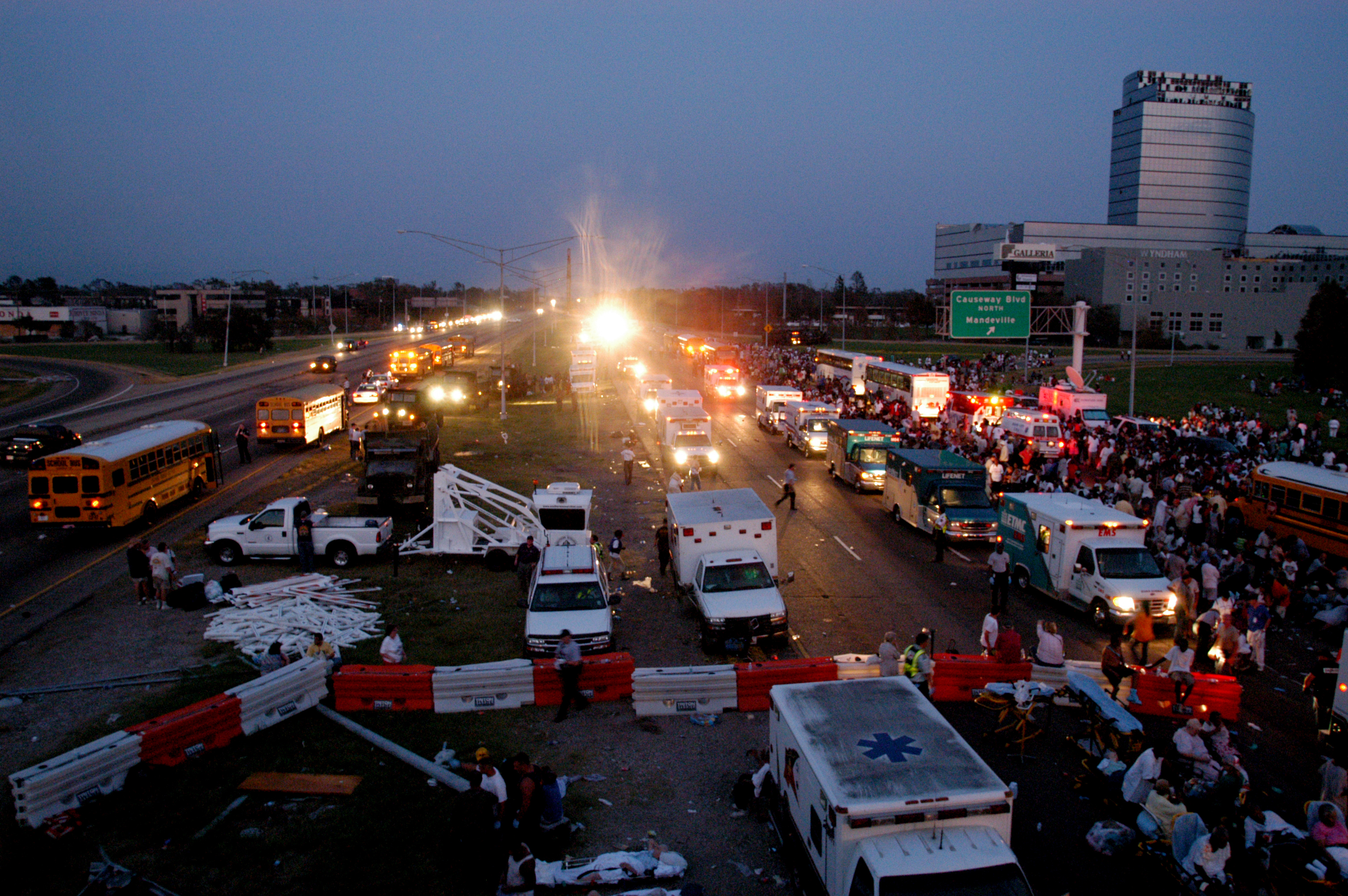
"Each of these stories become more subtle and often more difficult versions of the same question: when we see suffering, do we look away, or go towards it?"
Photo: rescue staging area after Hurricane Katrina.


...More to write about graduation soon (it was yesterday, June 7). First, here's the speech I gave at the commencement ceremony of the Harvard Medical School and Harvard School of Dental Medicine.

I’m going to start with a story. It starts when a man falls down on the sidewalk. He might be drunk, or he might not. He might be unconscious because he fell, or he might have fallen because he became unconscious. Hopefully sooner than later, someone realizes that he has fallen down.

The call to 911 comes from the first person to realize this and to care. Next comes the ambulance crew, and even the cars that get out of the way when the siren goes on. As the story continues, there are triage nurses and doctors, x-ray technicians and respiratory therapists. Maybe the man found down has a strange rash, goes to cardiac cath, or needs a CT scan; maybe he has blood in one of his eyes, or a shattered bone. There will be more to the story, but this is its essence: a person falls, and in small and large ways, a huge network of people begins to pick him up again.

Today, we step into a new role within this network. But we have already been part of this group of people: those who go to the man found down, and try to help him up.

We can’t be too romantic about this story. Almost as soon as the man’s story begins, promises and demands of money start moving through the wires underneath the sidewalk onto which he fell, perhaps even before he has been picked up off of it. But today is not about that part of the story. Today is about what we do because of who we are, and not just who we are paid to be.

Each of us will encounter different versions of this story in our work. A child is frightened of her father. A veteran is overwhelmed with anxiety inside an MRI machine. And a family is just down the hall, waiting to hear the news of an operation, and someone must tell them that the operation went badly. Hundreds and maybe thousands of stories like this are unfolding at this moment, right outside this tent, in the hospital and clinic buildings all around us. And each of these stories become more subtle and often more difficult versions of the same question: when we see suffering, do we look away, or go towards it?

We’ll have to answer this question day after day. I once heard an ICU nurse in an urban hospital say, “All of our patients have the same chief complaint: found down.” July’s novelty and excitement will be followed by February’s bleak repetition. Just about any hospital has many people found down for reasons that are easy to diagnose, but can seem impossible to solve.

To respond to this sometimes relentless suffering, we’ll have to push back against huge impersonal systems, even when those systems beat us back again and again. And we’ll sometimes have to forgive terrible human frailty even as that frailty pushes us to our limits of forgiveness. And so nearly all of us will succumb to frustration and even cynicism from time to time. This is nothing to be ashamed of, as long as we don’t wallow in it, and as long as we don’t mistake bitterness for truth. We are graduating from medical school, not saint school.

Nonetheless, we can hope to meet the basic moral standard of looking towards suffering instead of away from it. In clinics and hospitals, in our personal lives, and in research and policy, we’ll constantly face this moral challenge. Even the best of us will often fail it. But that should not stop us from continuing to try.

When we do reach this standard, we have one final important task: to avoid congratulating ourselves too vigorously for our own forms of benevolence. Sentimentality about our special virtue as doctors can be as dangerous as cynicism, because it causes us to forget that we are joining something much larger.

Our medical training means that we will bring our expertise, our intellectual curiosity, our readiness to work hard. We can be justifiably proud of ourselves for what we have already accomplished, and we know for sure that the people in the audience today are already proud of us.

But today we also join others—paramedics, nurses, social workers—and dentists—and many others who spend their lives responding to suffering. In the few blocks around us, there are thousands of people like this. And even more importantly, there are many other people who are not healthcare workers, but just caring people who also see suffering and find ways to respond. I came to medical school because of people like this—people who responded to the crisis of the AIDS epidemic in San Francisco, people who taught me about courage in the face of disaster.

In small or large ways, most of us have probably come to sit here today partly because of people like this, people who taught us how to behave in the face of suffering: teachers, friends, family. They have usually taught us by example, often because they cared for us when we were suffering. Some of those people are here today. They have seen us fall; in one way or another, they have found us down and helped us up, sometimes many times. As we graduate, we honor their acts of faith in us. Today we mark a moment in which their gifts to us have come to fruition. Now, we will join them in helping those who are found down.

Thursday, May 10, 2007

A glass ceiling in academic medicine?

Rosie the Riveters of academic medicine: the first women admitted to Harvard Medical School, in 1944. Women limited to 5-10% of the class for decades thereafter. From the Countway Library, HMS.

Medical academic extraordinaire Orah Platt putting a white coat on med student Tara Benjamin in 2001. Women are becoming a majority of entering medical students, but it's not yet clear how quickly the highest ranks of academic medicine will catch up with the lowest. From HMS's Focus newsletter.

Boston.com's "White Coat Notes" has a brief article about recent adding-up-the-basic-numbers findings, showing a lack of women in leadership positions in medical schools in Boston. A man who has been one of those looking into the problem says, "People might reflexively think that it's discrimination or a glass ceiling, and there may well be an element of that."

Right. There may well be.

Then he says, "It may be in some cases that women choose not even to apply for these positions or don't aspire to them because they are not appealing to women at that stage in life."

So, let's take the second proposition as true, for the sake of argument. Let's say that the medical schools have designed a set of powerful positions that they realize may not be appealing to women. That IS discrimination and a glass ceiling. It's discrimination against women the same way a set of stairs without a ramp is discrimination against wheelchair users. It's a way of saying we don't want you here, we don't want to find a way of getting you to come here, and in fact, we can't even imagine you being here--without actually having to say it to anyone's face.

For my part, I don't think there's really much functional difference between that kind of discrimination and the kind of discrimination that happens when some department chair just plain hates women in some kind of more personal and visceral way.